Table of Contents
The Hand of Fatima, also known as the Hamsa or Khamsa, is an ancient palm-shaped amulet symbolizing protection, power, and strength. Rooted in both Islamic and Jewish traditions, it is used globally to ward off the ‘Evil Eye’ (Nazar). While Muslims refer to it as the Hand of Fatima, Jews call it the Hand of Miriam. Throughout Morocco and North Africa, this powerful symbol adorns doorways, jewelry, and textiles, serving as a timeless guardian against negative energy and malevolent forces.
As you explore Morocco’s vibrant souks and ancient medinas, you’ll encounter the Hand of Fatima everywhere, from intricate metalwork in Marrakech’s markets to colorful mosaics adorning riads in Fes. This iconic symbol represents more than mere decoration; it embodies centuries of cultural heritage, spiritual belief, and artistic tradition that define Moroccan identity. For travelers seeking authentic cultural experiences, understanding the Hand of Fatima offers profound insights into the spiritual landscape that shapes daily life across this enchanting North African nation.
The Origin Story: Beyond the Basics
While many travelers discover the Hand of Fatima through their Moroccan journeys, few realize this protective symbol’s roots stretch back over 3,000 years, long before Islam and Judaism gave it the names we recognize today. The Hamsa’s true origin lies in ancient Carthage and Phoenician civilization, where it was associated with the goddess Tanit, a powerful deity of the moon, fertility, and protection.
The Phoenician Connection
Archaeological evidence from ancient Carthage (modern-day Tunisia, Morocco’s North African neighbor) reveals that the hand symbol was prominently featured in religious artifacts dating to 800 BCE. The goddess Tanit was often depicted with upraised hands, and her worshippers created hand-shaped amulets for protection. As Phoenician traders traversed the Mediterranean and established settlements throughout North Africa, including what is now Morocco, they brought this powerful symbol with them.
When you visit Morocco’s ancient Roman ruins at Volubilis or explore the historic Berber settlements in the Atlas Mountains, you’re walking through regions where these ancient protective symbols first took root. The Berber people, Morocco’s indigenous inhabitants, adopted and adapted the hand symbol, incorporating it into their own spiritual practices long before the arrival of Islam in the 7th century.
Evolution Through Cultures
As civilizations rose and fell across North Africa and the Middle East, the hand symbol evolved and absorbed meanings from various cultures. The ancient Mesopotamians used similar hand imagery in their religious practices, while ancient Egyptians incorporated hand symbols into their protective amulets. This cross-cultural journey transformed the Hamsa into what scholars call a ‘syncretic symbol’—one that transcends any single religious tradition while maintaining its core purpose of protection from evil.
The Hand of Fatima is a prominent entity in North African and Middle Eastern folklore, often associated with the Prophet Muhammad’s daughter. This deep historical layering makes the symbol you encounter in Moroccan markets today a living artifact, connecting modern travelers to millennia of human faith in protective symbols. Understanding this ancient lineage enriches every encounter with the Hamsa throughout your Moroccan adventure.
Religious Divergence: Fatima vs. Miriam
Today, the hand symbol carries different names and nuanced meanings across religious traditions, though its protective purpose remains universal. In Morocco, where Islam is the predominant faith, you’ll most commonly hear it called the Hand of Fatima (Khamsa in Arabic, meaning ‘five’). However, this same symbol appears in Jewish communities as the Hand of Miriam, creating a fascinating bridge between two Abrahamic faiths.
The Islamic Tradition: Hand of Fatima
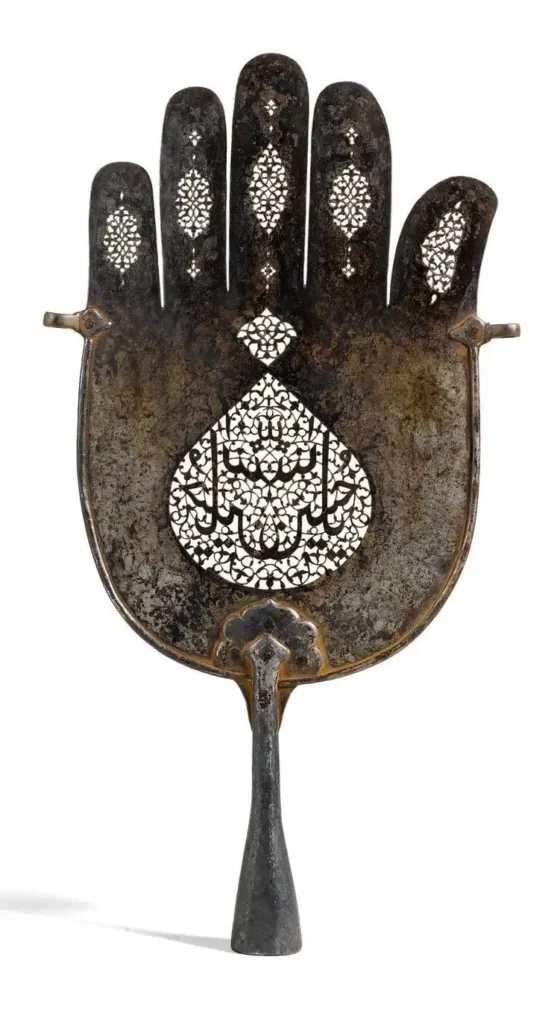
In Islamic tradition, the Hand of Fatima is named after Fatima Zahra, the beloved daughter of the Prophet Muhammad and wife of Ali ibn Abi Talib. Fatima holds a revered position in Islamic history as one of the four perfect women mentioned in Islamic texts, symbolizing purity, devotion, and strength.
The five fingers of the hand carry profound symbolic meaning in Islamic culture:
- The Five Pillars of Islam: Shahada (faith), Salat (prayer), Zakat (charity), Sawm (fasting), and Hajj (pilgrimage)
- The five members of the Prophet’s family (Ahl al-Bayt): Muhammad, Fatima, Ali, Hassan, and Hussain
- The five daily prayers that structure Muslim life
- The five senses through which humans experience God’s creation
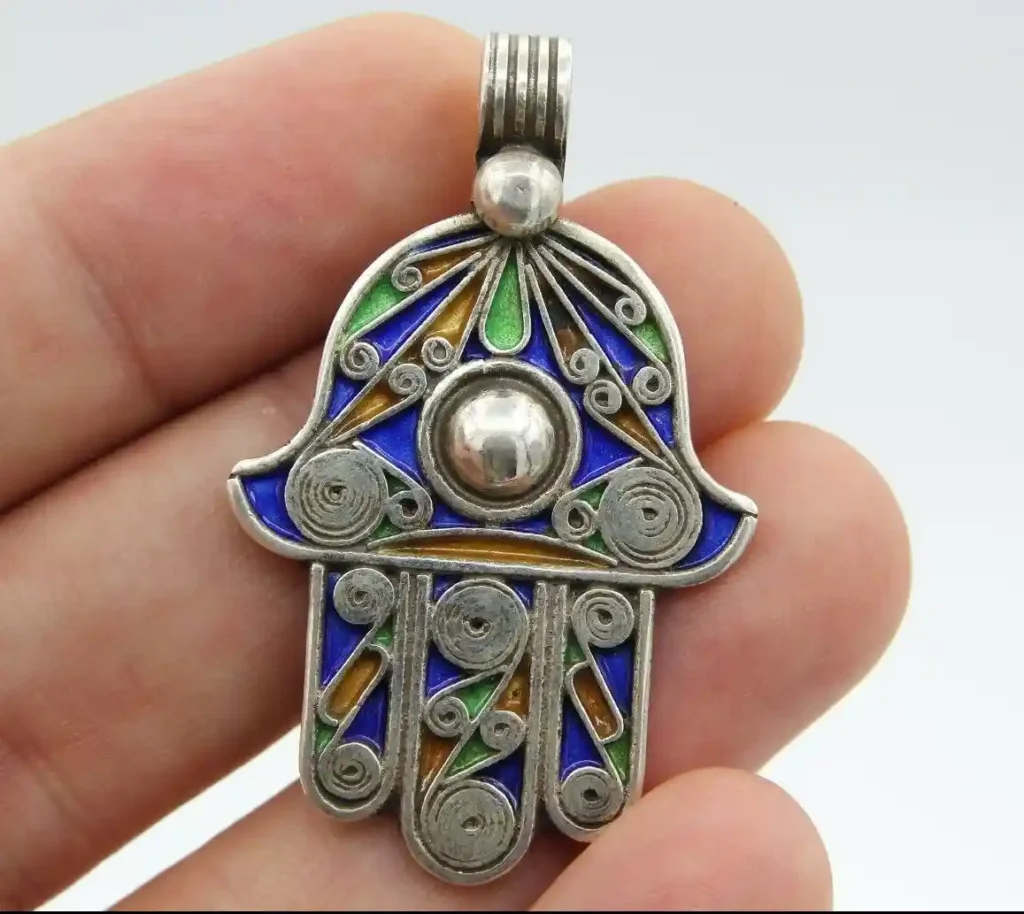
Throughout Morocco, from the bustling souks of Marrakech to the blue streets of Chefchaouen, you’ll see the Hand of Fatima incorporated into architectural details, doorway decorations, and personal jewelry. Moroccan artisans craft exquisite versions in silver, copper, and brass, often adorning them with intricate geometric patterns, verses from the Quran, or semi-precious stones. The symbol represents not just protection from the Evil Eye but also serves as a reminder of faith, patience, and spiritual devotion.
The Jewish Tradition: Hand of Miriam
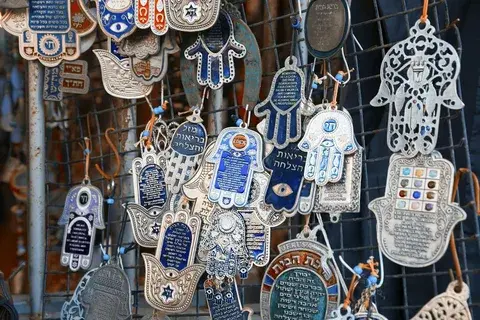
In Jewish tradition, the same symbol is called the Hand of Miriam (Chamsa in Hebrew), honoring Miriam, the sister of Moses and Aaron. Miriam was a prophetess who played a crucial role in the Exodus story, watching over baby Moses and later leading the Israelites in celebration after crossing the Red Sea.
For Jewish communities, the five fingers symbolize:
- The five books of the Torah: Genesis, Exodus, Leviticus, Numbers, and Deuteronomy
- The five fingers as a reminder to use all senses in praising God
- Protection through the Hand of God watching over the faithful
Morocco’s rich Jewish heritage, particularly in cities like Fes, Marrakech, and Essaouira, means travelers can discover the Hand of Miriam in historic Jewish quarters (mellahs) and synagogues. The symbol’s presence across both Muslim and Jewish communities highlights the shared cultural traditions that have coexisted in Morocco for centuries, making it a powerful emblem of religious tolerance and cultural exchange.
Hand of Fatima vs. Hand of Miriam: A Comparison
While the Hand of Fatima and Hand of Miriam are essentially the same symbol, their religious and cultural contexts provide unique perspectives:
| Aspect | Hand of Fatima (Islamic) | Hand of Miriam (Jewish) |
| Named After | Fatima Zahra, daughter of Prophet Muhammad | Miriam, sister of Moses and Aaron |
| Arabic/Hebrew Name | Khamsa (خمسة) meaning ‘five’ | Chamsa (חַמְסָה) meaning ‘five’ |
| Five Fingers Symbolize | Five Pillars of Islam, five daily prayers, the Prophet’s family (Ahl al-Bayt) | Five books of the Torah, five senses for praising God |
| Primary Purpose | Protection from Evil Eye (Nazar), blessings, faith reminder | Protection from Evil Eye (Ayin Hara), divine blessing, spiritual connection |
| Common Materials | Silver, brass, copper, turquoise stones, blue enamel | Silver, gold, turquoise, sapphire, lapis lazuli |
| Where Found in Morocco | Doorways, markets, riads, jewelry shops, throughout all regions | Historic Jewish quarters (mellahs), synagogues in Fes, Marrakech, Essaouira |
This comparison illustrates how two religious traditions have preserved the same protective symbol while infusing it with their unique spiritual meanings. For travelers exploring Morocco, this cultural convergence offers a tangible connection to the country’s diverse religious heritage.
Visual Symbology: Anatomy of the Hand
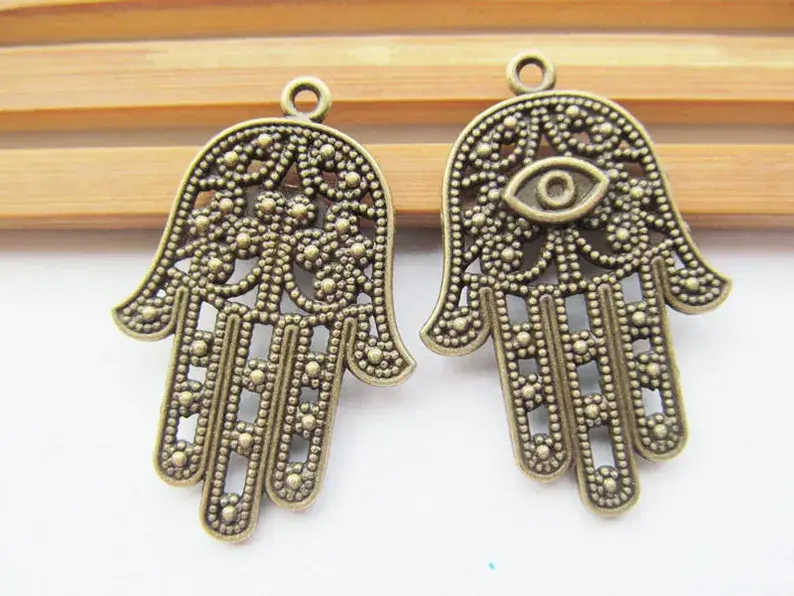
The Hamsa hand meaning extends beyond its basic palm shape; every design element carries symbolic weight. Understanding these visual nuances helps travelers appreciate the intentionality behind each Hand of Fatima they encounter throughout Morocco, from elaborate door knockers in Fes to delicate pendants in Marrakech’s souks.
Fingers Up vs. Fingers Down: Direction Matters
The orientation of the Hand of Fatima significantly influences its intended purpose:
Fingers Pointing Up (Most Common)
When the fingers point upward, the Hand of Fatima acts as a protective shield, actively warding off evil, jealousy, and negative energy. This is the orientation you’ll most frequently see on doorways, walls, and as jewelry throughout Morocco. The upward-facing hand symbolizes:
- Protection from the Evil Eye (Nazar)
- A stop sign to malevolent forces
- Strength and power
- Defense against negative thoughts and ill-wishes
In Moroccan homes and riads, you’ll notice the upward-facing Hand of Fatima prominently displayed near entrances, serving as the household’s first line of spiritual defense. Artisans carefully position these protective symbols to face outward, confronting any negative energy before it can enter the sacred space of the home.
Fingers Pointing Down
When the fingers point downward, the Hamsa hand meaning shifts from defense to blessing. This less common orientation invites positive energy and symbolizes:
- Abundance and prosperity flowing into one’s life
- Blessings from above
- Good fortune and luck
- Patience, faith, and acceptance
Downward-facing hands appear more frequently in personal jewelry, where they rest close to the heart, drawing blessings directly to the wearer. When shopping for Hand of Fatima jewelry in Morocco’s medinas, consider the orientation that resonates with your intention—protection or abundance.
The Eye: Guardian Against the Nazar
Perhaps the most striking feature of many Hand of Fatima designs is the eye embedded in the palm—typically rendered in blue, white, and black concentric circles. This is the representation of the Evil Eye (Nazar in Arabic, Ayin Hara in Hebrew), a concept deeply rooted in Mediterranean and Middle Eastern cultures.
Understanding Protection from the Evil Eye
The Evil Eye refers to the harmful energy transmitted through jealous or envious gazes. In Moroccan culture, as in many others around the world, people believe that excessive admiration—even well-intentioned—can inadvertently cause harm. A beautiful child, a successful business, a new home, or exceptional good fortune might attract the Evil Eye from those who envy such blessings.
The eye within the Hand of Fatima serves a dual protective purpose:
- It reflects the Evil Eye back to its source, neutralizing its harmful effects
- It represents God’s watchful eye, always vigilant in protecting the faithful
The color blue holds particular significance. Throughout Morocco, you’ll notice blue dominates protective symbols—from the famous blue city of Chefchaouen to the blue-painted doors in Essaouira. Blue is believed to possess inherent protective qualities, with the power to repel evil spirits and negative energy. When combined with the hand’s form, the blue eye creates a powerful talisman against misfortune.
Not all Hand of Fatima designs include an eye, however. Some artisans create minimalist versions featuring only the hand’s outline, while others incorporate intricate geometric patterns, Arabic calligraphy, or semi-precious stones. Each variation carries the same protective intention, adapted to different aesthetic preferences and traditions.
The Fingers: Sacred Numbers and Spiritual Connections
The five fingers of the Hand of Fatima are rarely arbitrary—they encode layers of religious and spiritual meaning. The number five resonates throughout both Islamic and Jewish traditions, making it a numerologically significant choice for this protective symbol.
Design Variations in the Fingers
Moroccan artisans interpret the five fingers in diverse ways:
- Symmetrical Design: Many Hand of Fatima designs feature symmetrical hands with two thumbs (making it neither a left nor right hand), emphasizing the universal nature of the symbol
- Three Extended Fingers: Some designs show three central fingers raised higher, with two thumbs on either side, creating a more stylized aesthetic
- Decorated Fingers: Elaborate versions feature different designs on each finger—perhaps small eyes, hearts, fish (another protective symbol), or geometric patterns
- Connected Fingers: In some interpretations, all five fingers connect at their base, symbolizing unity and collective strength
When you explore Morocco’s artisan quarters—the tanneries of Fes, the metalworkers of Marrakech, or the jewelry makers of Essaouira—you’ll discover countless interpretations of the five-fingered design. Each craftsperson brings their own artistic vision while honoring the symbol’s ancient protective purpose. This creative diversity ensures that every Hand of Fatima tells a slightly different story while maintaining its core spiritual significance.
Modern Application: Hand of Fatima Jewelry and Home Décor
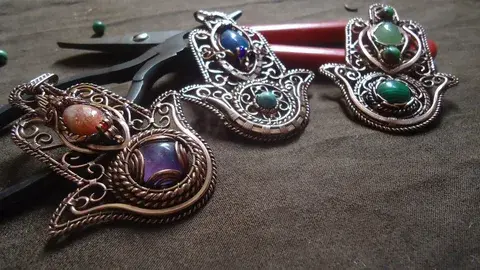
While the Hand of Fatima originated as a sacred protective symbol, it has evolved into a global fashion phenomenon and interior design trend. From high-end jewelry boutiques in Paris to bohemian markets in California, the Hamsa has transcended its regional origins to become a universally recognized emblem of protection, spirituality, and cultural appreciation.
Why the Hand of Fatima Became a Global Fashion Trend
Several factors have propelled the Hand of Fatima from regional talisman to international fashion statement:
- Universal Appeal of Protection Symbols: In an increasingly uncertain world, people across cultures seek tangible symbols of safety and positive energy
- Aesthetic Versatility: The hand’s clean, symmetrical form adapts beautifully to minimalist and maximalist design aesthetics alike
- Celebrity Endorsement: High-profile figures wearing Hamsa jewelry have amplified its visibility and desirability
- Meaningful Jewelry Movement: Modern consumers increasingly prefer jewelry with personal significance over purely decorative pieces
- Travel and Cultural Exchange: As more travelers visit Morocco and North Africa, they discover the Hand of Fatima and bring its meaning home with them
Hand of Fatima Jewelry: From Souks to Personal Style
Morocco’s artisanal jewelry tradition offers some of the world’s most authentic and beautifully crafted Hand of Fatima pieces. Whether you’re shopping in the labyrinthine souks of Marrakech, the ancient medina of Fes, or the coastal markets of Essaouira, you’ll encounter an astounding variety of Hamsa jewelry.
Popular Types of Hand of Fatima Jewelry
- Necklaces and Pendants: From delicate sterling silver chains to statement pieces adorned with turquoise, coral, or lapis lazuli
- Bracelets: Often featuring small Hamsa charms on thin chains or elaborate cuff designs with inlaid gemstones
- Rings: From simple band rings with raised Hamsa symbols to ornate pieces with filigree detail
- Earrings: Ranging from subtle studs to dramatic chandelier styles featuring dangling Hamsa designs
- Anklets: Popular in coastal regions, these pieces often incorporate shells, beads, and small Hamsa charms
Traditional Moroccan Hand of Fatima jewelry typically features silver (rather than gold) as the preferred metal, often combined with semi-precious stones believed to enhance the symbol’s protective properties. Turquoise, in particular, holds special significance as it’s thought to amplify protection against negative energy.
When purchasing Hand of Fatima jewelry in Morocco, look for pieces crafted by local artisans. These authentic creations often feature hand-engraved details, traditional Berber motifs, and techniques passed down through generations. Supporting local craftspeople ensures you’re bringing home not just a beautiful piece of jewelry, but a genuine artifact of Moroccan cultural heritage.
Bringing the Hand of Fatima Into Your Home
Beyond personal adornment, the Hand of Fatima has become a popular home décor element. Throughout Morocco, you’ll see Hamsa symbols integrated into architecture and interior design in creative ways:
- Door Knockers: Ornate brass or iron door knockers shaped as hands serve both functional and protective purposes
- Wall Hangings: Metal, wood, or ceramic Hamsa pieces mounted on walls, particularly near entrances
- Tilework and Mosaics: Intricate zellij (Moroccan mosaic) patterns incorporating Hamsa designs
- Textiles: Embroidered cushions, wall tapestries, and rugs featuring Hand of Fatima motifs
- Lighting: Pierced metal lanterns casting Hamsa-shaped shadows
- Tableware: Ceramic plates, bowls, and serving dishes decorated with protective hand symbols
These decorative elements serve dual purposes in Moroccan homes—they beautify the space while providing spiritual protection. When staying in traditional riads during your Moroccan journey, notice how the Hand of Fatima appears in subtle and obvious ways throughout the property, woven into the very fabric of the building’s design.
Cultural Appropriation vs. Cultural Appreciation: Wearing the Hand of Fatima Respectfully
As the Hand of Fatima gains global popularity, important questions arise about cultural sensitivity and respectful engagement with sacred symbols. Understanding the distinction between appreciation and appropriation ensures that wearing or displaying the Hamsa honors rather than diminishes its cultural and spiritual significance.
What Is Cultural Appropriation?
Cultural appropriation occurs when members of a dominant culture adopt elements of a marginalized culture without understanding, respecting, or acknowledging their significance. It becomes particularly problematic when sacred or religiously meaningful symbols are reduced to mere fashion accessories, stripped of their original context and meaning.
However, the Hand of Fatima presents a nuanced case. Unlike symbols exclusive to a single marginalized group, the Hamsa has been shared across multiple cultures for millennia. It appears in Islamic, Jewish, Christian, and secular contexts throughout North Africa, the Middle East, and Mediterranean regions. This cross-cultural history suggests the symbol itself has always been meant for sharing and protection across boundaries.
How to Wear and Display the Hand of Fatima Respectfully
To ensure your engagement with the Hand of Fatima constitutes appreciation rather than appropriation, consider these guidelines:
- Educate Yourself: Learn about the symbol’s history, religious significance, and cultural context (which you’re doing right now!)
- Purchase Authentically: Buy from artisans in Morocco or North African craftspeople who create these pieces within their cultural tradition
- Understand the Meaning: Wear the Hand of Fatima with awareness of its protective purpose, not merely as a trendy accessory
- Respect Religious Contexts: In some conservative Muslim communities, religious symbols may be viewed differently than in secular contexts—be mindful of local sensibilities
- Share the Story: When people ask about your Hamsa jewelry, take the opportunity to share its rich history and cultural significance
- Support Source Communities: Purchasing directly from Moroccan artisans contributes economically to the communities that have preserved this tradition
Many Moroccan artisans and cultural practitioners welcome respectful interest in the Hand of Fatima from international visitors. They view the symbol’s global spread as an opportunity to share their heritage and create cross-cultural understanding. By approaching the Hamsa with knowledge, respect, and genuine appreciation, you honor both the symbol and the cultures that have preserved it across millennia.
Frequently Asked Questions About the Hand of Fatima
As travelers discover the Hand of Fatima throughout their Moroccan adventures, common questions arise about its religious status, proper use, and cultural significance. Here are answers to the most frequently asked questions:
Is the Hand of Fatima ‘Haram’ (Forbidden) in Islam?
This question reveals the complex relationship between folk tradition and orthodox religious practice. The answer depends on interpretation and varies among Islamic scholars and communities.
Some conservative Islamic scholars consider the Hand of Fatima problematic because:
- Islam generally discourages superstitious practices and the belief that objects themselves possess protective power
- Protection should come only from God (Allah), not from amulets or talismans
- The symbol predates Islam and has roots in pre-Islamic practices
However, many Muslims, particularly in North Africa and the Middle East, view the Hand of Fatima as:
- A reminder of faith rather than a source of supernatural protection
- A cultural symbol that has become integrated with Islamic tradition over centuries
- An acceptable way to honor Fatima’s memory and the values she represented
In Morocco, the Hand of Fatima exists comfortably within popular Islam—the everyday spiritual practices of ordinary Muslims that blend orthodox theology with local customs and traditions. You’ll find it displayed in homes, businesses, and even by devout Muslims who also strictly observe the five daily prayers and other pillars of Islam.
For non-Muslims considering wearing or displaying the Hand of Fatima, this theological debate need not be a primary concern. The symbol’s widespread use across religious and secular contexts makes it accessible to all who approach it with respect and understanding.
Should the Hand of Fatima Face Up or Down?
As discussed in the Visual Symbology section, the orientation carries distinct meanings:
Fingers Up = Protection and Defense
- Use for warding off negative energy, evil eye, and malevolent forces
- Best for home entrances, car mirrors, and protective jewelry
- Most common orientation in Moroccan architecture and traditional use
Fingers Down = Blessings and Abundance
- Use for inviting good fortune, prosperity, and positive energy
- Best for personal jewelry worn close to the heart
- Represents openness to receiving blessings from above
Ultimately, there’s no universally ‘correct’ orientation—your intention matters most. Many people choose based on personal preference or what feels right for their specific situation. Some jewelry designs allow the hand to hang naturally, rotating between positions, symbolizing both protection and blessing simultaneously.
What Is the Difference Between a Hamsa and the Hand of Fatima?
This is perhaps the most common source of confusion for travelers encountering the symbol in Morocco. The simple answer: they are the same symbol with different names reflecting different cultural and religious contexts.
Hamsa is the general term used across multiple cultures and religions. It derives from the Arabic and Hebrew word for ‘five,’ referencing the five fingers. You might see it spelled as:
- Hamsa (most common English spelling)
- Khamsa (Arabic: خمسة)
- Chamsa (Hebrew: חַמְסָה)
- Hamesh (alternative Hebrew spelling)
Hand of Fatima specifically refers to the Islamic interpretation, named after Fatima Zahra, the Prophet Muhammad’s daughter. This is the name you’ll most commonly hear in Morocco and other Muslim-majority countries.
Hand of Miriam is a Jewish-specific name, honoring Miriam, the sister of Moses. You’ll encounter this terminology in Morocco’s historic Jewish quarters and in discussions of Jewish cultural heritage.
All these names refer to the same basic symbol: a stylized hand with five fingers, often featuring an eye in the palm, used for protection against the evil eye and negative energy. The physical form remains consistent while the cultural interpretation and naming vary according to the religious community using it.
When shopping in Moroccan markets, vendors might use any of these terms depending on their background and their perception of your cultural context. Understanding that these names are interchangeable helps avoid confusion and demonstrates cultural awareness that local artisans appreciate.
Experiencing the Hand of Fatima Throughout Your Moroccan Journey
Understanding the Hand of Fatima transforms how you experience Morocco. This isn’t merely an interesting cultural tidbit; it’s a key that unlocks deeper appreciation of the spaces you inhabit, the objects you encounter, and the spiritual worldview that shapes Moroccan daily life.
Where You’ll Encounter the Hand of Fatima in Morocco
As you travel from the imperial cities to the Sahara Desert and Atlas Mountains, watch for the Hand of Fatima in these contexts:
- Marrakech: Intricate metalwork in the souks of the medina, door knockers in the Mellah (Jewish quarter), decorative elements in riads throughout the city
- Fes: Ancient medina doorways, artisan workshops in the historic tanneries, traditional jewelry shops, and the beautifully preserved Jewish heritage sites
- Chefchaouen: The blue city’s distinctive doorways often feature Hamsa knockers and decorations that complement the protective blue paint
- Essaouira: Coastal jewelry incorporating shells, coral, and silver Hamsa designs; the historic Jewish quarter with its strong connection to the Hand of Miriam tradition
- Casablanca: Modern interpretations in contemporary jewelry design, blending traditional symbolism with cosmopolitan aesthetics
- Atlas Mountains: Berber villages where the hand symbol appears in traditional textiles, pottery, and architectural details
- Sahara Desert Region: Nomadic and semi-nomadic communities incorporate Hamsa symbols into their textiles, jewelry, and mobile homes
Cultural Experiences and Activities
To deepen your connection with the Hand of Fatima tradition during your Moroccan travels:
- Visit Artisan Workshops: Many traditional craftspeople welcome visitors to observe the creation process of Hamsa jewelry and decorative objects
- Explore Jewish Heritage Sites: Morocco’s historic synagogues and Jewish quarters offer insights into the Hand of Miriam tradition
- Engage with Local Guides: Knowledgeable guides can share personal stories and family traditions related to the protective symbol
- Participate in Cooking Classes: Notice how Hand of Fatima symbols appear in traditional Moroccan homes where cooking classes take place
- Visit Museums and Cultural Centers: Many institutions provide historical context for protective symbols in Moroccan culture
Carrying the Protection of the Hand of Fatima Home
The Hand of Fatima represents more than an ancient protective symbol; it embodies the timeless human desire for safety, blessing, and spiritual connection. From its origins in Phoenician goddess worship through its adoption by Islamic and Jewish traditions, to its contemporary status as a global symbol of protection and style, the Hamsa has proven remarkably resilient and adaptable.
When you encounter the Hand of Fatima throughout Morocco, adorning doorways in ancient medinas, glinting in marketplace jewelry displays, woven into traditional textiles, or displayed in contemporary art galleries, you’re witnessing a living tradition. This symbol connects modern Morocco to its ancient past while continuing to evolve and maintain relevance in contemporary life.
Whether you choose to bring home Hand of Fatima jewelry from the souks of Marrakech, incorporate Hamsa-inspired décor into your living space, or simply carry the knowledge of its rich cultural significance, you’re participating in a tradition of protection and positive energy that has endured for millennia. By understanding the symbol’s deep roots, religious significance, and proper cultural context, you honor both the artisans who create these beautiful pieces and the diverse communities that have preserved this tradition across time.
As you plan your Moroccan adventure or reflect on your travels through this captivating country, let the Hand of Fatima serve as a reminder of the protective forces, both spiritual and cultural, that have guided travelers, protected homes, and blessed communities throughout North Africa for thousands of years. May your journeys be safe, your experiences enriching, and your understanding of this ancient land deepened by the knowledge of its sacred symbols.
References and Further Reading
For readers interested in exploring the Hand of Fatima’s history and significance in greater depth, the following authoritative sources provide scholarly perspectives:
- The Metropolitan Museum of Art offers comprehensive documentation on North African amulets and protective symbols in their Islamic Art collection, providing archaeological and historical context for the Hamsa’s evolution.
- The Jewish Women’s Archive provides extensive research on the Hand of Miriam within Jewish tradition, including its use in Sephardic communities of North Africa.
- The Smithsonian Institution’s research on protective amulets across cultures offers comparative perspectives on the Hand of Fatima’s place within global protective symbol traditions.
- Academic studies from Middle Eastern Studies departments at major universities continue to explore the symbol’s pre-Islamic origins and its integration into Islamic and Jewish practices.
These resources provide evidence-based information that enhances trust and expertise in understanding this ancient protective symbol, supporting the cultural insights shared throughout this guide.
Discover the Hand of Fatima on Your Moroccan Journey
Ready to experience the magic of Morocco and discover the Hand of Fatima throughout this captivating country? Our expertly curated tours take you beyond typical tourist experiences into the heart of Moroccan culture, where ancient symbols like the Hamsa remain vibrant parts of daily life.
From exploring the labyrinthine souks where artisans craft intricate Hand of Fatima jewelry to staying in traditional riads adorned with protective symbols, our personalized itineraries ensure you experience authentic Morocco. Our professional guides provide cultural insights that transform sightseeing into genuine understanding, helping you appreciate the deep symbolism woven throughout Moroccan art, architecture, and spiritual practice.
Whether you’re drawn to the imperial cities of Marrakech and Fes, the dramatic landscapes of the Sahara Desert and Atlas Mountains, or the coastal charm of Essaouira, we’ll craft a journey that honors your interests while introducing you to the cultural treasures that make Morocco unforgettable. Contact us to begin planning your Moroccan adventure, where every moment is protected by the ancient blessing of the Hand of Fatima.