Table of Contents
What Are Moroccan Handicrafts?
Moroccan handicrafts (Artisanat Marocain) comprise centuries-old traditions of woodcraft, pottery, weaving, metalwork, and textile production that have been passed down through generations of skilled artisans. These authentic Moroccan handicrafts represent a living cultural heritage that blends Berber, Arab, Andalusian, and African influences into distinctive art forms. From handmade Berber carpets to intricate zellige tilework, Moroccan craftsmanship embodies the soul of North African artisanal traditions, where every piece tells a story of heritage, skill, and cultural identity.
The Geography of Craft: Where Moroccan Artisanal Traditions Thrive
One of the most fascinating aspects of Moroccan handicrafts is how different cities have become renowned for specific crafts. Understanding this geographical distinction helps travelers and collectors source authentic pieces directly from master artisans. Here’s your essential guide to Morocco’s craft geography:
| City/Region | Signature Craft | What Makes It Special | Best Time to Visit |
|---|---|---|---|
| Fez | Blue Pottery & Ceramics | Intricate cobalt blue patterns on white backgrounds; traditional glazing techniques from the 14th century | Year-round (spring and fall ideal) |
| Marrakech | Leather Goods | Babouche slippers, bags, and poufs crafted in historic tanneries using natural dyes | October-April (cooler months) |
| Essaouira | Thuya Wood | Aromatic wood inlaid with mother-of-pearl, ebony, and lemon wood; maritime motifs | April-October (fewer crowds) |
| Tetouan | Embroidery & Textiles | Fine needlework and traditional jellebas with Andalusian influence | Spring (March-May) |
| Safi | Ceramics & Pottery | Vibrant glazed earthenware; traditional pottery wheels still in use | Year-round |
| Taroudant | Silver Jewelry | Berber silver work with semi-precious stones; traditional Amazigh designs | Fall-Winter (September-February) |
| Vibrant glazed earthenware; traditional pottery wheels are still in use | Berber Carpets | Beni Ourain, Azilal, and Boucherouite rugs from nomadic tribes | After harvest season (late summer-fall) |
| Chefchaouen | Wool Blankets & Weavings | Striped blankets and traditional textiles in the blue city | Spring-Summer (April-July) |
Pro Tip for Travelers: When planning your Morocco tour with Desert Merzouga Tours, request visits to specific artisan workshops and cooperatives. Witnessing craftspeople at work, whether at the Chouara Tannery in Fez or a Berber weaving collective in the Atlas Mountains, transforms shopping into an immersive cultural experience.
The 7 Pillars of Moroccan Art: A Deep Dive into Traditional Craftsmanship
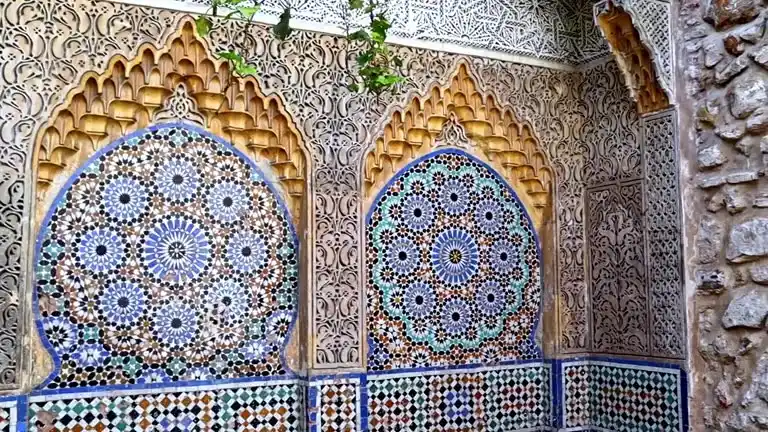
1. Zellige: The Mosaic Art of Patience
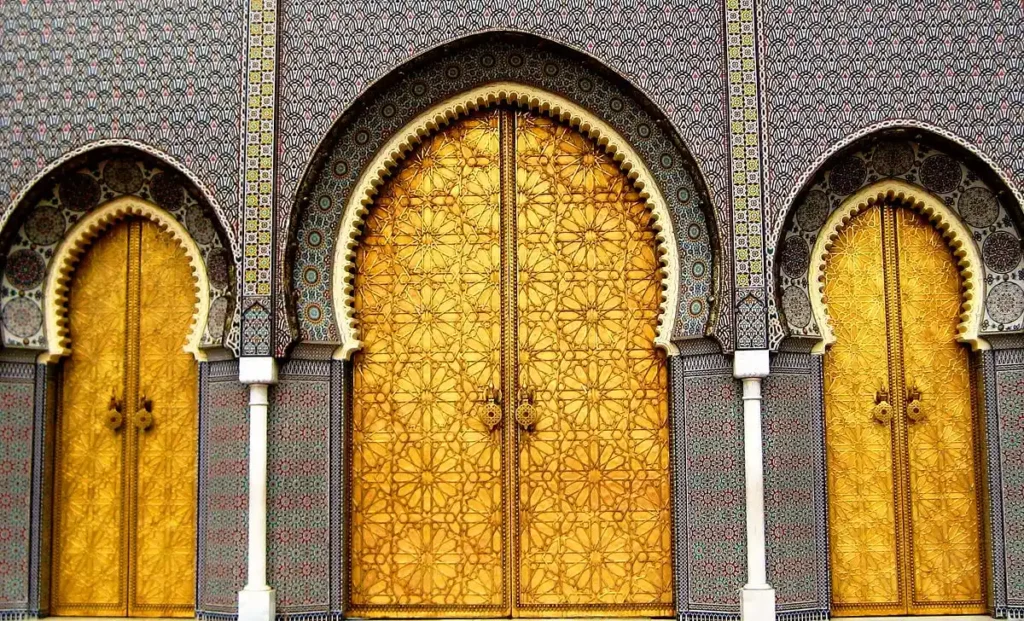
Zellige represents one of the most iconic forms of Moroccan craftsmanship, geometric tilework that adorns palaces, mosques, riads, and fountains throughout Morocco. This ancient art form dates back to the 10th century and requires extraordinary precision and patience.
The Creation Process:
- Artisans hand-cut glazed terracotta tiles into precise geometric shapes
- Individual pieces (sometimes thousands) are assembled face down like a puzzle
- Designs range from simple star patterns to breathtakingly complex interlocking geometries
- Colors traditionally include cobalt blue, emerald green, yellow ochre, white, and black
Where to See Master Craftsmen: The Ben Youssef Madrasa in Marrakech and the Bou Inania Madrasa in Fez showcase some of the finest historical zellige work. For contemporary pieces, visit workshops in the Fez medina where artisans still use centuries-old techniques.
Investment Value: Authentic zellige pieces, especially antique fountain surrounds or architectural elements, can range from $200-$5,000+ depending on size, age, and intricacy.
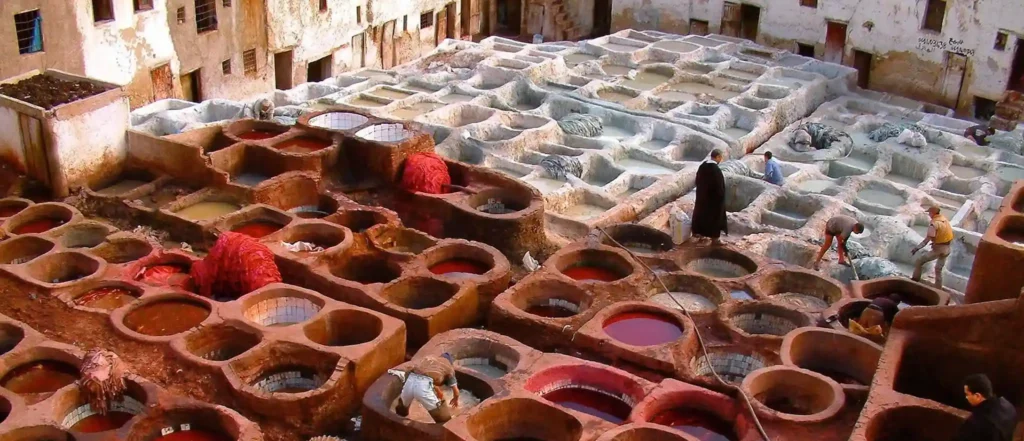
2. Traditional Moroccan Leatherwork: From Tannery to Treasure
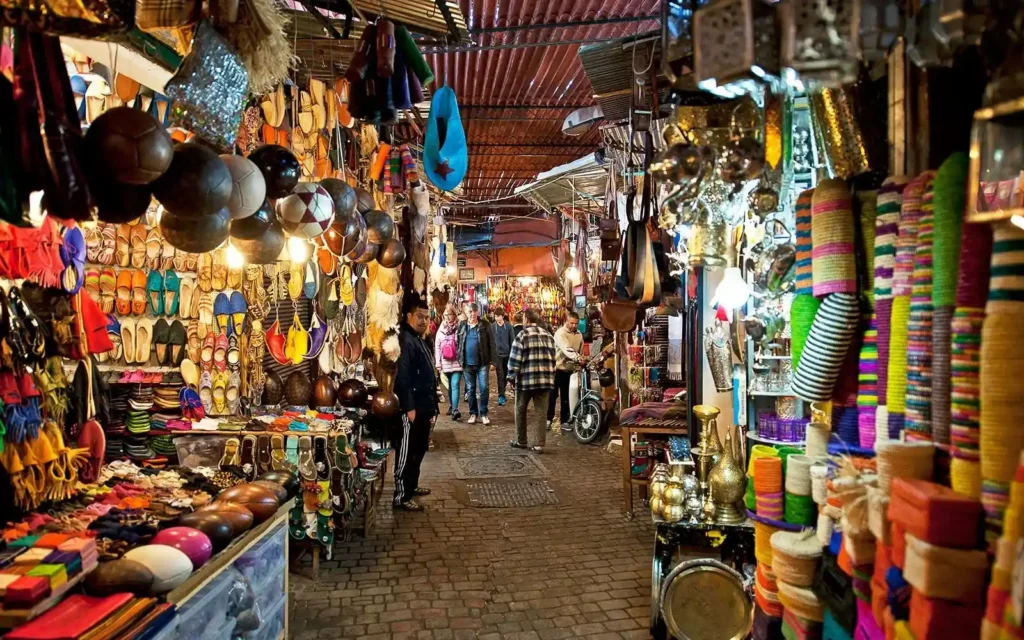
The pungent aroma of the medieval tanneries might take your breath away, but the resulting leatherwork represents some of Morocco’s most sought-after handicrafts. The Chouara Tannery in Fez, operational since the 11th century, remains one of the oldest tanneries in the world.
Traditional Tanning Process:
- Raw hides are soaked in mixtures of cow urine, salt, water, and lime to soften
- Natural dyes derived from poppy flowers (red), indigo (blue), henna (orange), mint (green), and saffron (yellow) create vibrant colors
- Artisans work the leather by hand in stone vessels, using techniques unchanged for centuries
- The leather is dried naturally in the Moroccan sun
Popular Leather Items:
- Babouche slippers – Traditional pointed-toe slippers in every color imaginable
- Pouffes – Stuffed leather ottomans, perfect for bringing Moroccan style home
- Bags and satchels – From practical messenger bags to decorative clutches
- Belts and accessories – Hand-tooled designs featuring Berber motifs
Authenticity Check: Real Moroccan leather has a distinct earthy smell (from natural tanning) and feels supple but substantial. Machine-made imitations from Asia often feel too uniform and smell of chemicals.
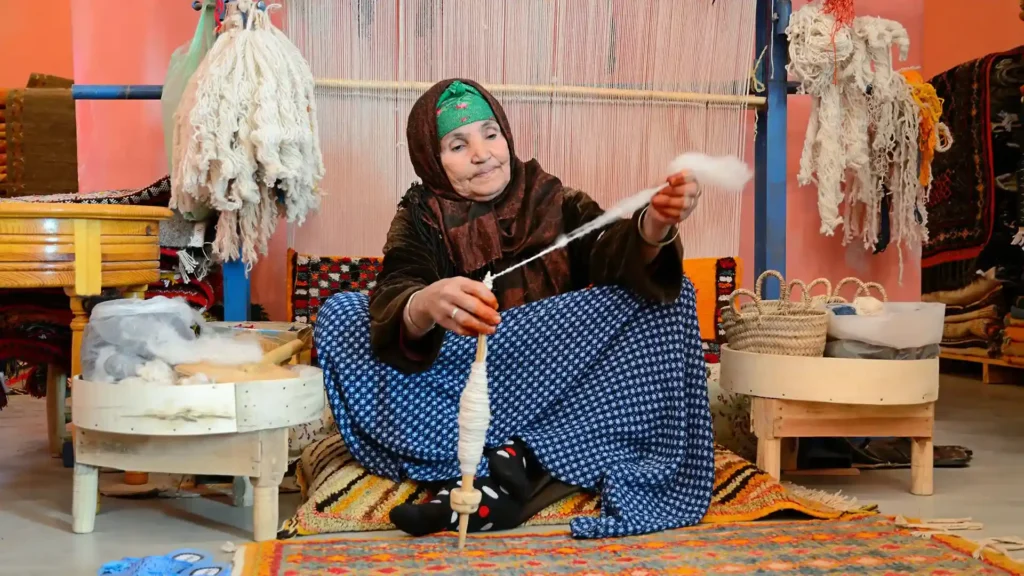
3. Handmade Berber Carpets: Woven Stories of the Atlas Mountains
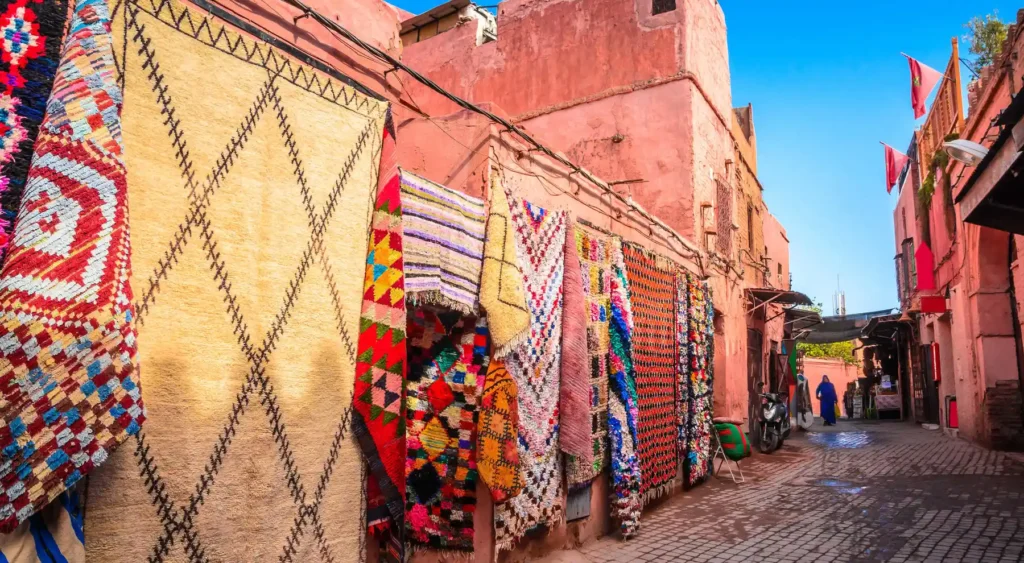
Berber rugs represent some of the most authentic Moroccan handicrafts, with each region producing distinct styles that reflect their tribal heritage, climate, and cultural narratives. These aren’t just floor coverings, they’re woven historical documents.
Beni Ourain Carpets:
- Origin: Middle Atlas Mountains
- Characteristics: Thick, plush pile with geometric black or brown patterns on cream wool background
- Traditional Use: Warmth in cold mountain winters; wedding blankets
- Modern Appeal: Beloved by interior designers for minimalist, Scandinavian-inspired spaces
- Price Range: Authentic pieces range from $400-$3,000+, depending on size and age
Azilal and Boucherouite Rugs:
- Origin: High Atlas Mountains
- Characteristics: Vibrant colors, abstract designs, asymmetrical patterns
- Unique Feature: Often incorporates recycled textiles (Boucherouite means “reused clothing”)
- Symbolism: Designs may represent fertility, protection, spirituality, or daily life
- Price Range: $300-$2,500 for authentic artisan pieces
Vintage vs. New:
- Vintage rugs (30+ years) show natural patina, slight irregularities, and deeper colors
- New rugs have brighter colors and a more uniform pile height
- Both have value, vintage for collectors, and new for supporting contemporary artisans
Buying Tips: Purchase directly from cooperatives in the Atlas Mountains when possible. Women’s weaving collectives offer fair prices while ensuring your money supports the artisans. Desert Merzouga Tours can arrange visits to authentic weaving cooperatives where you’ll meet the makers and understand the months of work behind each piece.
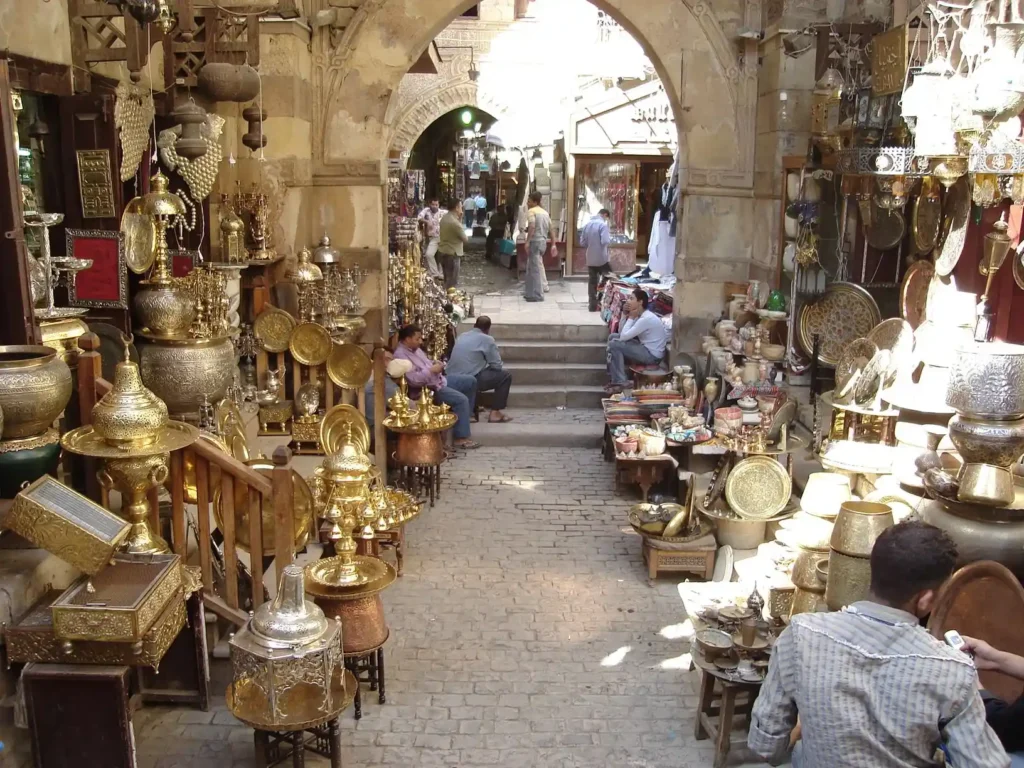
4. Metalwork: Copper, Brass, and Silver Artistry
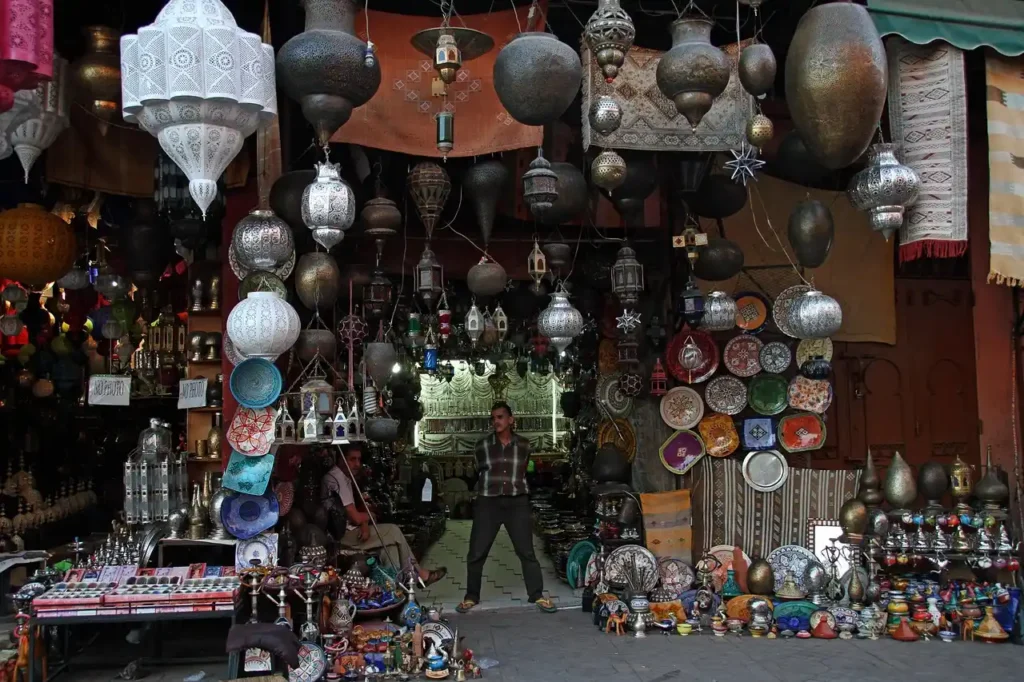
From the rhythmic hammering echoing through the souks to the glittering displays of lanterns and trays, Moroccan metalwork showcases centuries of refined craftsmanship.
Copper and Brass Work:
- Lanterns: Intricate pierced metal with colored glass inserts, creating magical light patterns
- Trays: Engraved tea trays that serve as decorative wall art or functional serveware
- Tagines: Both decorative and functional cooking vessels
- Technique: Hand-hammered, chased, and engraved using traditional tools
Silver Jewelry:
- Berber Silver: Heavy, ornate pieces featuring geometric designs and semi-precious stones
- Fibula Brooches: Traditional garment fasteners, now popular as statement jewelry
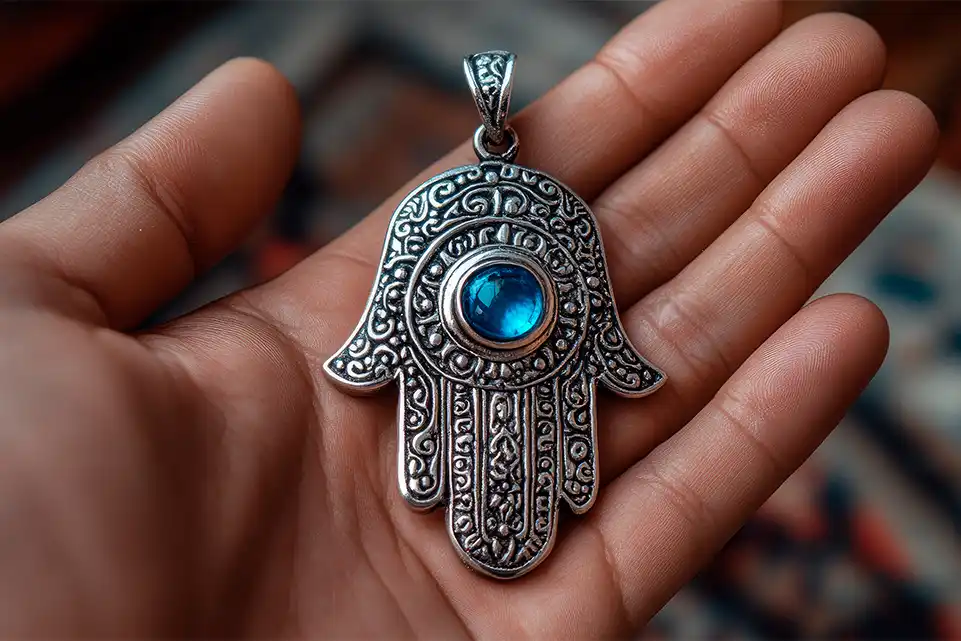
- Hand of Fatima (Hamsa): Protective amulets in various sizes
- Materials: Traditional pieces use low-grade silver (often mixed with copper for durability)
Regional Styles:
- Tiznit and Taroudant: Elaborate Berber silver with coral, amber, and turquoise
- Essaouira: Delicate filigree work with maritime influences
- Marrakech: Contemporary fusion designs mixing traditional motifs with modern aesthetics
5. Woodwork: Thuya, Cedar, and Marquetry Magic
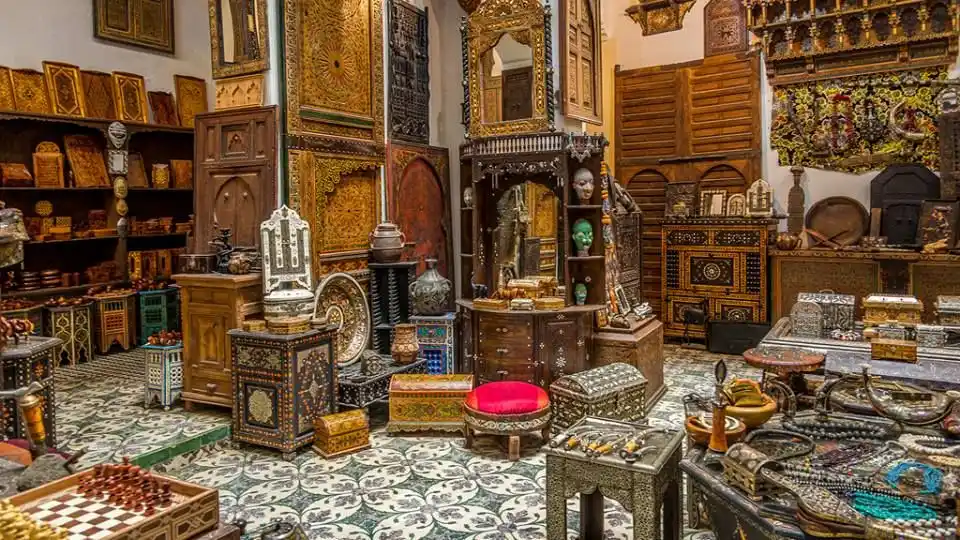
Moroccan woodwork encompasses everything from architectural elements to decorative boxes, all showcasing extraordinary inlay work and natural wood beauty.
Thuya Wood (Essaouira Specialty):
- Derived from the root burl of the thuya tree (endemic to Morocco)
- Natural reddish-brown color with distinctive swirling grain patterns
- Aromatic, emits a pleasant cedar-like scent
- Often inlaid with ebony, lemon wood, mother-of-pearl, or bone
- Typical items: Jewelry boxes, chess sets, serving trays, decorative objects
Cedar Wood (Atlas Mountains):
- Prized for its durability and natural insect-repelling properties
- Used in architectural elements, furniture, and decorative screens
- Hand-carved with geometric or floral patterns
Marquetry Techniques:
- Artisans create intricate patterns by inlaying different woods and materials
- Designs include geometric stars, arabesques, and calligraphy
- Can take weeks or months for complex pieces
Investment Pieces: Antique Moroccan doors, window screens (moucharabieh), and large chests can be valuable architectural elements for homes, ranging from $500-$10,000+.
6. Textiles: From Sabra Silk to Cotton Weaves
Morocco’s textile traditions extend far beyond carpets, encompassing a wide variety of fabrics and techniques.
Sabra Silk (Cactus Silk):
- Actually derived from the Aloe Vera plant (not cactus)
- Vegetable-dyed in vibrant jewel tones
- Soft, silky texture similar to true silk
- Used for cushions, throws, and lighter-weight rugs
- Sustainable and eco-friendly production
Cotton Textiles:
- Handira wedding blankets: White cotton with sequins, traditionally given as wedding gifts
- Striped blankets and throws in bold color combinations
- Table linens embroidered with traditional motifs
Embroidery Traditions:
- Fez embroidery: Silk thread on silk or linen, often in geometric patterns
- Rabat embroidery: Cross-stitch style on cotton and linen
- Tetouan embroidery: Andalusian-influenced floral designs
7. Pottery and Ceramics: Earth, Fire, and Artistry
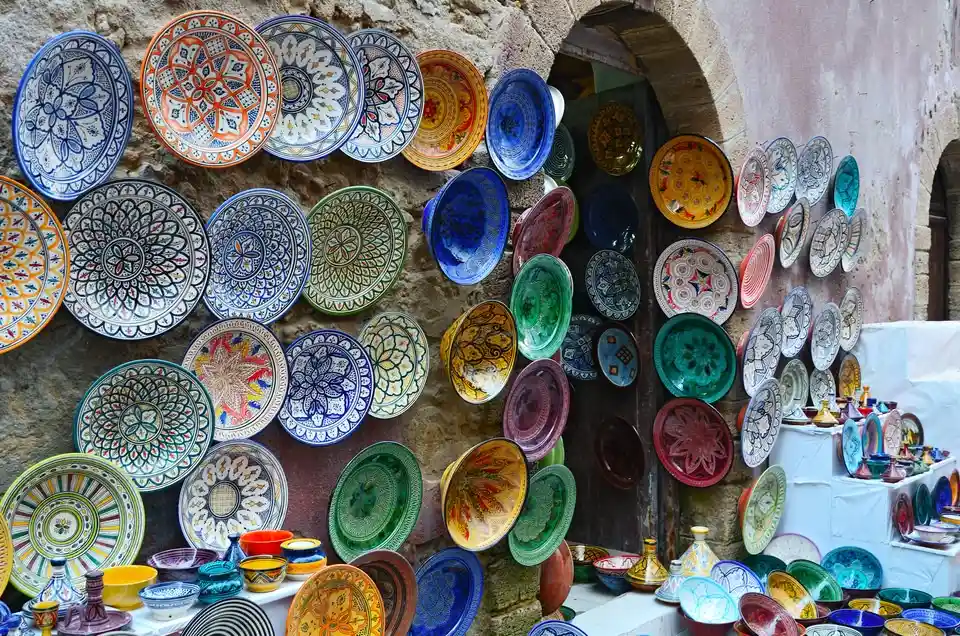
Moroccan pottery combines functionality with stunning decorative appeal, with techniques passed down through generations.
Fez Blue Pottery:
- Signature cobalt blue and white color scheme
- Intricate geometric and floral patterns
- The glazed finish creates a luminous surface
- Items: Plates, bowls, tagines, vases, tiles
Safi Ceramics:
- Known for vibrant polychrome designs
- Brighter, more varied color palette than Fez pottery
- Often features yellow, green, blue, and brown
- More affordable than Fez pottery while still authentic
Terracotta (Unglazed):
- Traditional cooking vessels and storage containers
- Natural earth tones
- Functional for traditional Moroccan cooking
- Often decorated with hand-painted or carved designs
Tamegroute Pottery:
- Distinctive green glaze from copper oxide
- Made in the village of Tamegroute near the Sahara
- Simple, rustic shapes
- Each piece is unique due to the wood-fired kilns
How to Spot Authenticity: Real vs. Fake Moroccan Handicrafts
With the global popularity of Moroccan crafts, the market has become flooded with mass-produced imitations, often manufactured in Asia and sold as “authentic Moroccan” pieces. Here’s your essential guide to distinguishing genuine artisanal work from factory reproductions:
Berber Carpets: Real vs. Fake
Authentic Handmade Berber Carpets:
- Wool Quality: Hand-spun wool feels irregular with natural variations in thickness; may have small knots or imperfections
- Back Side: Shows irregular knot work; no canvas or fabric backing
- Fringe: Woven into the rug itself, not sewn on afterward
- Patterns: Slightly asymmetrical; lines aren’t perfectly straight
- Colors: Natural dyes create subtle color variations within the same hue
- Weight: Substantial and heavy due to thick wool pile
- Price: Authentic pieces rarely sell for under $300 for a medium-sized rug
- Smell: Natural wool scent, sometimes slightly earthy or lanolin-rich
Mass-Produced Imitations:
- Machine-made wool feels uniform and synthetic-soft
- Canvas or fabric backing is visible on the reverse side
- Fringes sewn on separately or knotted at ends
- Perfectly symmetrical patterns with machine precision
- Uniform synthetic dye colors
- Lighter weight with thin pile
- Suspiciously low prices ($50-$150 for large rugs)
- Chemical or no smell
Leather Goods: Genuine vs. Counterfeit
Authentic Moroccan Leather:
- Smell: Earthy, natural leather scent (from traditional tanning)
- Texture: Supple but substantial; develops character with use
- Color: May show slight variations in dye saturation
- Construction: Hand-stitching visible; thread may be slightly irregular
- Durability: Well-made seams; quality stitching at stress points
- Price Point: Babouches $20-60, bags $40-200, pouffes $80-200
Factory-Made Imitations:
- Strong chemical or plastic smell
- Overly uniform texture; feels too soft or stiff
- Perfect, even color throughout
- Machine stitching with perfectly uniform stitches
- Weak seams; may use glue instead of stitching
- Extremely low prices (babouches under $10, bags under $25)
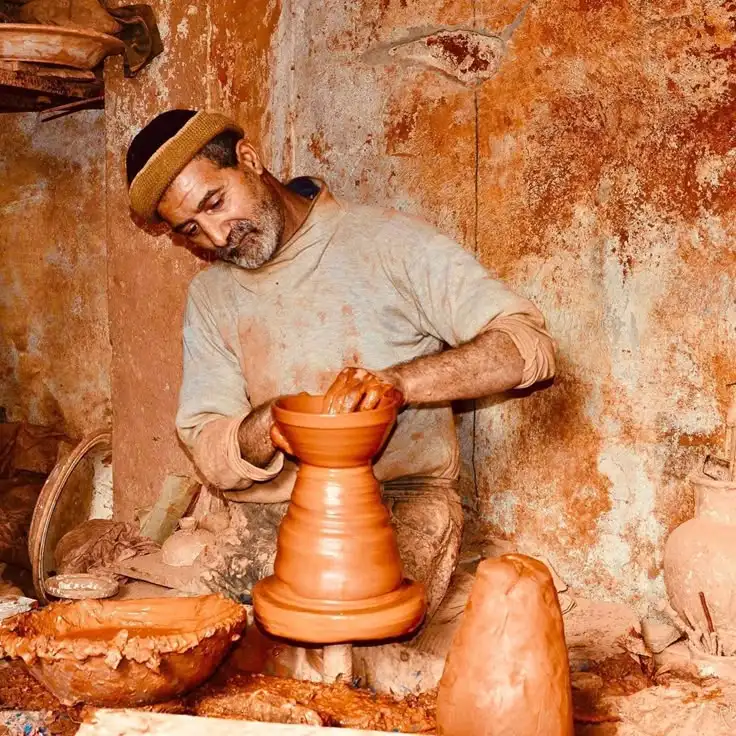
Pottery and Ceramics: Handmade vs. Factory
Handmade Moroccan Pottery:
- Shape: Slight irregularities; not perfectly circular or symmetrical
- Glaze: Hand-painted patterns show brush strokes; colors may bleed slightly
- Bottom: Usually unglazed with artisan marks or finger marks from the wheel
- Weight: Heavier due to thicker clay walls
- Sound: Rings with a clear tone when tapped
- Price: Small bowls $15-40, large tagines $40-120, decorative pieces $50-300
Mass-Produced Factory Ceramics:
- Perfect symmetry and uniformity
- Printed designs (decals) with no brush strokes or color variation
- Fully glazed bottom with factory stamps or “Made in China” labels
- Lighter weight; thinner walls
- Dull thud when tapped
- Very cheap (bowls under $10, tagines under $20)
Silver Jewelry: Traditional vs. Fake
Authentic Berber Silver:
- Purity: Often low-grade silver mixed with copper (traditional method)
- Patina: Develops natural tarnish over time
- Weight: Substantial heft; not lightweight
- Construction: Hand-soldered joints; slight imperfections
- Stones: Real semi-precious stones (coral, amber, turquoise) show natural variations
- Design: Traditional symbolic motifs; tribal patterns
- Price: Bracelets $40-200, necklaces $60-400, elaborate pieces $200-1,000+
Imitation Jewelry:
- Base metal with silver plating
- Maintains a shiny finish; doesn’t tarnish naturally
- Lightweight and hollow-feeling
- Perfect, uniform construction
- Plastic or glass “stones” with a uniform color
- Generic designs without cultural meaning
- Suspiciously cheap (bracelets under $15)
Wood Items: Real Thuya vs. Imitation
Genuine Thuya Wood:
- Grain Pattern: Unique, swirling burl patterns; no two pieces are identical
- Aroma: Distinct cedar-like scent that persists for years
- Color: Rich reddish-brown with natural variation
- Inlay Work: Hand-cut pieces fit together with visible seams
- Weight: Solid and heavy
- Price: Small boxes $30-80, chess sets $60-200, larger pieces $150-600+
Fake Thuya or Other Woods:
- Uniform, printed wood grain or veneer
- No scent or chemical smell
- Flat, uniform color
- Printed patterns or stickers simulating inlay
- Lightweight; hollow or thin walls
- Extremely low prices (boxes under $15)
General Authentication Tips for All Moroccan Crafts:
- Buy Directly from Artisans: Visit workshops, cooperatives, or reputable galleries where you can see items being made
- Ask Questions: Genuine sellers can explain the creation process, materials, and regional origins
- Trust Your Hands: Authentic handmade items have slight irregularities, weight, and tactile quality that machines can’t replicate
- Document Purchases: Get receipts, certificates of authenticity when available
- Price Reality Check: If it seems too cheap to be true, it probably is
- Support Fair Trade: Purchase from women’s cooperatives and certified fair-trade sources
Desert Merzouga Tours Advantage: Our guided experiences include visits to authenticated artisan workshops where you’ll learn directly from master craftspeople. This educational component helps you develop an eye for authenticity while supporting genuine Moroccan artisanal traditions.
The Cultural Significance of Moroccan Handicrafts
Beyond their aesthetic appeal, Moroccan handicrafts carry deep cultural and spiritual significance that enriches their value as both art and artifact.
Berber Symbolism in Carpets and Textiles
Berber women weave their stories, hopes, and beliefs into every carpet. Common symbols include:
- Diamond shapes: Feminine protection, female eye watching over the home
- Zigzag lines: Water, life force, rivers flowing through the mountains
- Cross shapes: Spiritual protection, four cardinal directions
- Triangle patterns: Mountains, strength, the Atlas Mountains homeland
- Abstract figures: May represent fertility, family members, or significant life events
Many weavers claim they don’t plan designs in advance, the patterns emerge intuitively, creating a visual diary of their emotions and experiences during the weaving process.
The Hamsa (Hand of Fatima)
Found throughout Moroccan metalwork and jewelry, the Hamsa represents:
- Protection against the evil eye
- Blessings, power, and strength
- The five pillars of Islam
- A mother’s protective love
Colors and Their Meanings
Traditional Moroccan crafts employ colors with cultural significance:
- Blue: Protection, spirituality, safety (think of Chefchaouen’s blue walls)
- Green: Islam, paradise, peace, renewal
- Red: Strength, vitality, celebration
- Yellow/Gold: Wealth, prosperity, sun
- White: Purity, peace, mourning
- Black: Protection, sophistication, mystery
Ethical Buying Guide: Supporting Moroccan Artisans Responsibly
As travelers increasingly seek meaningful connections and sustainable tourism practices, the ethical purchasing of Moroccan handicrafts becomes both an opportunity and a responsibility.
Why Ethical Buying Matters
Economic Impact:
- Artisan crafts employ over 2 million Moroccans (approximately 20% of the workforce)
- Many artisan families depend entirely on craft sales for income
- Mass tourism and cheap imitations threaten traditional livelihoods
- Your purchase can directly impact a family’s education, healthcare, and quality of life
Cultural Preservation:
- Traditional techniques risk extinction as younger generations seek urban jobs
- The financial viability of crafts encourages knowledge transmission
- Fair pricing recognizes the value of cultural heritage
- Demand for authentic crafts incentivizes skill development
How to Buy Ethically in Morocco
1. Purchase from Cooperatives
Women’s weaving cooperatives, particularly in the Atlas Mountains, offer:
- Direct support to artisan families (90%+ of purchase price goes to makers)
- Fair wages and working conditions
- Community development (schools, healthcare, infrastructure)
- Quality assurance and authenticity
- Opportunity to meet the artisans and see their work process
2. Visit Artisan Workshops
When you buy directly from workshops:
- Observe the creation process firsthand
- Understand the time and skill involved
- Build relationships with craftspeople
- Negotiate fairly (not excessively)
- Commission custom pieces supporting continued work
3. Ask the Right Questions
Responsible retailers should be able to tell you:
- Who made the item (ideally by name or cooperative)
- Where it was made (specific city or region)
- What materials were used (natural vs. synthetic)
- How long did it take to make
- What portion of the price goes to the artisan
4. Fair Negotiation Practices
Bargaining is expected in Moroccan souks, but ethical negotiation means:
- Research approximate fair prices beforehand
- Don’t start negotiations you don’t intend to complete
- Respect the artisan’s first price as a starting point for discussion, not an insult
- Remember that an extra $10 means far more to the artisan than to most travelers
- Walk away if you genuinely can’t agree, but don’t play games
- Avoid comparing prices disrespectfully
5. Support Certified Fair Trade
Look for certifications and partnerships with:
- Max Havelaar Fair Trade (Morocco)
- Anou Berber Cooperative
- Cooperative Artisanale des Femmes (various locations)
- Association Marocaine des Coopératives Artisanales
Red Flags: Unethical or Exploitative Practices
Avoid:
- Shops claiming “friend/family prices” but selling mass-produced items
- Aggressive hard-sell tactics that pressure vulnerable tourists
- Prices so low that they couldn’t possibly support an artisan fairly
- Items marketed as “handmade” but showing machine production signs
- Sellers who can’t or won’t answer questions about artisan origins
- “Tourist cooperatives” that are actually wholesale import shops
Investment vs. Souvenir: Making Meaningful Purchases
Souvenir Shopping ($20-100):
- Small ceramics, pouches, spices, and simple jewelry
- Focus on authentic but modest pieces
- Support local markets and small vendors
- Perfect for gifts and remembrances
Investment Pieces ($200-2,000+):
- Handmade Berber carpets
- Antique furniture or architectural elements
- High-quality leather goods
- Elaborate silver jewelry
- Master craftsman of ceramics or zellige
Heirloom Quality ($2,000+):
- Vintage or antique Berber rugs
- Commissioned furniture with marquetry
- Museum-quality ceramics
- Elaborate metalwork pieces
- Antique doors, screens, or architectural salvage
Bringing Your Purchases Home
Customs and Shipping:
- Save receipts and authenticity certificates
- Understand import regulations in your home country
- Many cooperatives offer international shipping services
- For valuable pieces, consider professional art shipping
- Insurance is recommended for high-value items
Care and Maintenance:
- Request care instructions from sellers
- Handmade items require gentle, specific care
- Professional cleaning for carpets and textiles
- Proper display preserves longevity (avoid direct sunlight for textiles)
Planning Your Moroccan Handicrafts Shopping Experience
Best Times to Shop
High Season (October-April):
- Wider selection as artisans prepare for tourist season
- More artisan workshops are open and active
- Traditional festivals showcase local crafts
- Expect higher prices in peak months (November-March)
Low Season (May-September):
- Better prices due to lower tourist numbers
- More intimate shopping experiences
- Easier negotiation
- Some workshops may have limited hours
- Intense heat in the summer months (especially in desert regions)
Festival Shopping:
- Marrakech Popular Arts Festival (June-July)
- Essaouira Gnaoua Music Festival (June) – combines music and craft markets
- Imilchil Marriage Festival (September) – Atlas Mountains, traditional crafts
- Fez Festival of World Sacred Music (June) – craft exhibitions alongside performances
Essential Shopping Destinations
Marrakech:
- Souk Semmarine: Main thoroughfare for all crafts
- Souk Cherratine: Leather goods and babouches
- Souk Haddadine: Metalwork and lanterns
- Rahba Kedima: Spices, textiles, basketry
- Ensemble Artisanal: Fixed-price government shop (great for price orientation)
Fez:
- Talaa Kebira: Main Medina Street with everything
- Souk Attarine: Spices and perfumes
- Seffarine Square: Metalwork (hear the hammering!)
- Ain Azliten Tannery: Watch leather making, shop directly
- Pottery Quarter: Ceramics workshops outside Bab Ftouh
Essaouira:
- Woodworking Quarter: Thuya wood artisans
- Mellah: Former Jewish quarter, now silver and jewelry
- Fish market crafts: Marine-themed woodwork
- Women’s Argan Cooperative: Argan oil and Berber textiles
Atlas Mountains:
- Telouet: Carpet cooperatives
- Aït Benhaddou: Pottery and textiles (combine with kasba visit)
- Imlil: Berber crafts from mountain villages
- Asni: Saturday souk (weekly market)
Working with Desert Merzouga Tours
Desert Merzouga Tours specializes in creating customized experiences that go beyond typical tourist shopping. Our cultural immersion approach includes:
Artisan Workshop Visits:
- Private access to master craftspeople in their workshops
- Demonstrations of traditional techniques (carpet weaving, pottery throwing, leather tanning)
- Opportunity to try your hand at crafts under expert guidance
- Direct purchasing from makers with fair pricing guaranteed
Cultural Context:
- Professional guides explain the history and significance of each craft
- Understanding symbols, techniques, and regional variations
- Stories of individual artisans and their families
- Connection between crafts and broader Moroccan culture
Ethical Shopping Support:
- Guidance on fair prices and authentic quality
- Introduction to certified cooperatives and fair-trade sources
- Assistance with shipping arrangements for large purchases
- Documentation for customs and authenticity
Customized Itineraries:
- Design your tour around specific craft interests (carpets, ceramics, metalwork, etc.)
- Visit lesser-known artisan villages off tourist routes
- Time allocated for shopping without rushed, pressured experiences
- Combine craft exploration with Morocco’s stunning landscapes and historical sites
Practical Assistance:
- Language translation during negotiations and purchases
- Transportation for bulky items
- Connections with reliable shipping companies
- Post-trip support for any issues
Beyond Shopping: Hands-On Craft Experiences
Cooking Classes with Ceramic Tagines
Learn traditional Moroccan cooking while using and understanding the iconic ceramic tagine. These experiences often include:
- Market tours to select ingredients
- Preparation of dishes like chicken tagine with preserved lemons or vegetable couscous
- Understanding how the ceramic vessel’s design creates tender, flavorful meals
- Opportunity to purchase tagines you’ve used
Pottery Workshops
Get your hands muddy at traditional pottery studios:
- Learn wheel-throwing techniques unchanged for centuries
- Paint your own piece with traditional designs
- Understand the glazing and firing process
- Take home your creation (though firing may require shipping)
Best Locations: Safi (pottery capital), Fez (blue pottery), Tamegroute (green pottery)
Weaving Experiences
Spend time with Berber women in mountain cooperatives:
- Learn basic weaving techniques on traditional looms
- Understand the time investment (3-6 months for one carpet)
- Hear the stories and symbolism behind designs
- Appreciate the meditative, communal nature of the work
Best Locations: Atlas Mountains villages (Telouet, Megdaz, Tifoultoute)
Zellige Tile Workshops
Observe the exacting process of creating mosaic tilework:
- See tiles hand-cut with traditional chisels
- Learn how patterns are designed and planned
- Watch master craftsmen assemble complex geometries
- Create a small zellige coaster or tile to take home
Best Location: Fez medina workshops
Leather Craft Classes
For the adventurous (and strong-stomached):
- Tour working tanneries (bring mint sprigs for your nose!)
- Learn about natural dye sources
- Try your hand at simple leather tooling or stamping
- Understand the ancient preservation techniques
Best Location: Fez tanneries, Marrakech leather souk workshops
Caring for Your Moroccan Handicrafts at Home
Berber Carpets and Textiles
Regular Maintenance:
- Vacuum weekly on lowest setting (use handheld for delicate vintage rugs)
- Rotate every 3-6 months to ensure even wear
- Shake outside periodically to remove deep dust
- Avoid direct sunlight to prevent fading
Deep Cleaning:
- Professional cleaning recommended every 2-3 years
- Hand-wash small pieces with cold water and wool-safe detergent
- Never use harsh chemicals or bleach
- Air dry flat; never machine dry
- Consider professional Berber rug specialists for valuable pieces
Storage:
- Roll (never fold) with acid-free tissue paper
- Store in breathable cotton bags, never plastic
- Keep in cool, dry, dark location
- Check periodically for moths or moisture
Leather Goods
Daily Care:
- Wipe with soft, dry cloth after use
- Allow to air dry if wet; never use heat
- Avoid overstuffing bags and poufs to prevent stress on seams
Conditioning:
- Apply natural leather conditioner every 6-12 months
- Use beeswax-based products for traditional vegetable-tanned leather
- Test on inconspicuous area first
- Buff with soft cloth after conditioning
Storage:
- Stuff bags and shoes with tissue paper to maintain shape
- Store in dust bags or pillowcases
- Keep away from heat sources and direct sunlight
- Allow leather to breathe; avoid plastic containers
Pottery and Ceramics
Usage:
- Hand-wash with mild soap; avoid dishwasher for handmade pieces
- Don’t expose to extreme temperature changes
- Use tagines over low, even heat
- Season new tagines before first use (soak overnight, coat with oil, heat slowly)
Display:
- Avoid areas prone to vibration or accidental knocks
- Use plate stands for decorative pieces
- Keep away from direct sunlight (can fade hand-painted designs)
- Dust gently with soft cloths
Repairs:
- Small chips can be smoothed with fine sandpaper
- Cracks can be stabilized with food-safe epoxy for decorative pieces
- Consider professional ceramic restoration for valuable or antique pieces
Metalwork and Jewelry
Silver Maintenance:
- Tarnish is natural for traditional low-grade silver
- Polish with silver cloth or mild silver cleaner
- Some prefer the antique patina look; others keep it bright
- Store in anti-tarnish bags or with anti-tarnish strips
Copper and Brass:
- Will develop natural patina over time
- Polish with lemon juice and salt for bright finish
- Commercial brass cleaners work but avoid abrasives
- Clear lacquer can preserve bright finish if desired
- Embrace the aged look for authentic character
Lanterns:
- Dust regularly with soft brush or compressed air
- Clean glass panels with glass cleaner
- Use LED candles to avoid smoke damage
- Check that glass is secure before hanging
Wood Items
Regular Care:
- Dust with soft, lint-free cloths
- Avoid water exposure (wipe spills immediately)
- Apply furniture wax or oil annually to maintain luster
- Keep away from heat sources and direct sunlight
Thuya Wood Specific:
- The aromatic scent will diminish over the years, but can be refreshed by light sanding
- Natural oils in the wood help preserve it
- Avoid chemical cleaners
- Buff with a soft cloth to maintainthe sheen
The Future of Moroccan Handicrafts: Sustainability and Innovation
Challenges Facing Artisan Communities
Economic Pressures:
- Mass-produced imports are undercutting traditional artisans
- Young people leaving crafts for modern jobs
- Declining tourism during global crises
- Rising costs of raw materials (wool, leather, silver, wood)
- Difficulty accessing international markets
Cultural Erosion:
- Loss of traditional knowledge as master artisans age
- Urbanization is pulling youth from artisan communities
- Changing tastes among local populations
- Lack of prestige associated with traditional crafts
- Educational systems prioritizing modern careers over artisanal skills
Promising Solutions and Innovations
Fair Trade and Cooperative Models:
- Women’s cooperatives providing fair wages, education, and healthcare
- Direct-to-consumer platforms connecting artisans with global buyers
- Certification programs ensure quality and fair labor practices
- Community investment in training the next generation
Modern Marketing and E-Commerce:
- Online platforms bringing Moroccan crafts to global customers
- Social media showcasing artisan stories and processes
- Influencer partnerships raising awareness
- Virtual shopping experiences during and after the pandemic
Design Innovation:
- Collaboration between traditional artisans and contemporary designers
- Adapting traditional techniques to modern aesthetics
- New applications for ancient crafts (fashion, interior design, architecture)
- Preservation of technique while evolving designs
Sustainable Practices:
- Emphasis on natural, local materials
- Water conservation in tanning and dyeing processes
- Solar energy in workshops
- Waste reduction and recycling (Boucherouite rugs from textile scraps)
Tourism Integration:
- Experiential tourism supporting artisan communities
- Workshop visits provide income and cultural exchange
- Craft-focused travel itineraries
- Education programs for tourists about authentic crafts
Government and NGO Support:
- Skills training programs
- Marketing assistance for cooperatives
- Quality certifications and labeling
- Infrastructure improvements in artisan regions
- Microfinance for artisan enterprises
How Travelers Can Support Sustainable Crafts
Choose Experiences Over Souvenirs:
- Invest in fewer, higher-quality pieces
- Prioritize items with known artisan provenance
- Consider the story and impact, not just the price
Share Your Discoveries:
- Post about authentic artisans and cooperatives on social media
- Write reviews highlighting ethical producers
- Recommend specific artisans to fellow travelers
- Share knowledge about authentication
Support Training Programs:
- Some cooperatives accept donations for apprenticeships
- Purchase items specifically for funding skills transmission
- Visit programs training young artisans
Respect Artisan Rights:
- Don’t share proprietary techniques or designs without permission
- Credit artisans when displaying or sharing their work
- Understand that designs have cultural and intellectual value
Frequently Asked Questions About Moroccan Handicrafts
Q: Is bargaining expected when buying handicrafts in Morocco?
A: Yes, negotiation is a normal part of Moroccan commercial culture, especially in souks. However, ethical bargaining means being respectful, not beating down artisans to unreasonable prices. A general rule: the seller’s first price might be 30-50% above fair value, but don’t aim to pay less than 60-70% of their initial quote. Fixed-price government shops (Ensemble Artisanal) provide good baseline prices. Never bargain aggressively at cooperatives where artisans already offer fair prices.
Q: How can I ship large items (like carpets or furniture) home?
A: Many reputable shops and cooperatives offer international shipping services. Get detailed quotes including all costs, insurance, and estimated delivery time. Keep all receipts and customs documentation. For valuable pieces, consider specialized art shipping companies. DHL, FedEx, and UPS operate in Morocco for smaller items. Budget 4-8 weeks for delivery and factor costs into purchase decision (shipping can add 20-40% to item cost).
Q: Are vintage Berber rugs better than new ones?
A: Different, not necessarily better. Vintage rugs (30-100+ years old) offer:
- Unique historical value
- Natural patina and color mellowing
- Potentially rarer designs
- Investment potential
New rugs offer:
- Direct support to current artisans
- Cleaner, more durable condition
- Ability to commission custom sizes and colors
- Often brighter, more vibrant colors
Both authentic vintage and new handmade rugs have value depending on your preferences and goals.
Q: What should I budget for authentic Moroccan handicrafts?
A: Budget guidelines for authentic, artisan-made pieces:
- Small ceramics/pottery: $15-60
- Leather babouches: $20-60
- Leather bags: $40-200
- Metal lanterns: $30-150
- Small thuya boxes: $30-80
- Medium Berber carpets (6×9 feet): $400-1,200
- Large Berber carpets (8×10 feet): $800-3,000
- Berber silver jewelry: $40-400
- Antique or master craftsman pieces: $500-$10,000+
Remember: if prices seem too good to be true, you’re probably looking at mass-produced items.
Q: Can I take antiquities out of Morocco?
A: Morocco has strict laws protecting cultural patrimony. Items over 100 years old require export permits, which are difficult to obtain. Antique dealers should provide the necessary documentation. Never attempt to smuggle antiquities; penalties are severe. For pieces 50-100 years old, maintain excellent documentation and receipts. Most tourists purchase recently made traditional crafts, which don’t face export restrictions but should still be documented for customs.
Q: What’s the difference between Beni Ourain and other Berber rugs?
A: Beni Ourain rugs originate from the Middle Atlas Mountains and feature:
- Thick, plush cream/ivory wool pile
- Black or brown geometric diamond patterns
- Minimalist aesthetic
- Traditionally used as wedding blankets and winter bedding
- Most popular style internationally
Other Berber rugs include:
- Azilal: Colorful, abstract designs from High Atlas
- Boucherouite: Recycled textile rugs in vibrant colors
- Kilims: Flat-woven without pile
- Zanafi: High pile with minimal patterns
- Hanbel: Flat-weave striped wool blankets
Each region and tribe has distinct styles reflecting their heritage.
Q: How do I know if silver jewelry is authentic?
A: Traditional Berber silver is often low-grade (mixed with copper), which is authentic to the craft. Look for:
- Substantial weight
- Hand-soldered construction
- Natural patina/tarnish
- Real semi-precious stones with color variations
- Traditional tribal designs
- Artisan stamps or marks
Modern sterling silver (92.5% pure) might have hallmarks. Request testing if purchasing expensive pieces. Authentic Berber jewelry may not be pure silver, but it is still genuine traditional work.
Q: What handicrafts make the best gifts?
A: Highly giftable Moroccan handicrafts:
- Argan oil and Moroccan beauty products (support women’s cooperatives)
- Small thuya boxes (beautiful, portable, aromatic)
- Ceramic tea sets or individual pieces
- Leather pouches, wallets, or small bags
- Berber jewelry (especially Hamsa designs)
- Spices and spice blends in traditional tins
- Small tagines (decorative or functional)
- Babouche slippers (universal sizes available)
- Hand-woven tea towels or napkins
- Moroccan mint tea glasses and tea
For special occasions: commissioned jewelry, small carpets, or quality leather goods.
Conclusion: Bringing Morocco Home, One Craft at a Time
Moroccan handicrafts represent far more than beautiful souvenirs, they are tangible connections to ancient traditions, individual artisan stories, and the rich cultural tapestry of North Africa. Each handmade Berber carpet carries the weaver’s spirit and heritage. Every piece of traditional Moroccan leatherwork reflects centuries of refined techniques. Authentic Moroccan handicrafts transform houses into homes filled with meaning, beauty, and global perspective.
When you choose to invest in genuine artisan work, you’re participating in cultural preservation. Your purchase supports families, keeps ancient skills alive, and acknowledges that some things, skill, heritage, artistry- cannot be mass-produced or rushed. You’re voting with your wallet for a world where craftsmanship matters, where tradition has value, and where beauty serves purpose.
As you plan your Moroccan adventure with Desert Merzouga Tours, remember that the most valuable souvenirs are the ones that carry authentic stories. Whether you’re standing in a Fez pottery workshop watching a master shape clay, sitting with Berber women as they weave in the Atlas Mountains, or navigating the aromatic chaos of the Marrakech souks, these moments of connection with Moroccan artisanal traditions will enrich your journey far beyond the physical objects you bring home.
The ultimate Moroccan souvenir isn’t just the carpet, the lantern, or the ceramic bowl; it’s the understanding of the hands that made it, the culture that inspired it, and the responsibility you carry as a custodian of that heritage. Shop thoughtfully, buy ethically, and let each authentic Moroccan handicraft you acquire remind you of the extraordinary craftsmanship, resilience, and beauty of Moroccan artisan communities.
Your journey through Morocco’s handicraft heritage awaits. Let Desert Merzouga Tours guide you beyond the surface of tourism to the heart of Moroccan craftsmanship, where every purchase becomes a meaningful connection, every artisan interaction a treasured memory, and every handcrafted piece a story worth telling.
Ready to Explore Authentic Moroccan Handicrafts?
Desert Merzouga Tours specializes in customized journeys that go beyond ordinary tourism to create meaningful cultural connections. Our expertly crafted itineraries include:
- Artisan workshop visits with master craftspeople
- Hands-on craft experiences (weaving, pottery, cooking)
- Ethical shopping guidance supporting local communities
- Fair trade cooperative connections in the Atlas Mountains
- Shipping assistance for your treasured purchases
- Cultural context from knowledgeable local guides
Whether your passion is Berber carpets, Moroccan ceramics, traditional leatherwork, or the full spectrum of Moroccan craftsmanship, we’ll design your perfect journey through Morocco’s artisan heartland, from the blue pottery studios of Fez to the weaving cooperatives of the High Atlas, from the tanneries of Marrakech to the thuya workshops of Essaouira.
Let us help you discover, appreciate, and ethically support the living heritage of Moroccan handicrafts while experiencing the stunning landscapes, rich history, and warm hospitality that make Morocco unforgettable.
Contact Desert Merzouga Tours today to begin planning your authentic Moroccan handicrafts adventure.