Table of Contents
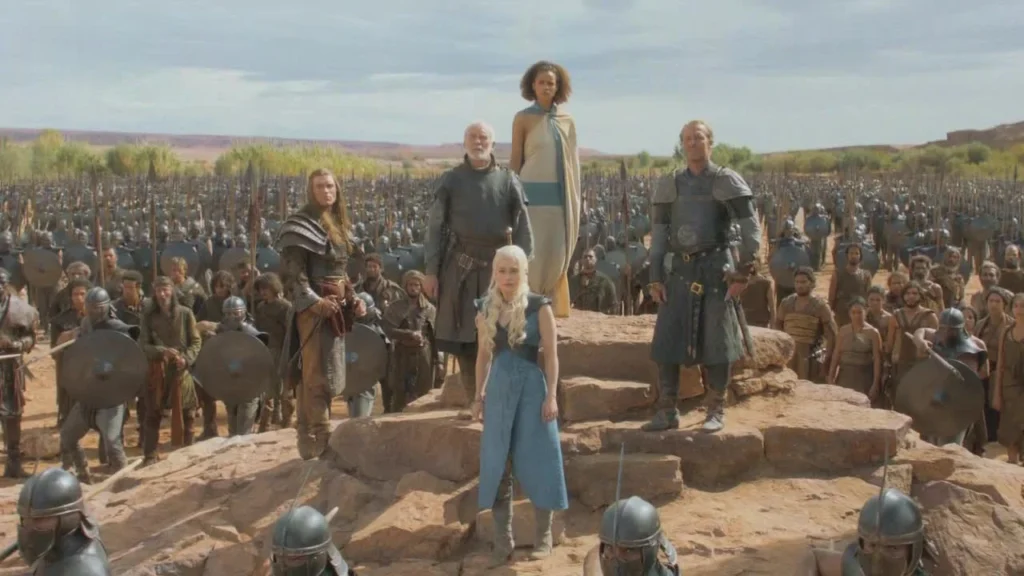
Game of Thrones was filmed in Morocco primarily across three locations: Essaouira (the city of Astapor), Aït Benhaddou (Yunkai), and Atlas Studios in Ouarzazate (Pentos). These locations featured prominently in Season 3 as Daenerys Targaryen built her army of Unsullied.
If you’ve ever watched Daenerys Targaryen walk through the gates of Yunkai or witnessed the Mother of Dragons liberating Astapor’s Unsullied army, you’ve already glimpsed the stunning landscapes of Morocco. For Game of Thrones fans planning their next adventure, Morocco offers a rare opportunity to step into the world of Westeros and experience these iconic filming locations firsthand.
Morocco’s dramatic deserts, ancient kasbahs, and medieval coastal fortresses provided the perfect backdrop for some of Season 3’s most memorable scenes. Whether you’re a die-hard fan seeking to walk in Khaleesi’s footsteps or a traveler looking to explore Morocco’s rich cultural heritage, this comprehensive guide will help you plan the ultimate Game of Thrones tour Morocco experience.
Game of Thrones Morocco: At a Glance
Before we dive deep into each location, here’s a quick reference table comparing the real-world Game of Thrones filming locations Morocco with their on-screen counterparts:
| Real Location | Game of Thrones City | Key Scenes & Season |
| Essaouira (Atlantic Coast) | Astapor (Slaver’s Bay) | Daenerys acquiring the Unsullied army, slave market scenes (Season 3) |
| Aït Benhaddou (Near Ouarzazate) | Yunkai (Yellow City) | Daenerys approaching the city gates, siege scenes (Season 3) |
| Atlas Studios, Ouarzazate | Pentos & Slaver’s Bay Set Pieces | Various interior and constructed exterior scenes (Season 3) |
Essaouira Game of Thrones: Walking Through Astapor’s Slave Markets
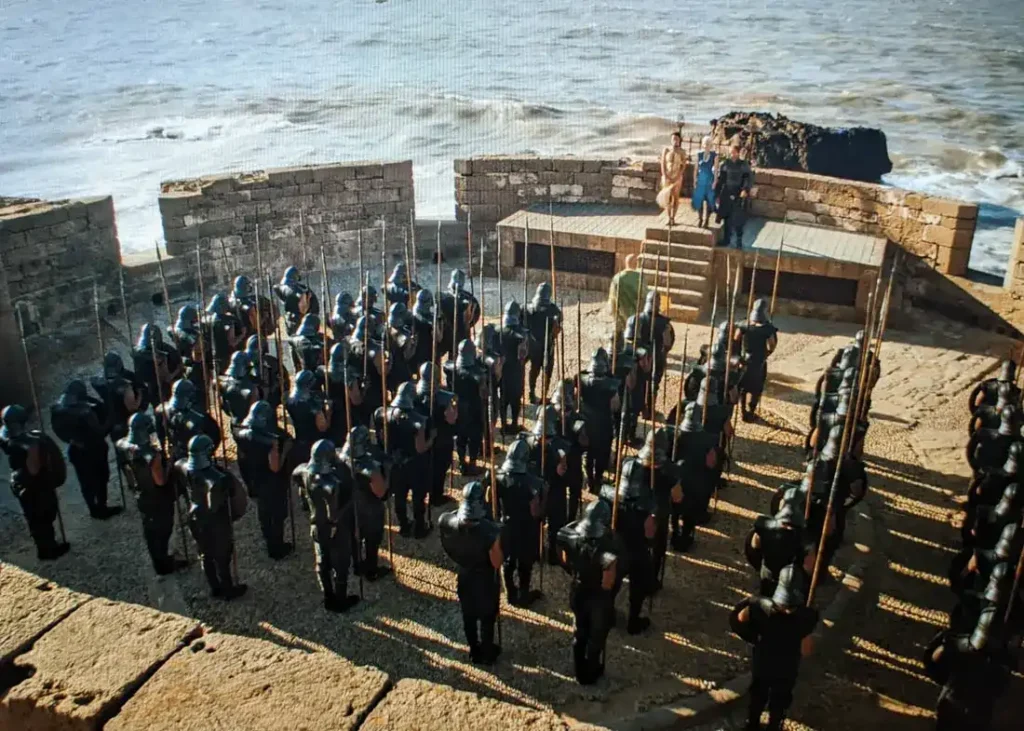
The windswept coastal city of Essaouira Game of Thrones transformed into the brutal slave city of Astapor, where Daenerys Targaryen made one of the series’ most pivotal power moves. This UNESCO World Heritage Site, located on Morocco’s Atlantic coast, became the backdrop for the iconic scene where the Mother of Dragons acquired her legendary Unsullied army.
The Skala de la Ville: Astapor’s Defensive Walls
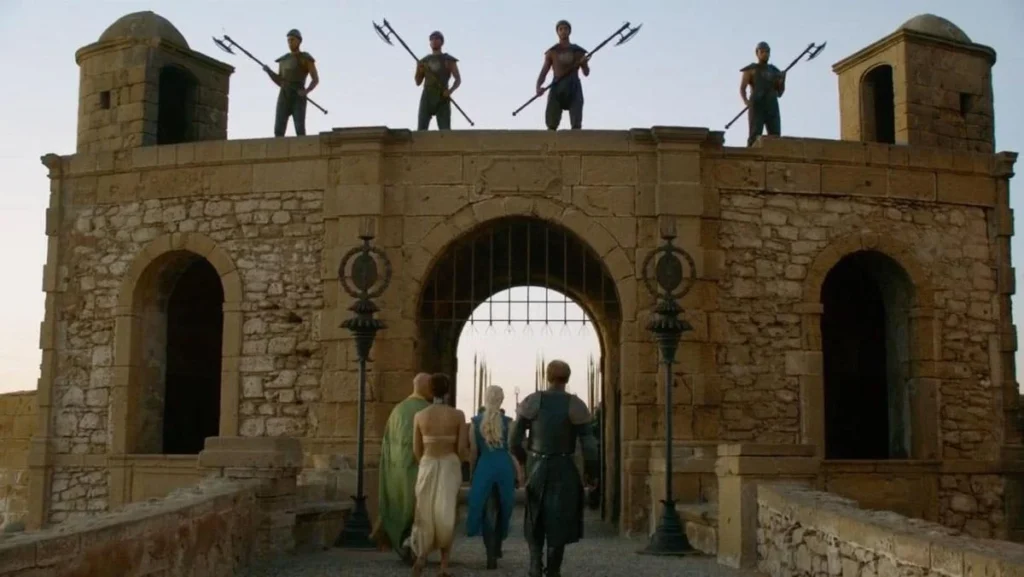
The most recognizable Game of Thrones filming location in Essaouira is the Skala de la Ville, an impressive 18th-century seafront fortification. The production team used these ancient ramparts to create Astapor’s defensive walls and walkways. As you stroll along the battlements today, you’ll walk the same path where Daenerys surveyed rows of Unsullied warriors before her famous exchange with the slave master Kraznys mo Nakloz.
The weathered stone walls, lined with Portuguese bronze cannons, overlook the Atlantic Ocean, though on screen, they framed the fictional Slaver’s Bay. The contrast between Essaouira’s real-world charm and its dark on-screen portrayal makes visiting this location particularly fascinating for fans.
Beyond Game of Thrones: Essaouira’s Rich Culture
While Game of Thrones in Morocco brought international attention to Essaouira, the city offers far more than filming locations. The medina’s blue-and-white streets bustle with artists, musicians, and craftspeople. The port brings in fresh seafood daily, which you can enjoy grilled at harbourside restaurants. The city’s relaxed vibe and artistic heritage make it a perfect stop on any Moroccan itinerary.
Pro Tips for Visiting Essaouira
- Visit early morning or late afternoon: The Skala de la Ville can get crowded with tour groups mid-day. Early visits offer better photo opportunities and fewer crowds, allowing you to imagine yourself in Daenerys’s shoes.
- Bring a light jacket: Even in summer, the Atlantic winds can be strong and cool, especially along the ramparts where many scenes were filmed.
- Combine with beach time: Essaouira’s beaches are excellent for windsurfing and kitesurfing. After exploring filming locations, many visitors enjoy the coastal activities.
- Stay overnight: Although it’s possible as a day trip from Marrakech (2.5 hours), staying overnight allows you to experience the city’s stunning sunset over the Atlantic and its vibrant nighttime atmosphere in the medina.
Aït Benhaddou Game of Thrones: The Yellow City of Yunkai
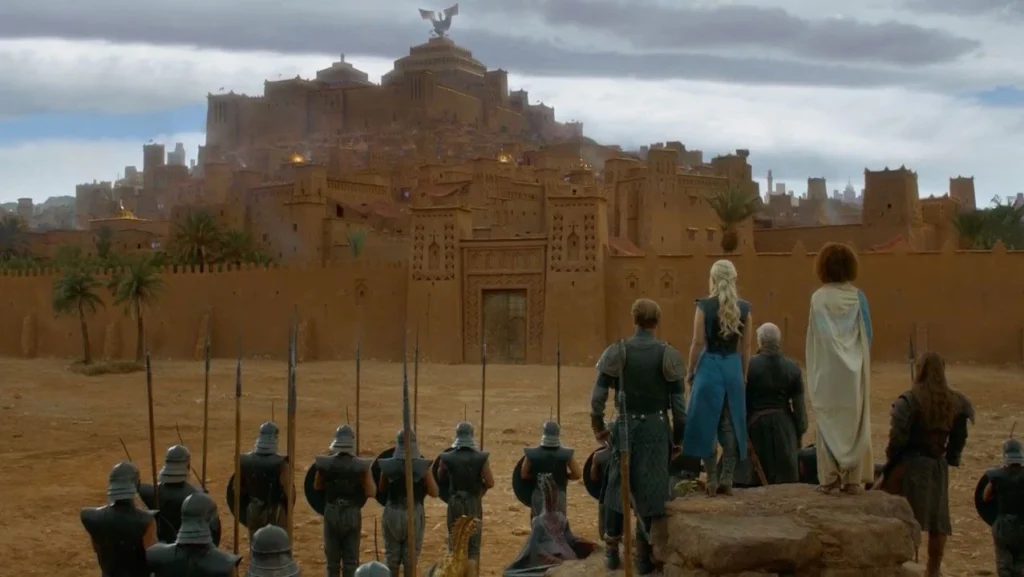
Perhaps the most spectacular of all Game of Thrones filming locations Morocco has to offer, Aït Benhaddou Game of Thrones served as the Yellow City of Yunkai. This fortified village, or ksar, is one of Morocco’s most photographed sites and has appeared in numerous Hollywood productions, but its role in Game of Thrones remains among the most memorable.
UNESCO Heritage Meets Westeros
Aït Benhaddou’s UNESCO World Heritage status dates back to 1987, recognizing its exceptional example of southern Moroccan architecture. The earthen clay buildings, constructed using traditional techniques, have stood for centuries along the former caravan route between the Sahara and Marrakech. When Game of Thrones scouts discovered this location, they found the perfect real-world equivalent to George R.R. Martin’s description of Yunkai.
The ksar’s distinctive reddish-brown walls and strategic hilltop position made minimal CGI necessary. What you see on screen is largely what exists in reality, a testament to both the location’s natural grandeur and Morocco’s architectural heritage.
The Gates Daenerys Walked Through
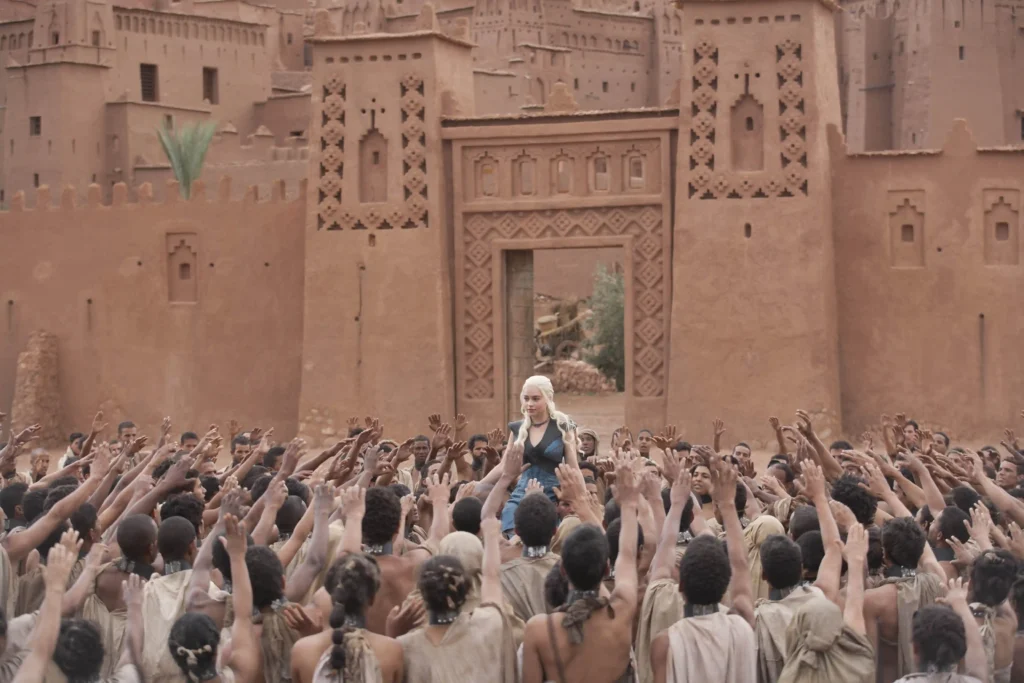
Die-hard fans often ask: which exact gate did Daenerys approach in Season 3, Episode 7 when she demanded the slave masters surrender? The answer is the main southern gate, accessible after crossing the seasonal river (usually dry except during spring rains) and climbing the winding path through the village.
The production team enhanced this gate with temporary set pieces, but the fundamental structure you’ll see today is identical to what appeared on screen. Standing before these gates, you can perfectly recreate one of Season 3’s most powerful images: the Mother of Dragons confronting another slave city with her growing army at her back.
Exploring the Ksar: A Living Film Set
Unlike abandoned film sets, Aït Benhaddou remains partially inhabited. Several families still live within the ancient walls, maintaining traditional lifestyles that have remained largely unchanged for generations. As you climb through the narrow passages to the granary at the summit, you’ll pass homes, small shops selling local crafts, and terraces where residents dry herbs and dates.
The climb to the top takes about 20-30 minutes and rewards visitors with panoramic views of the surrounding valley, palm groves, and the Atlas Mountains. This vantage point offers incredible photography opportunities; bring a camera with a good zoom lens to capture both sweeping landscapes and detailed architectural elements.
Pro Tips for Visiting Aït Benhaddou
- Arrive before 10 AM or after 4 PM: Tour buses flood the site mid-day. Early morning light is particularly beautiful for photography, casting golden hues on the earthen walls.
- Wear comfortable walking shoes: The paths are uneven, steep in places, and can be slippery if there’s been recent rain. Proper footwear is essential for safely exploring the entire site.
- Support local guides: While you can explore independently, hiring a local guide (typically 100-150 MAD) provides context about the architecture, history, and specific filming locations that you might otherwise miss.
- Bring water and sun protection: There’s limited shade within the ksar, and the North African sun can be intense, especially during summer months.
- Stay in the new village: Several guesthouses across the river offer overnight accommodations with views of the illuminated ksar after sunset, a magical experience not available to day-trippers.
Atlas Studios Ouarzazate: Hollywood’s Moroccan Outpost
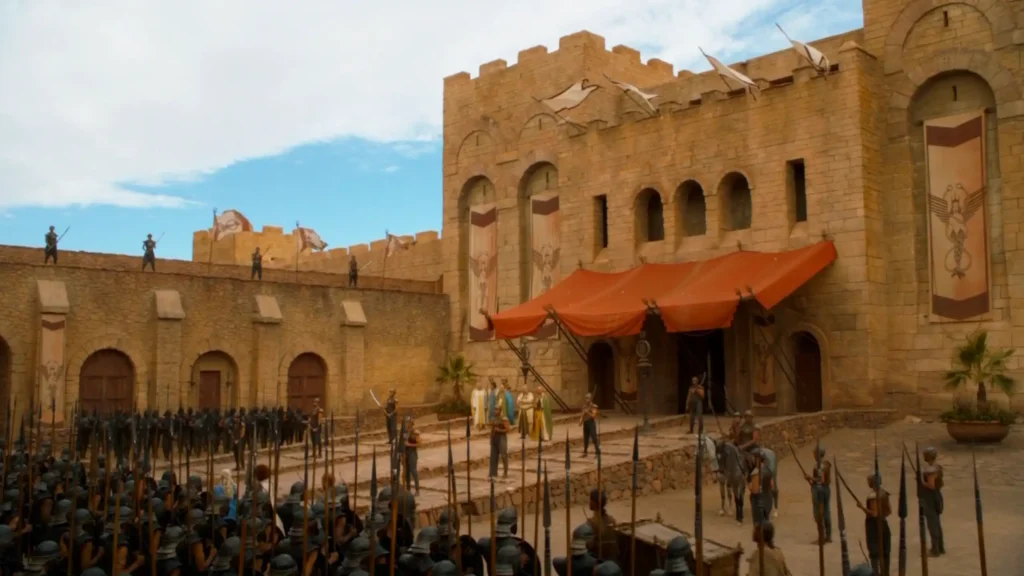
Located in Ouarzazate, often called the “Gateway to the Sahara” and “Hollywood of Africa,” Atlas Studios represents a different aspect of Game of Thrones Morocco filming locations. While Essaouira and Aït Benhaddou offered natural settings, Atlas Studios provided controlled environments where the production team constructed elaborate sets for Pentos and interior scenes from Slaver’s Bay cities.
Behind the Scenes: Visiting the Actual Sets
Atlas Studios offers guided tours that take visitors through various film sets, including those used for Game of Thrones. While some sets have been dismantled or repurposed for other productions, several Game of Thrones locations Morocco remain visible, along with sets from Gladiator, Kingdom of Heaven, and other major films.
The studio tour typically lasts 1-2 hours and includes walk-throughs of various reconstructed historical settings, Egyptian temples, Roman arenas, medieval fortresses, and desert palaces. Guides explain how different areas were adapted for Game of Thrones, demonstrating the magic of movie-making and how minimal set dressing transforms locations.
What to Expect During Your Visit
Studio hours are typically 8 AM to 6 PM, with tours running throughout the day. Entrance fees are modest (around 50-70 MAD), making it an accessible addition to any Game of Thrones tour Morocco itinerary. The studios are located about 5 kilometers from Ouarzazate city center, easily reachable by taxi or as part of organized tours.
Photography is permitted throughout most of the studio, though some areas under active production may be restricted. The vast scale of the sets and dramatic desert backdrop make for impressive photos, especially during golden hour when the warm light enhances the earthen architecture.
Pro Tips for Atlas Studios
- Call ahead to check tour availability: Occasionally, active film productions may limit public access to certain areas. A quick phone call can save disappointment.
- Combine with other Ouarzazate attractions: The Taourirt Kasbah and Cinema Museum are nearby and can be visited in the same afternoon as Atlas Studios.
- Ask specific questions: Guides appreciate engaged visitors who ask about particular scenes or technical aspects of filming. Don’t hesitate to inquire about Game of Thrones specifically.
- Consider timing with weather: Summer can be extremely hot in Ouarzazate. Spring (March-May) and autumn (September-November) offer more comfortable temperatures for outdoor studio exploration.
3 Spots Only Die-Hard Game of Thrones Fans Know
Beyond the main Game of Thrones filming locations Morocco offers, true superfans seek out these lesser-known connections:
1. The Palm Grove Between Takes
The lush palm groves surrounding Aït Benhaddou weren’t just a backdrop; they served as holding areas for extras and equipment during Season 3 filming. Residents recall hundreds of crew members setting up temporary camps among the date palms. Today, walking these same groves offers a quieter, reflective connection to the production’s massive scale. Several paths wind through the oasis, and asking villagers about “where the dragon mother’s army waited” often yields fascinating behind-the-scenes stories.
2. The Spice Market Scene Location in Essaouira
While most fans photograph the Skala de la Ville, fewer discover that scenes depicting Astapor’s spice and slave markets were filmed in specific corners of Essaouira’s medina. The narrow alley near the jewelers’ souk, with its arched passageways and stacked goods, appears briefly in several market scenes. Local shopkeepers sometimes share stories of the filming process, including how they had to temporarily remove modern signage and adapt their displays to fit the ancient aesthetic.
3. The Base Camp at Ouarzazate’s Ksar Ait Ben Moro
Production crews used the less-famous Ksar Ait Ben Moro, about 7 kilometers from Aït Benhaddou, as a base camp and for certain wide-angle shots that required untouched desert backgrounds. This smaller, less-visited ksar sees far fewer tourists but offers an authentic glimpse of traditional Berber architecture without crowds. Knowledgeable local guides can point out exact vantage points used for establishing shots of Daenerys’s approaching armies.
How to Visit All Game of Thrones Locations in Morocco in 4 Days
Planning a comprehensive Game of Thrones tour Morocco requires strategic routing to maximize time at filming locations while experiencing Morocco’s broader cultural treasures. Here’s an optimized 4-day itinerary:
Day 1: Marrakech to Essaouira (Astapor)
Depart Marrakech early morning for the 2.5-hour drive to Essaouira along the scenic coastal route. Arrive mid-morning and spend the day exploring Essaouira Game of Thrones locations, particularly the Skala de la Ville where Astapor’s walls were filmed. Walk through the medina’s blue-and-white streets, visit the port for fresh seafood lunch, and photograph the ramparts during golden hour. Stay overnight in a traditional riad within the medina walls to experience the city’s evening atmosphere.
Recommended activities: Guided GoT filming location tour (morning), medina exploration (afternoon), seafood dinner at port-side restaurant (evening).
Day 2: Essaouira to Ouarzazate via Atlas Mountains
Depart Essaouira after breakfast for the spectacular drive through the High Atlas Mountains to Ouarzazate (approximately 5-6 hours with stops). The route passes through traditional Berber villages and offers stunning mountain vistas. Arrive Ouarzazate late afternoon, check into accommodation, and visit Atlas Studios for an evening tour. The studios’ dramatic desert backdrop photographs beautifully during sunset.
Recommended activities: Atlas Mountain photo stops (mid-morning), traditional Berber lunch in Tizi n’Tichka, Atlas Studios guided tour (late afternoon).
Day 3: Aït Benhaddou (Yunkai) Deep Dive
Dedicate this entire day to exploring Aït Benhaddou Game of Thrones locations thoroughly. Arrive early (before tour buses at 8 AM) to photograph the ksar in morning light. Hire a local guide to learn about the specific gates and areas where filming occurred. Climb to the granary summit for panoramic views. Return in late afternoon for different lighting conditions and fewer crowds. Consider staying in a guesthouse across from the ksar to watch it illuminated after sunset, a view most day-trippers miss.
Recommended activities: Early morning photography session (8-10 AM), guided historical and filming location tour (10 AM-12 PM), lunch with ksar views, afternoon exploration of surrounding palm groves and lesser-known filming spots (3-5 PM), sunset from accommodation terrace.
Day 4: Return to Marrakech via Scenic Route
After a final morning at Aït Benhaddou (catch sunrise if staying overnight), begin the return journey to Marrakech (approximately 4 hours). The route retraces the High Atlas crossing but offers different perspectives in the opposite direction of lighting. Schedule stops at roadside cooperatives to see traditional argan oil production and purchase authentic Moroccan crafts. Arrive in Marrakech late afternoon with time for evening exploration of Jemaa el-Fnaa square or a celebratory dinner.
Recommended activities: Sunrise photography at Aït Benhaddou (optional), argan oil cooperative visit (mid-morning), traditional lunch in Taddert, arrival in Marrakech with evening free.
Transportation and Logistics
This itinerary works best with private transportation, allowing flexibility for photo stops and optimal timing at each location. Desert Merzouga Tours offers customized Game of Thrones tour Morocco packages with professional drivers who know the filming locations intimately and can suggest the best viewing angles and times. Private tours eliminate the stress of navigation and parking while providing cultural context through knowledgeable guides.
Alternatively, budget-conscious travelers can use CTM buses between cities, though this reduces flexibility for specific filming location visits and optimal photography times. Car rental is possible but requires comfort with Moroccan driving conditions and mountain roads.
Beyond Westeros: Morocco’s Other Film Legacy
While Game of Thrones filming locations Morocco provide compelling reasons to visit, the country’s cinematic heritage extends far beyond a single series. These same locations have hosted numerous legendary productions, enriching your visit with layers of film history.
Aït Benhaddou alone has appeared in Gladiator (2000), Lawrence of Arabia (1962), The Mummy (1999), Prince of Persia (2010), and Babel (2006). Walking through the ksar, you’re not just retracing Daenerys’s steps, you’re following Maximus’s path to the arena, Lawrence’s desert campaigns, and countless other cinematic journeys.
Essaouira has hosted Orson Welles’s Othello (1951) and served as a favorite location for music videos and international commercials. The city’s distinctive blue-and-white aesthetic and dramatic coastal setting continue attracting productions seeking authentic Mediterranean ambiance.
Atlas Studios in Ouarzazate maintains sets from dozens of major productions. Beyond Game of Thrones locations Morocco, visitors encounter Egyptian temples from The Mummy, Roman arenas from Gladiator, and medieval fortresses from Kingdom of Heaven, all standing side by side in the desert, creating a surreal landscape where historical periods collide.
Experiencing Moroccan Culture Beyond the Screen
A Game of Thrones tour Morocco offers more than location spotting; it provides immersion into a rich, living culture that predates Westeros by millennia. The same landscapes that framed Daenerys’s journey have witnessed Berber dynasties, Arab conquests, European colonial ambitions, and modern independent Morocco’s emergence.
The kasbahs and ksour that served as filming locations represent centuries of architectural innovation adapted to harsh desert climates. Traditional pisé (rammed earth) construction techniques, still practiced today, create buildings that remain cool in summer heat and warm during cold desert nights—practical solutions that coincidentally photograph beautifully on film.
Berber hospitality extends beyond filming locations. In villages surrounding Aït Benhaddou, families maintain traditional tea ceremonies, craft cooperatives preserve ancient weaving techniques, and agricultural practices follow rhythms unchanged for generations. Many visitors find these authentic cultural encounters more memorable than the filming locations themselves.
Desert Merzouga Tours specializes in combining Game of Thrones location visits with immersive cultural experiences, cooking classes with local families, guided medina tours by artisans, traditional hammam sessions, and encounters with nomadic communities. This approach ensures your Game of Thrones tour Morocco delivers both cinematic thrills and genuine cultural understanding.
Practical Planning for Your Game of Thrones Morocco Adventure
Best Time to Visit
Morocco’s diverse geography means different seasons suit different locations. For comprehensive Game of Thrones filming locations Morocco tours, spring (March-May) and autumn (September-November) offer the best balance, pleasant temperatures across all locations, manageable crowds, and excellent photography light.
Summer (June-August) brings intense heat to Ouarzazate and the Atlas regions, though coastal Essaouira remains comfortable. Winter (December-February) can see snow in the High Atlas passes, potentially complicating travel, though it offers unique photography opportunities with snow-capped mountains behind desert kasbahs.
What to Pack
Essential items for Game of Thrones location hunting:
- Comfortable walking shoes with good traction for climbing through Aït Benhaddou’s steep passages
- Layered clothing for temperature variations between coastal, mountain, and desert regions
- Sun protection (hat, sunglasses, high-SPF sunscreen) is essential year-round
- A camera with extra batteries and memory cards, these locations inspire thousands of photos
- Reusable water bottle to stay hydrated while minimizing plastic waste
- Light scarf or shawl for visiting kasbahs and respecting local customs
- Portable phone charger for GPS navigation and constant photo-taking
Budgeting Your Trip
Game of Thrones tour Morocco costs vary significantly based on travel style. Budget-conscious backpackers can visit all locations, spending $40-60 daily using public transport and basic accommodations. Mid-range travelers seeking comfort and private guides typically budget $150-250 per person daily. Luxury travelers preferring premium riads, private drivers, and exclusive experiences should budget $300-500+ daily.
Entrance fees are minimal, and most filming locations are free or charge nominal amounts (50-150 MAD). The primary costs involve transportation, accommodation, and dining. Professional guided tours like those from Desert Merzouga Tours provide excellent value by handling logistics, negotiating local prices, and maximizing time efficiency.
Frequently Asked Questions About Game of Thrones in Morocco
Where exactly was Game of Thrones filmed in Morocco?
Game of Thrones was filmed in Morocco at three primary locations: Essaouira (which became Astapor), Aït Benhaddou near Ouarzazate (which portrayed Yunkai), and Atlas Studios in Ouarzazate (used for Pentos and various Slaver’s Bay interiors). All filming occurred during Season 3 production in 2012.
Can you visit Game of Thrones filming locations in Morocco?
Yes, all Game of Thrones filming locations Morocco are accessible to tourists. Essaouira and Aït Benhaddou are public sites that welcome visitors year-round. Atlas Studios offers guided tours during regular business hours. No special permits or advance booking are required, though organized tours can enhance the experience with expert guides.
Which Game of Thrones scenes were filmed in Morocco?
Morocco hosted Daenerys Targaryen storyline scenes from Season 3. Key sequences include: her acquisition of the Unsullied army in Astapor (Essaouira), the siege and liberation of Yunkai (Aït Benhaddou), meetings with slave masters, and various marketplace and army camp scenes filmed at Atlas Studios or surrounding desert locations.
How long does it take to visit all Game of Thrones locations in Morocco?
A comprehensive Game of Thrones tour Morocco can be completed in 4 days, though many visitors prefer 5-6 days to explore more thoroughly and include additional Moroccan experiences. A rushed 3-day itinerary is possible, but it limits time at each location and requires long driving days.
Is Aït Benhaddou worth visiting beyond Game of Thrones?
Absolutely. Aït Benhaddou Game of Thrones fame, represents just one chapter in its rich history. This UNESCO World Heritage Site showcases exceptional traditional Moroccan architecture, has appeared in dozens of major films, and offers insight into centuries of Berber culture. Even visitors with no interest in Game of Thrones consistently rate it among Morocco’s must-see destinations.
Do I need a guide to visit Game of Thrones filming locations?
Guides aren’t mandatory but significantly enhance the experience. Local guides identify specific filming spots, share behind-the-scenes stories from production crews, and provide historical context that deepens appreciation. At Aït Benhaddou particularly, guides help navigate the complex layout and point out details easily missed by independent visitors.
What’s the best way to travel between filming locations?
Private transportation offers the most flexibility for Game of Thrones location tours, allowing optimal timing for photography and freedom to explore. Tour operators like Desert Merzouga Tours provide experienced drivers familiar with the routes and locations. Alternatively, rental cars work for confident drivers, while intercity buses serve budget travelers willing to sacrifice some convenience.
Are there any Game of Thrones tours in Morocco?
Yes, several tour operators offer dedicated Game of Thrones Morocco packages. Desert Merzouga Tours specializes in customized itineraries that visit all filming locations while incorporating broader Moroccan cultural experiences. These packages typically include transportation, accommodations, guides, and sometimes themed extras like traditional costumes for photos at filming sites.
Can you still see the Game of Thrones sets in Morocco?
The locations themselves remain unchanged; Essaouira’s ramparts and Aït Benhaddou’s gates look exactly as they did during filming since they’re permanent historical structures. However, temporary set pieces, props, and decorations have been removed. Atlas Studios retains some set elements, though they may be repurposed for other productions. The essential architectural backdrops that made these locations recognizable on screen remain intact.
Your Westeros Adventure Awaits in Morocco
Game of Thrones in Morocco offers fans a unique opportunity to step directly into their favorite series’ world while discovering a country rich in history, culture, and natural beauty. From Essaouira’s windswept ramparts to Aït Benhaddou’s ancient gates, these filming locations provide more than photo opportunities; they connect viewers with the real places that brought George R.R. Martin’s vision to life.
The beauty of a Game of Thrones tour Morocco lies in its dual nature. You’ll satisfy your fandom by retracing Daenerys’s path through Slaver’s Bay, but you’ll also experience Morocco’s authentic treasures, traditional architecture, Berber hospitality, stunning landscapes, and living cultures that have thrived for millennia. The same qualities that attracted HBO’s location scouts, dramatic scenery, well-preserved historical sites, and distinctive aesthetics, make Morocco an extraordinary travel destination regardless of cinematic connections.
Whether you’re planning a dedicated 4-day filming location pilgrimage or incorporating these sites into a broader Moroccan adventure, proper planning ensures you maximize your experience. Desert Merzouga Tours specializes in creating personalized Game of Thrones Morocco itineraries that balance location visits with cultural immersion, comfortable accommodations, and seamless logistics.
From walking Astapor’s ramparts to climbing through Yunkai’s gates, your journey through Game of Thrones filming locations Morocco promises unforgettable memories. The Mother of Dragons blazed her trail across these landscapes; it’s your turn to follow. Winter may be coming in Westeros, but Morocco’s warm hospitality and year-round sunshine await your arrival.
Ready to embark on your own Game of Thrones adventure? Contact Desert Merzouga Tours to design your perfect Moroccan journey through the world of Westeros and beyond. The Seven Kingdoms may be fictional, but the magic of Morocco is wonderfully real.