Table of Contents
There’s a moment, usually somewhere between the Rif Mountains and the Atlantic coast, when Morocco motorhome travel stops feeling like a trip and starts feeling like a calling. The light is impossibly golden. A shepherd waves from a hillside. Your GPS has given up entirely, and you don’t care even slightly. Welcome to one of the most rewarding overlanding destinations on the planet, and in 2026, it is more accessible, better-connected, and more van-life-friendly than ever before.
This Morocco campervan guide 2026 exists because the information scattered around the internet is either dangerously outdated or frustratingly vague. We’ve driven these roads, crossed these borders, swapped gas bottles in Merzouga, and argued with ferry ticket machines in Algeciras. What follows is what we actually know, practical, specific, and honest.
Morocco Motorhome — At a Glance
- Best Time to Go: October–November & March–April (mild temperatures, fewer crowds)
- Visa: 90-day visa-free entry for EU, UK, US, and Canadian passport holders
- Ferry Cost: €120–€220 one-way (vehicle + 2 adults, Algeciras to Tanger Med)
- Daily Budget: €30–€55/day (fuel, food, campsite)
- Best Ferry Route: Algeciras → Tanger Med (fastest crossing, largest port, best for big rigs)
- SIM Card Cost: Approximately $1 per GB — available at the port on arrival
- Wild Camping: Permitted in rural areas; use the Park4Night app to find spots
- 4×4 Required? No — 90% of main tourist routes are on paved roads
Getting to Morocco: Ferries & Ports
The most important decision you’ll make before your Morocco motorhome trip begins is which ferry route to take. There are three main departure points from Spain, and they are not equal, especially if you’re driving a large motorhome or long-wheelbase campervan.
Ferry Route Comparison
| Route | Duration | Approx. Vehicle Cost | Best For |
|---|---|---|---|
| Algeciras → Tanger Med ✅ Recommended | 90 minutes | €120–€180 | Large motorhomes; modern port, efficient customs |
| Tarifa → Tangier Ville | 35 minutes | €90–€140 | Foot passengers; chaotic for large rigs |
| Barcelona → Tangier | ~30 hours | €350–€550 | Avoiding the drive through Spain entirely |
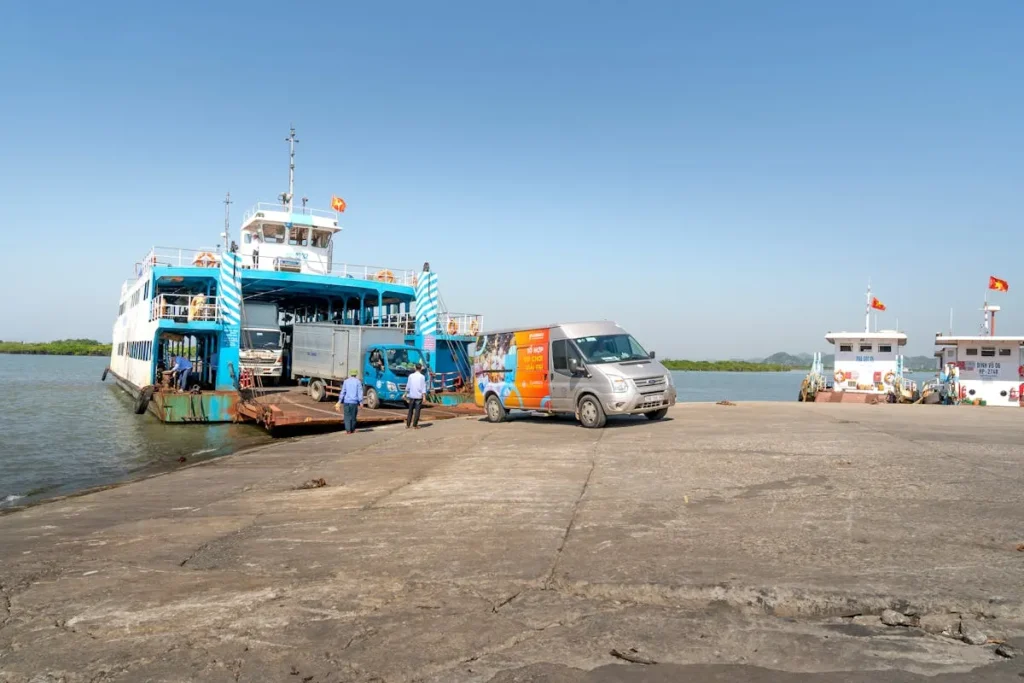
For the vast majority of overlanders, Algeciras to Tanger Med is the gold standard for the Morocco motorhome crossing in 2026. Tanger Med is a purpose-built commercial port 40 km east of Tangier city. The lanes are wide, officials are accustomed to campervans, and the whole process, from boarding to clearing customs, typically takes 2–4 hours.
💡 Pro Tip: Book your ferry tickets using Direct Ferries or the FRS and Baleària carrier apps directly. Cross-reference prices on Rome2Rio for broader routing options. Book at least 2–3 weeks ahead in July–August, and always declare your vehicle’s total length honestly; overhanging bikes and roof boxes must be included.
Essential Documents & Insurance
This is the section where most Morocco campervan guides wave their hands vaguely and move on. Let’s be specific: getting this wrong at the border is a miserable experience.
- Passport: Must be valid for at least 6 months beyond your entry date.
- V5C Logbook (UK) / Vehicle Registration Document: Original only, photocopies are not accepted at the border. If the vehicle is on finance, carry a letter of authorisation from the finance company.
- Green Card (International Motor Insurance Certificate): Check your insurer’s policy carefully, as many UK and EU policies do not extend cover to Morocco by default. Morocco must be listed explicitly on the document.
- Moroccan Border Insurance: If your Green Card doesn’t cover Morocco, you can buy 10-day, 30-day, or 90-day third-party insurance at the Tanger Med port directly after customs. Booths are clearly signposted. Expect to pay €40–€90 for 30 days, depending on vehicle size.
- Health Insurance: The EHIC / GHIC does not apply in Morocco. Ensure your travel insurance covers medical evacuation, as serious care may require transport to Casablanca or Spain.
- International Driving Permit (IDP): Recommended but not always checked. Available from the AA or RAC for UK drivers.

⚠️ Important: Do not attempt to enter Morocco with a hired motorhome unless the rental company has issued a specific letter authorising the vehicle to cross into Morocco. Many rental agreements explicitly prohibit it, and Moroccan customs will refuse entry without written owner consent or a hiring authority letter.
Driving and Road Safety in Morocco
Let’s address the elephant in the room first: police checkpoints. On a 4-week Morocco motorhome itinerary, you will pass through dozens of them. The Gendarmerie Royale checkpoints on national roads are routine traffic stops, not shakedowns. Present your documents calmly, answer questions about your destination and duration of stay, and you’ll be waved through in 90 seconds. The persistent myth of endemic bribery does a disservice to what is, in practice, a professional and courteous national police force.
Key Road Rules to Know
- Speed limits: 120 km/h motorway · 100 km/h national roads · 60 km/h in towns · 40 km/h in some mountain villages. Fines are paid on the spot.
- Road surface: Main N-routes and A-motorways are excellent. P-routes (secondary roads) vary but are almost always navigable in a standard motorhome.
- Night driving: Avoid it in mountain and rural areas. Cyclists, mopeds, pedestrians, and livestock regularly use roads without lights after dark.
- Fuel: Petrol and diesel are widely available at approximately MAD 12–14/litre (roughly £1/litre). Fill up when you see a station — in the southern desert regions, they can be 100 km apart.
Water, Gas, and Electricity in Your Morocco Motorhome
One of the most common Morocco motorhome practical questions is about LPG gas. European gas bottles (Campingaz, Dutch EMOS, German DIN fittings) cannot be refilled in Morocco. You have two options:
- Bring enough gas from Europe for your entire stay. Most experienced overlanders carry two spare bottles and use them conservatively.
- Swap to Moroccan Butagaz. Butagaz is the dominant Moroccan LPG brand. You can buy a local Butagaz bottle (12kg) for around MAD 100–130 (€9–12) and use it with an adapter hose available at hardware stores (quincailleries) in cities.
Water is available free at many mosques (outdoor taps marked for public use) and at most campsites. “Bornes” motorhome service points with fresh water fill and waste dump are growing in number in Morocco, particularly in the north. The Park4Night app and Camper Contact app both index borne locations with user-submitted reviews.
💡 Electricity tip: Moroccan outlets are the same EU two-pin standard used in France and Spain. Most established campsites offer electric hook-up (EHU) at 4–10 amps. Morocco’s 300+ annual sunshine days make solar panels an extremely efficient choice for wild camping.
The 4-Week Morocco Motorhome Itinerary
This route covers the Atlantic coast, imperial cities, the High Atlas mountains, the Sahara Desert, and a gorge that will make you feel genuinely small. It totals approximately 2,800 km and is entirely achievable on paved roads in a standard motorhome. This Morocco motorhome itinerary assumes arrival via Tanger Med.
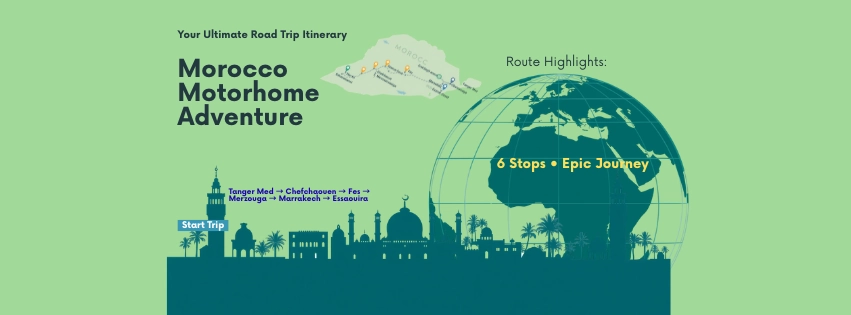
- Tanger Med → Chefchaouen (3 days)
Drive south through the Rif Mountains. The famous Blue City needs at least 2 nights. Park outside the medina and walk in — the narrow streets are not navigable by motorhome. - Chefchaouen → Fès (3–4 days)
Morocco’s spiritual capital. The ancient medina is a UNESCO World Heritage Site. Base yourself at a campsite outside the city walls and take taxis in. - Fès → Merzouga / Sahara Desert (3–4 days)
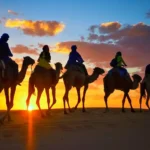
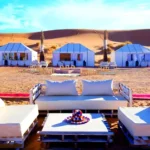
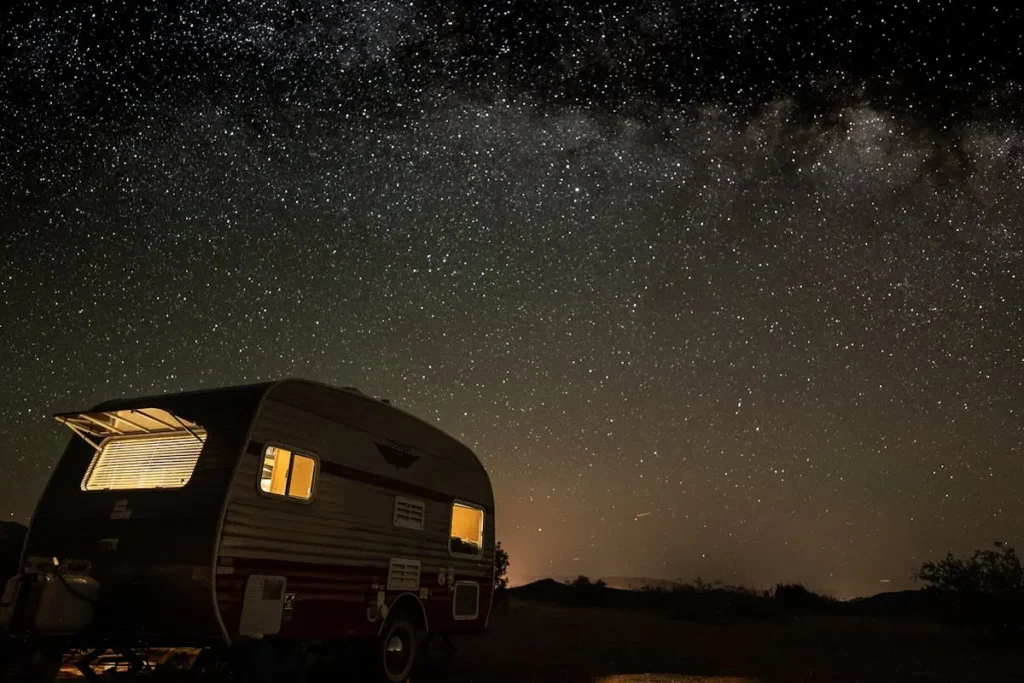
The centrepiece of any Morocco motorhome trip. Wild camp on the edge of the Erg Chebbi dunes. Arrange a sunset camel ride and sleep under Saharan stars. - Merzouga → Todra Gorge (2 days)
Dramatic 300m limestone walls rising from the palm valley. Excellent hiking and wild camping in the gorge is a magical experience. - Todra Gorge → Marrakech (3–4 days)
Drive via the stunning Dadès Valley. Park at a campsite near the Palmeraie — the medina is 20 minutes by taxi. - Marrakech → Essaouira (3 days)
Wind-swept Atlantic coast town. Excellent seafood, historic ramparts, world-class kitesurfing beach. A perfect final chapter before heading north.
💡 Pro Tip: Return north via the coastal N1 road — one of Morocco’s most scenic drives, passing through Agadir, Tiznit, and the dramatic cliffs of Sidi Ifni. Add 3–4 extra days if your schedule allows.
Daily Costs for Vanlife in Morocco
Morocco is excellent value for money, one of the key reasons it tops “best van life destinations” lists year after year. Here’s a realistic breakdown of the cost of vanlife in Morocco per month, based on a couple in a self-sufficient motorhome.
| Expense | Daily Cost |
|---|---|
| Fuel (avg 12L/100km · €1/L · ~80km/day) | €9–12 |
| Campsite or wild camping (many Park4Night spots are free) | €0–14 |
| Food (souk shopping + occasional restaurant) | €12–18 |
| Activities & entrance fees | €3–8 |
| Tips, parking guardians, miscellaneous | €2–5 |
| Total Daily Estimate (couple) | €26–57 |
| Monthly Total (30 days) | €780–1,710 |
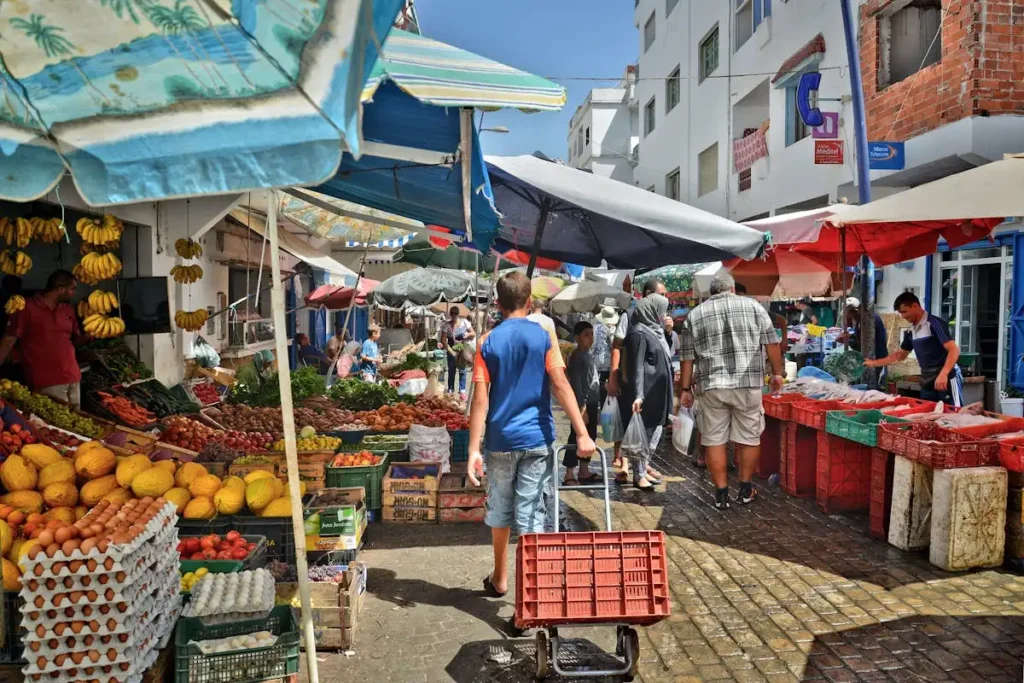
Note: The ferry crossing (€150–€220 return for vehicle + 2 adults) and Moroccan border insurance (€40–90) are one-off costs. The total cost of a 4-week Morocco motorhome trip, all-in, typically lands between €1,500–€2,800 per couple.
Best Internet for Remote Workers: SIM Cards in Morocco
Mobile data in Morocco is excellent value and surprisingly fast in the most populated areas. Three carriers cover the country; here’s how they compare for Morocco motorhome travel:
- Maroc Telecom — Best for overlanders ✅
Largest network. Best rural, mountain, and Saharan coverage. Approximately $1/GB. Recommended if your itinerary includes southern Morocco and the desert regions. - Orange Maroc
Strong urban coverage. Slightly cheaper data bundles in cities. Good for digital nomads spending most of their time in Marrakech, Agadir, or Casablanca. - Inwi
Most affordable data (~$0.80/GB). Weakest rural coverage. Best suited for those staying predominantly in northern Morocco or on the Atlantic coast.
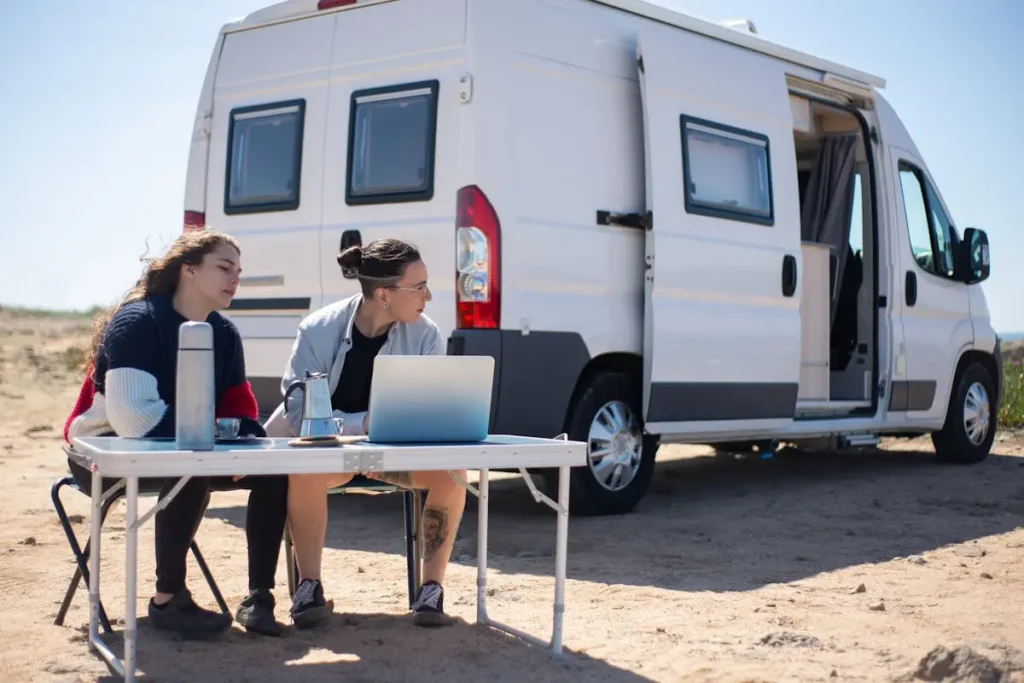
SIM cards are available immediately on arrival at Tanger Med port, at any “Teleboutique” shop in towns and cities, and at larger supermarkets. Bring your passport; registration is required by law. Top-up credit is available everywhere. Expect 4G/LTE speeds in all cities and along most national road corridors.
The best SIM card for Morocco motorhome travel is Maroc Telecom; its rural and desert coverage is significantly better than the alternatives, and at $1/GB, it remains an extraordinary value.
Frequently Asked Questions about Morocco Motorhome Travel
Is Morocco safe for motorhomes in 2026?
Yes — emphatically. Morocco is one of the safest overlanding destinations in Africa and the Middle East. The Gendarmerie Royale maintains a visible presence on national roads, vehicle theft at campsites is rare, and the vanlife community is welcoming and well-connected through platforms like Park4Night and iOverlander, where you can read real-time safety reports from fellow travellers. Thousands of motorhomes make the crossing annually from the UK and Europe without incident. Exercise normal city caution (lock your van, don’t leave valuables visible), and you’ll have no problems.
Can you wild camp in a motorhome in Morocco?
Wild camping in Morocco is broadly tolerated in rural areas, desert, mountain, and farmland, with owner’s permission, and is extremely common among the overlanding community. Camping within national parks, on urban beaches, or inside city limits is more restricted. The Park4Night app is the definitive community guide to wild camping spots in Morocco, with user reviews indicating current local conditions. The iOverlander app also documents community-verified spots across the country, including remote Saharan locations near Merzouga. As a rule, be respectful, leave no trace, and move on if asked.
What is the best ferry route from Spain to Morocco for large motorhomes?
Without question: Algeciras to Tanger Med. This is the gold standard Tanger Med ferry for motorhomes in 2026. The port is modern, purpose-built for large vehicles, and the customs process is orderly and efficient. In contrast, the Tarifa to Tangier Ville route arrives in an older city port with tighter lanes and more congestion, manageable in a small campervan, but stressful in a large rig. Book via FRS or Baleària ferry operators and arrive at the port 90 minutes before your departure time.
Do I need a 4×4 motorhome for Morocco?
No. Roughly 90% of the main tourist routes in Morocco, including the road to the Sahara dunes at Merzouga, the approach to Todra Gorge, all main Atlas Mountain passes, and coastal routes, are fully paved and navigable in any standard two-wheel-drive motorhome. The Morocco campervan guide 2026 reality is far less extreme than overlanding marketing imagery suggests. A 4×4 is only needed for specific unpaved desert pistes between remote villages. For the classic Morocco motorhome itinerary, a standard motorhome is perfectly adequate.
How do I get a Moroccan SIM card for my van?
The simplest option: immediately after clearing customs at Tanger Med, there are SIM card kiosks in the arrivals area representing all three major carriers. Bring your passport, as registration is required by Moroccan law. Data is extraordinarily cheap, approximately $1 per GB, and bundles of 10–30GB are available for the equivalent of €10–25. Alternatively, find any “Teleboutique” in any town or city. For rural Morocco and desert regions, choose Maroc Telecom for the best coverage.
Ready to Hit the Road?
Whether you’re planning your first Morocco motorhome crossing or returning for your third, the country rewards those who come prepared and stay curious. The roads are better than rumour suggests, the people are warmer than you’ll expect, and the light, that extraordinary amber Moroccan light, will make every average parking spot look like a postcard.
If you’d prefer to experience Morocco without the logistics of driving a motorhome yourself, Desert Merzouga Tours offers bespoke, fully guided journeys, from Sahara desert camps to imperial city tours, with premium transport, expert guides, and zero planning stress. Explore our customised Morocco tours here.
Safe travels. Bonne route.