
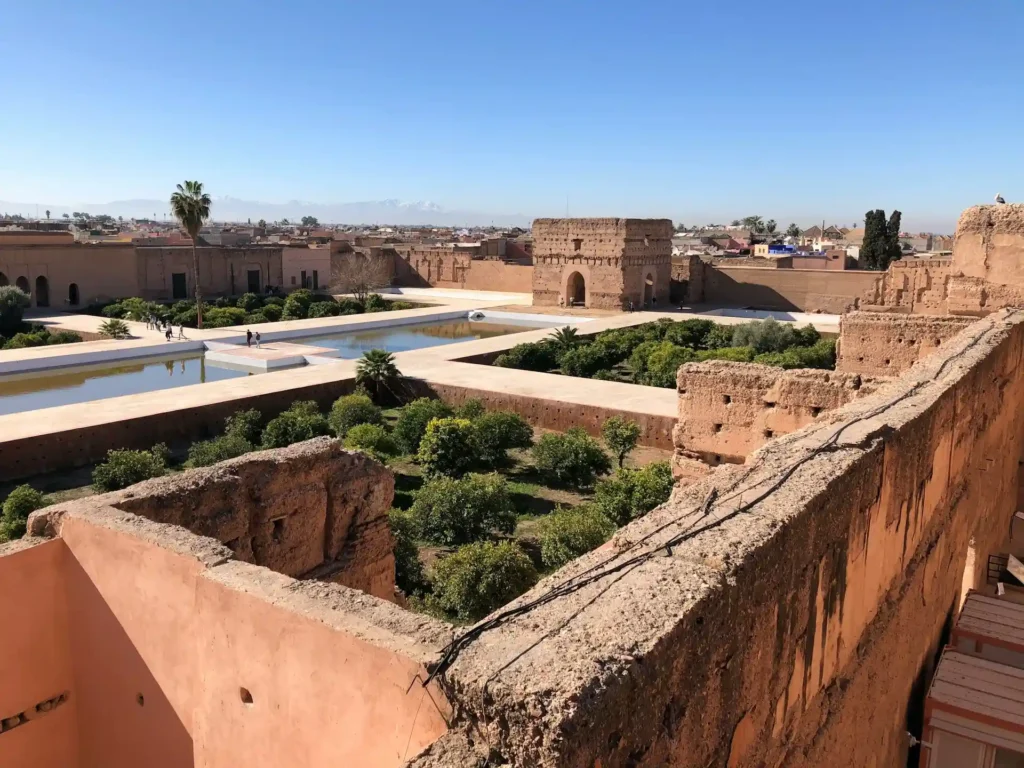
Quick Answer: El Badi Palace, known as “The Incomparable,” is a 16th-century ruin in Marrakech commissioned by Sultan Ahmad al-Mansur of the Saadian Dynasty. Today, it is famous for its vast sunken gardens, intricate mosaics, and the storks that nest on its ancient ramparts. Entry costs around 100 Moroccan Dirhams in 2026, and most visitors need 1 to 1.5 hours to explore it.
If you are planning a trip to Marrakech, El Badi Palace deserves a top spot on your list. It is one of the most photographed ruins in Morocco, and once you see its scale, you’ll understand why. This guide covers everything you need: the history, what to see, ticket prices, opening hours, and the best photography tips, so you can plan your visit with confidence.
Table of Contents
The Rise and Fall of the Incomparable Palace
El Badi Palace was built in the late 16th century, at a time when Marrakech was one of the wealthiest cities in the world. The palace was commissioned by Sultan Ahmad al-Mansur of the Saadian Dynasty, who wanted a building that would announce Morocco’s power to the world. He got his wish. The name “El Badi” translates loosely to “The Incomparable,” and for good reason.
Al-Mansur funded this ambitious project largely with gold from West Africa, after a decisive military campaign against the Songhai Empire known historically as the “Three Kings War” (also called the Battle of the Three Kings, or Wadi al-Makhazin). This 1578 battle was a turning point for the Saadian Dynasty, and the wealth it generated flowed directly into the construction of El Badi Palace.
No expense was spared. Historical accounts describe:
- Gold from West Africa, used to gild ceilings and decorative panels
- Onyx, imported for its polished, luxurious finish
- Italian marble, shipped in exchange for Moroccan sugar, a rare and prized commodity at the time
At its peak, the palace complex reportedly held over 350 rooms, a massive courtyard, and reflecting pools designed to mirror the sky. Foreign ambassadors were deliberately walked through the palace to be dazzled by Saadian wealth.
But the glory did not last. When the Alaouite Dynasty rose to power in the late 17th century, Sultan Moulay Ismail stripped El Badi Palace of nearly everything valuable- gold, marble, tiles, and cedar wood- and used the materials to build his new capital in Meknes. What remains today are the bare, sunburnt walls of Marrakech ruins that still hint at the palace’s former glamour. Ironically, this stripped-down skeleton is exactly what makes El Badi Palace so striking to visit today.
Top Highlights of the El Badi Ruins
Walking through El Badi Palace feels a little like walking through an open-air history book. Here are the highlights you should not miss.
The Sunken Gardens and Reflection Pools
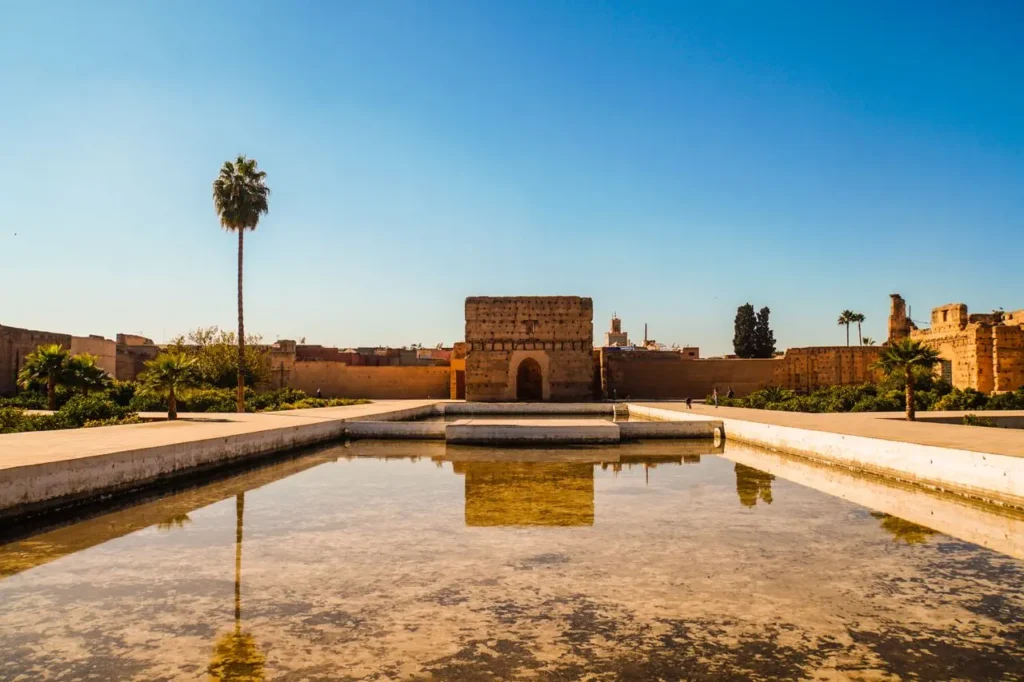
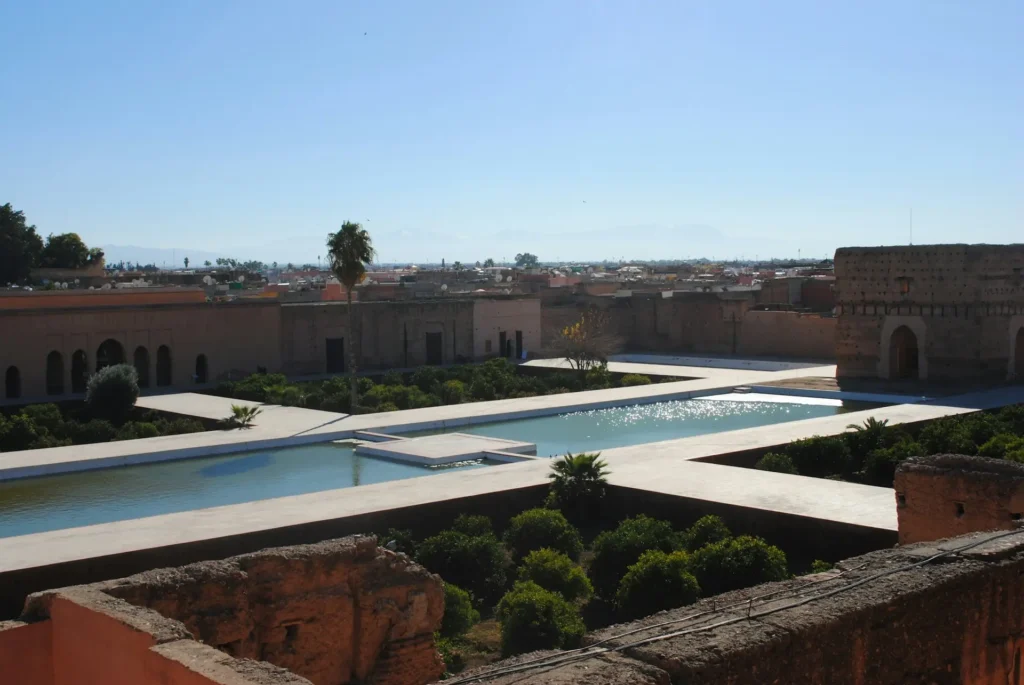
The sunken gardens of El Badi Palace are the heart of the site. Originally planted with orange trees and designed around large reflecting pools, these gardens sit below the level of the main courtyard, a clever architectural trick that made the palace appear even larger from the ramparts above. The history of the sunken gardens in Marrakech dates back to Islamic garden design traditions, where water and greenery symbolized paradise. Today, the pools still catch the sky, and on a clear day, the reflection alone is worth the visit.
The Koutoubia Minbar
Tucked inside a small museum room within the complex is the Koutoubia Minbar, widely considered a masterpiece of Islamic art. This wooden pulpit, originally carved for the Koutoubia Mosque, is decorated with intricate marquetry and inlaid with silver and gold thread by master artisans. It took years to complete and remains one of the finest surviving examples of Islamic woodwork anywhere in the world. Don’t rush past this room; it’s easy to miss, but it’s one of the most important artifacts in Marrakech.
The Underground Dungeons
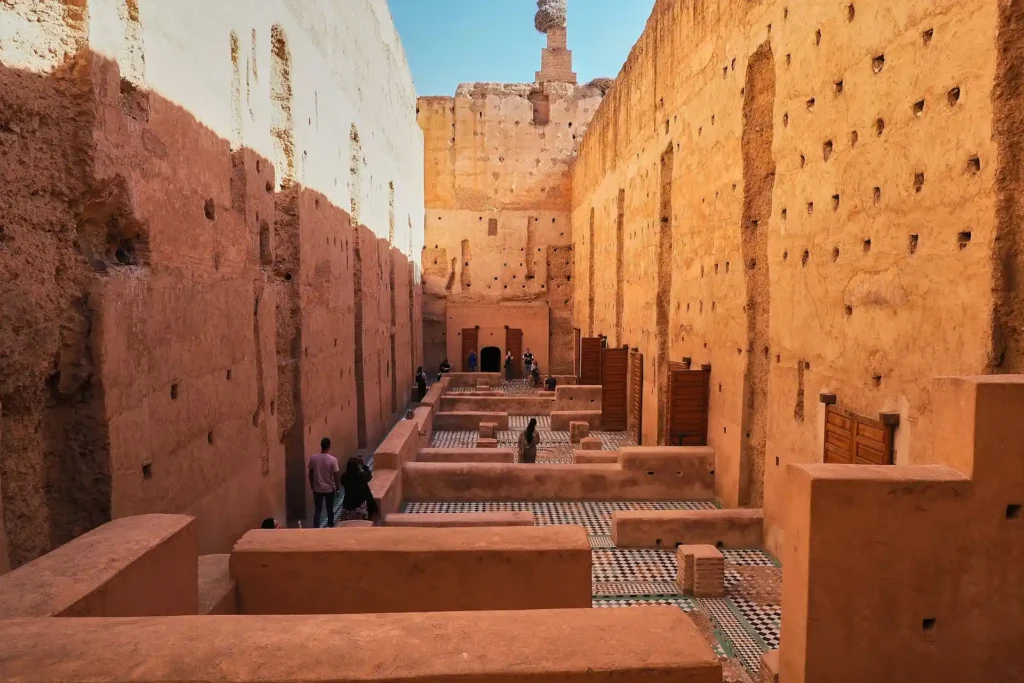
Here’s a detail many blogs skip entirely: beneath the main courtyard, you can descend into a network of underground passages once used as storage rooms and, according to local guides, dungeons. These cool, dim corridors are a striking contrast to the bright, open ruins above, and they add a layer of intrigue that most first-time visitors don’t expect. If you enjoy the lesser-known corners of a historical site, this is where to look.
The Stork Nests
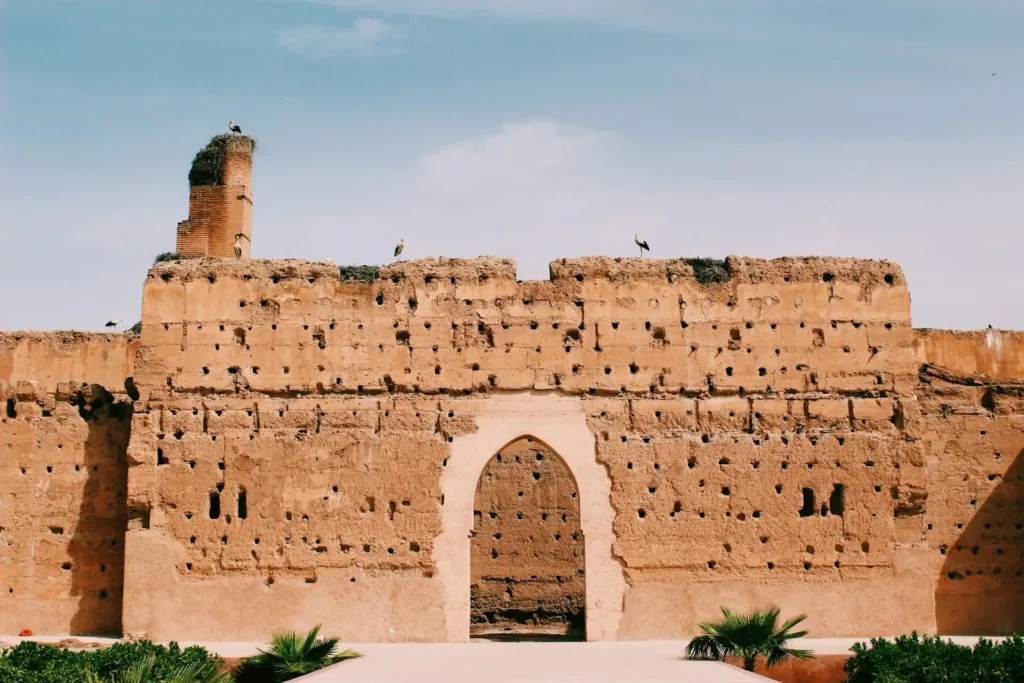
No visit to El Badi Palace is complete without looking up. The high ramparts are home to dozens of massive stork nests, and the birds themselves have become an unofficial symbol of the site. Can you see storks at El Badi Palace? Yes, especially between January and April, when nesting activity peaks. For photographers and Instagram lovers alike, the sight of white storks perched against crumbling sandstone walls is one of the most memorable images you’ll bring home from Marrakech.
Practical Information: Tickets, Hours, and Getting There
Here’s everything you need to plan a smooth visit to El Badi Palace.
| Detail | Information |
|---|---|
| Entrance Fee (2026) | Approximately 100 MAD for international visitors (around $9–10 USD); a small additional fee may apply to view the Koutoubia Minbar |
| Opening Hours | Daily, 9:00 AM – 5:00 PM (last entry roughly 30 minutes before closing) |
| Ramadan Hours | Typically 10:00 AM – 4:00 PM (schedule adjusts during the holy month) |
| Best Time of Day to Visit | Early morning (right at opening) or the hour before closing, for cooler weather, softer light, and fewer crowds |
| Recommended Visit Duration | 1 to 1.5 hours |
| Location | Ksibat Nhass, Kasbah district, Marrakech, near the Saadian Tombs |
| How to Get to El Badi Palace | A short walk from Bahia Palace and the Saadian Tombs; about 15 minutes on foot from Jemaa el-Fnaa; taxis and local buses (lines serving Bab Rab) also stop nearby |
| Accessibility | Uneven stone surfaces throughout; wear comfortable, sturdy shoes |
Is El Badi Palace worth visiting? Absolutely. Even though it’s a ruin, the sheer scale of the courtyard, the sunken gardens, and the panoramic rooftop views make it one of the most rewarding historical stops in Marrakech. Combine it with a visit to nearby Bahia Palace and the Saadian Tombs for a full half-day exploring the Kasbah district.
What else is nearby? Because El Badi Palace sits in the heart of the Kasbah district, it pairs naturally with a walking route through some of Marrakech’s other essential landmarks:
- Bahia Palace – a beautifully preserved 19th-century palace with ornate cedar ceilings, roughly 10 minutes on foot
- Saadian Tombs – the burial site of the very dynasty that built El Badi, hidden behind narrow alleyways
- Jemaa el-Fnaa – Marrakech’s famous main square, about 15 minutes away, ideal for lunch after your visit
Many travelers choose to visit all three sites in a single morning, since they sit within easy walking distance of one another. If you’d rather skip the planning and let a knowledgeable local guide walk you through the history in real time, a guided city tour can make the experience far richer than exploring alone.
Pro Photography Tips
El Badi Palace is a photographer’s dream, but a few insider tips will help you get shots that actually do the site justice.
Where to get the best view: The terrace overlooking the ruins is, without question, the best vantage point. Climb up to the ramparts and look out over the full sunken garden, the reflecting pools, and the crumbling walls stretching toward the Atlas Mountains on a clear day. This elevated angle captures the scale of the palace in a way that ground-level shots simply cannot.
What lens to bring:
- A wide-angle lens (16–35mm) is essential for capturing the vast open courtyards and sweeping rooftop views.
- A telephoto lens (up to 200mm) lets you zoom in on the stork nests without disturbing the birds, perfect for those dramatic silhouette shots against the Marrakech sky.
Timing matters: Aim for the first hour after opening or the last hour before closing. The light is softer, the heat is more manageable, and the crowds thin out considerably, giving you a much better chance at that perfect, uncluttered shot.
“The sunken orange groves and the storks nesting on the high ramparts provide incredible leading lines for photography, especially in the golden hour.”
FAQ: Your El Badi Palace Questions Answered
Q: How much does it cost to enter El Badi Palace? A: As of 2026, the entrance fee is around 100 Moroccan Dirhams for international visitors (it was 70 MAD in 2024, so prices have increased). If you wish to see the Koutoubia Minbar, there is sometimes a small additional fee, though it’s often included in the main ticket.
Q: How long does it take to visit El Badi Palace? A: Most visitors spend 1 to 1.5 hours exploring the ramparts, the underground passages, and the museum area. If you’re traveling with a guide who shares the deeper history, plan for closer to 2 hours.
Q: Is El Badi Palace better than Bahia Palace? A: They are very different experiences. Bahia Palace is beautifully preserved, with intact ceilings, carved cedar, and colorful zellij tilework. El Badi Palace, by contrast, is a majestic ruin defined by scale and sunken gardens. If you love history and grand, open spaces, El Badi is superior; if you love intricate tilework and lush interior courtyards, Bahia wins. Our recommendation: see both; they’re only about a 10-minute walk apart.
Q: Can you see storks at El Badi Palace? A: Yes. The palace is famous for the dozens of white storks that build massive nests atop the ancient ramparts, especially visible from January to April.
Q: What is the best time of day to visit El Badi Palace? A: Early morning, right after the 9:00 AM opening, or late afternoon before the 5:00 PM closing. Both windows offer softer light for photos and noticeably smaller crowds than midday.
Ready to Explore Marrakech and Beyond?
El Badi Palace is just one stop on Morocco’s incredible historical trail. If you want a stress-free, personalized way to experience El Badi Palace, Bahia Palace, the Saadian Tombs, and the rest of Marrakech’s royal heritage, alongside unforgettable adventures in the Sahara Desert and the Atlas Mountains, explore our custom Morocco tours at Desert Merzouga Tours. Our professional guides, premium transportation, and authentic accommodations take care of the logistics, so all you have to do is enjoy the journey.
For more on the site’s cultural and historical significance, you can also check official heritage resources such as the Moroccan Ministry of Culture and UNESCO’s listings on Moroccan heritage sites.
Planning your Marrakech itinerary? Don’t miss our companion guides on Bahia Palace, the Saadian Tombs, and the best day trips from Marrakech.