Table of Contents
SUMMARY: Morocco Argan Oil is a precious, nutrient-rich oil extracted from the kernels of argan trees (Argania spinosa) indigenous to southwestern Morocco, particularly within the UNESCO-protected Arganeraie Biosphere Reserve. Known as “liquid gold,” this oil is produced through traditional cold-pressing methods by Moroccan women’s cooperatives and has been used for centuries for both culinary and cosmetic purposes. Pure Argan oil from Morocco contains high concentrations of vitamin E, essential fatty acids, and antioxidants, making it one of the world’s most sought-after natural skincare and wellness products.
Introduction: Discovering Morocco’s Liquid Gold
When travelers embark on a journey through Morocco, they quickly discover that this enchanting North African country offers far more than stunning landscapes and ancient medinas. Among the many treasures that define Moroccan culture and commerce, Morocco Argan Oil stands out as a remarkable gift from nature. This precious commodity has sustained local communities for generations while capturing the attention of the global beauty and wellness industry.
If you’re planning a trip to Morocco with Desert Merzouga Tours, understanding the story behind Argan oil in Morocco adds an enriching layer to your adventure. This isn’t just another souvenir to bring home; it’s a connection to ancient traditions, sustainable practices, and the resilient women who have perfected its production over centuries. Whether you’re exploring the winding streets of Marrakech, trekking through the Atlas Mountains, or experiencing the majesty of the Sahara Desert, you’ll encounter this golden elixir at cooperatives, markets, and authentic Moroccan experiences throughout your journey.
This comprehensive guide will take you deep into the world of Morocco Argan Oil, from the UNESCO-protected forests where argan trees grow to the cooperatives where local women extract this precious oil, from understanding the differences between culinary and cosmetic varieties to learning how to identify authentic Argan oil. By the end, you’ll be equipped with the knowledge to make informed purchases and appreciate the cultural significance of this remarkable Moroccan treasure.
The Origins: UNESCO Forests and Ancient Traditions
The Arganeraie Biosphere Reserve
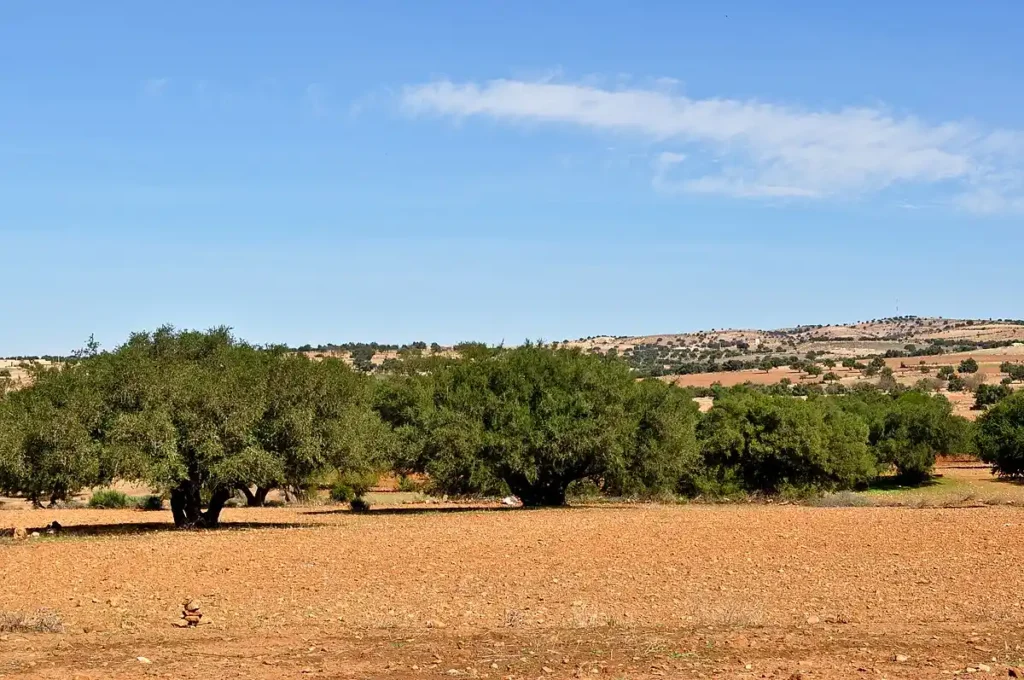
The story of Morocco Argan Oil begins in the southwestern regions of Morocco, where the argan tree (Argania spinosa) has thrived for millions of years. These remarkable trees are endemic to Morocco, found nowhere else on Earth, and grow primarily in the region spanning from Essaouira to Agadir and extending into the Anti-Atlas Mountains. In 1998, UNESCO designated this area as the Arganeraie Biosphere Reserve, recognizing both its ecological importance and the unique socio-economic role it plays in Moroccan society.
The argan forest ecosystem spans approximately 820,000 hectares and serves multiple crucial functions. It acts as a natural barrier against desertification, helps maintain soil integrity, provides habitat for diverse wildlife, and sustains the livelihoods of roughly 2 million people. The trees themselves are remarkably resilient, capable of surviving in arid conditions with temperatures exceeding 50°C (122°F) and thriving on as little as 100-200mm of annual rainfall. Some argan trees live for 200-400 years, their deep root systems reaching depths of up to 30 meters, enabling them to access underground water sources.
Centuries of Moroccan Heritage
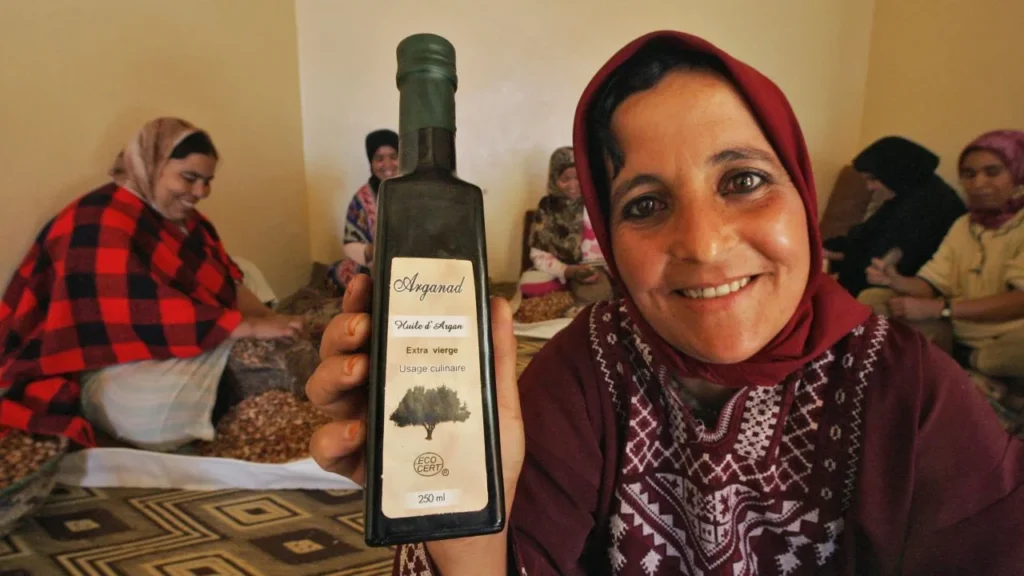
The production of pure Argan oil from Morocco dates back centuries, with indigenous Berber communities developing sophisticated extraction techniques long before modern manufacturing processes existed. For generations, Moroccan women have been the guardians of this knowledge, passing down production methods from mother to daughter. This traditional role has evolved into a powerful economic force, with Moroccan women’s cooperatives Argan oil production becoming a model for sustainable, community-based enterprise.
Historically, argan oil served multiple purposes in Berber households. Culinary argan oil added distinctive nutty flavors to traditional dishes, particularly amlou (a delicious spread made with argan oil, almonds, and honey), couscous, and tagines. Cosmetic argan oil protected skin from the harsh desert sun and winds, treated various skin conditions, and conditioned hair. Moroccan women also used it as a natural remedy for minor burns, eczema, and joint pain, applications that modern research has increasingly validated.
From Tree to Bottle: The Production Process
Traditional Extraction Methods
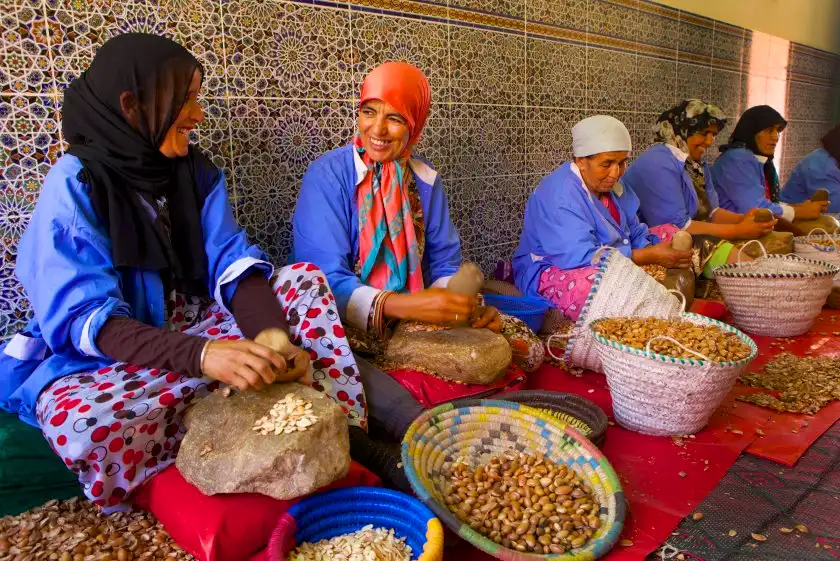
The traditional production of Argan oil in Morocco is a labor-intensive process that requires skill, patience, and dedication. Women working in cooperatives follow time-honored methods that have been refined over generations:
- Harvesting: Argan fruits are collected between June and September when they fall naturally from the trees. Ethical producers never cut branches or strip trees, as this damages the ecosystem.
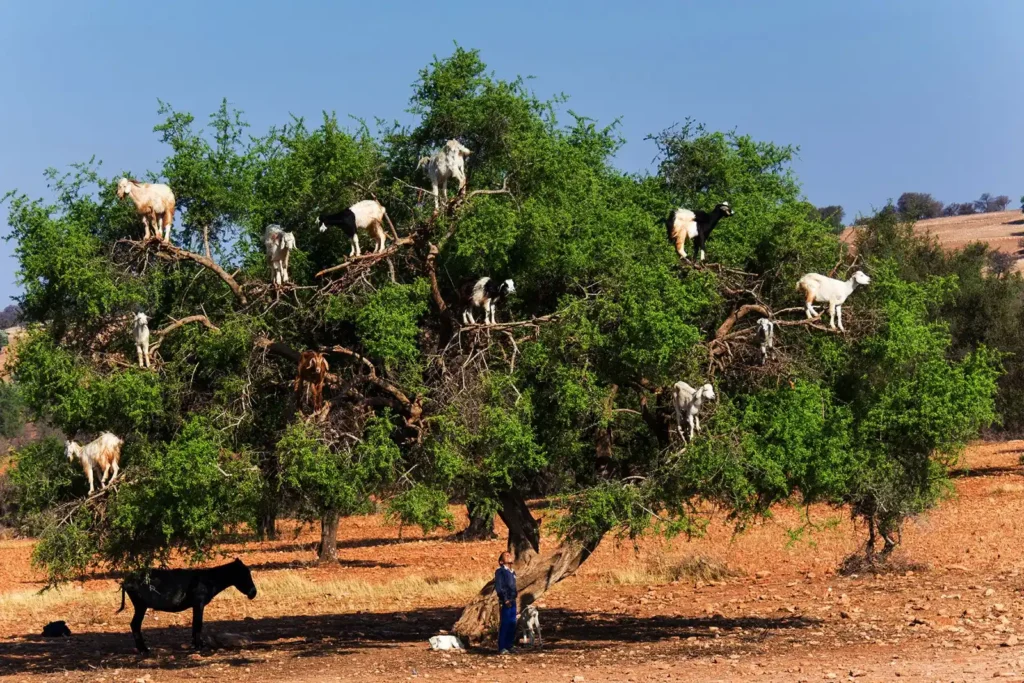
- Fruit Removal: The fleshy outer pulp of the fruit is removed to reveal the hard nut inside. Traditionally, goats would eat the pulp and spit out the nuts, though modern cooperatives use manual removal methods.
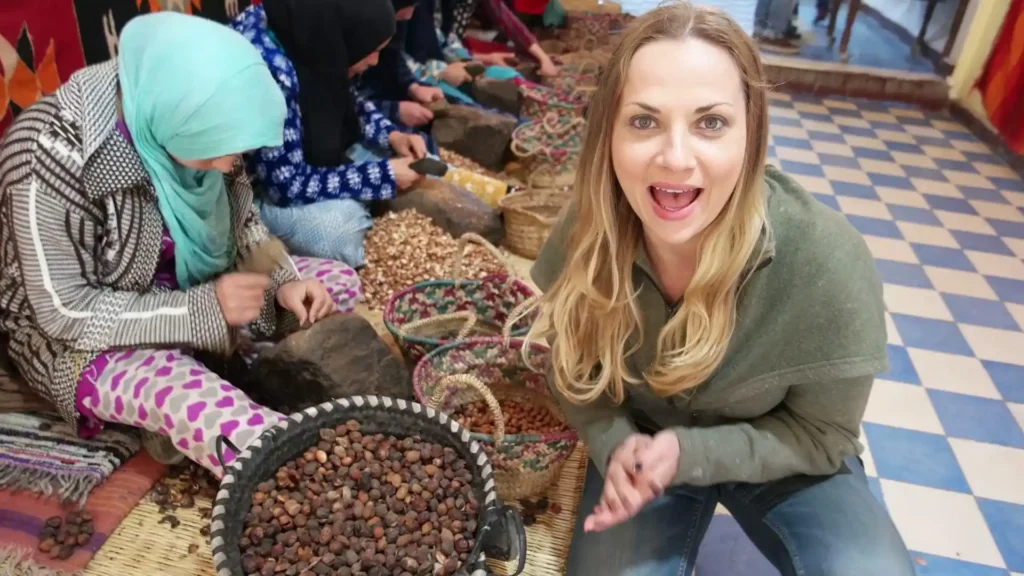
- Nut Cracking: This is the most time-consuming step. Women use stones to carefully crack open the extremely hard nut shells, revealing 1-3 small kernels inside. It takes approximately 2-3 days of work to crack enough nuts to produce just one liter of oil.
- Roasting (for culinary oil): For edible argan oil, kernels are lightly roasted, giving the final product its characteristic nutty aroma and darker color.
- Grinding: Kernels are ground using traditional stone mills, creating a thick paste.
- Kneading: The paste is hand-kneaded with small amounts of water to help separate the oil.
- Cold-Pressing: The paste is cold-pressed to extract the golden oil without heat, preserving its beneficial properties. This yields approximately 30-50% oil by weight of kernels.
Traditional vs. Industrial Extraction Comparison
Understanding the differences between traditional and industrial production methods helps travelers appreciate why pure Argan oil from Morocco from cooperatives commands premium prices:
| Aspect | Traditional Method | Industrial Method |
| Processing Time | 2-3 days per liter | Hours per batch |
| Labor | 100% hand-processed by cooperative women | Mechanical with minimal human involvement |
| Temperature | Cold-pressed (below 60°C) | Often heat-processed (reduces quality) |
| Chemical Use | None – completely natural | May use solvents for higher extraction rates |
| Quality | Highest nutrient retention, rich flavor/aroma | Variable quality, potential nutrient loss |
| Traceability | Direct from specific cooperatives | Often lacks clear sourcing information |
| Social Impact | Empowers local women, fair wages | Minimal community benefit |
When purchasing Morocco Argan Oil from cooperatives during your travels, you’re not just buying a superior product—you’re directly supporting sustainable practices and women’s economic empowerment.
Culinary vs. Cosmetic Argan Oil: Understanding the Differences
One of the most common questions travelers ask concerns the culinary vs. cosmetic Argan oil differences. While both types come from the same argan kernels, their production processes and intended uses make them distinct products with different characteristics.
Culinary Argan Oil (Edible)
Production Process:
- Kernels are lightly roasted before grinding and pressing
- Roasting develops rich, nutty flavors and aromas
- Results in darker, amber-colored oil
Characteristics:
- Deep amber to dark golden color
- Distinctive nutty, toasted aroma
- Rich, complex flavor profile
- Thicker consistency
Culinary Uses:
- Drizzled over couscous, salads, or grilled vegetables
- Mixed into amlou (traditional Moroccan spread)
- Added to tagines for depth of flavor
- Used as finishing oil (not for high-heat cooking)
- Incorporated into traditional Moroccan breakfast with honey and bread
Cosmetic Argan Oil (Beauty/Skincare)
Production Process:
- Kernels are cold-pressed without roasting
- No heat applied during extraction
- Preserves maximum nutrients and antioxidants
Characteristics:
- Light golden to pale yellow color
- Mild, neutral scent
- Lighter, more fluid texture
- Higher concentration of vitamin E and essential fatty acids
Beauty Uses:
- Facial moisturizer (excellent for all skin types)
- Hair treatment for shine, strength, and softness
- Nail and cuticle conditioning
- Body moisturizer for dry skin
- Anti-aging treatment (reduces fine lines and wrinkles)
- Stretch mark prevention and treatment
- Beard conditioning for men
Important Note: While cosmetic argan oil can technically be consumed, and culinary argan oil can be used on skin, it’s best to use each type for its intended purpose to maximize benefits and ensure optimal quality for each application.
Moroccan Women’s Cooperatives: Empowerment Through Argan Oil
The success story of Moroccan women’s cooperatives Argan oil production represents one of the most remarkable examples of sustainable development and women’s empowerment in North Africa. These cooperatives have transformed what was once isolated, unpaid household work into organized enterprises that provide financial independence, education opportunities, and social respect for thousands of rural Moroccan women.
The Cooperative Movement
The argan oil cooperative movement began gaining momentum in the 1990s, supported by international development organizations and the Moroccan government. Today, there are over 300 women’s cooperatives dedicated to pure Argan oil from Morocco production, employing approximately 10,000 women directly and benefiting countless more in their communities.
What Cooperatives Provide:
- Fair Wages: Women earn 2-3 times more than they would through individual sales, with transparent profit-sharing systems.
- Education: Many cooperatives offer literacy classes, business training, and health education for members and their families.
- Healthcare: Some larger cooperatives provide health insurance or access to medical care for workers.
- Childcare: Cooperative facilities often include childcare services, enabling mothers to work.
- Social Support: Cooperatives create safe spaces for women to gather, share experiences, and support each other.
- Market Access: Cooperatives negotiate better prices and provide direct access to international markets.
Visiting Cooperatives During Your Morocco Tour
When traveling with Desert Merzouga Tours, visitors have unique opportunities to visit authentic cooperatives and witness the production process firsthand. These visits offer far more than shopping opportunities; they provide cultural insights and the chance to meet the women whose skill and dedication create this remarkable product.
What to Expect During a Cooperative Visit:
- Demonstrations of traditional nut-cracking techniques
- Explanations of the grinding and pressing process
- Opportunities to taste culinary argan oil with fresh bread
- Chances to try cosmetic argan oil on skin
- Learning about cooperative social programs
- Direct purchasing opportunities at fair prices
Notable Cooperatives to Visit: Major cooperatives accessible through organized tours include Tighanimine Cooperative near Essaouira, Ajddigue Cooperative in Agadir region, Tamanar Cooperative along the coastal route, and various cooperatives in the Taroudant area. Your Desert Merzouga Tours guide can arrange visits to authentic, fairly-operated cooperatives that welcome visitors.
How to Identify Authentic Argan Oil: A Buyer’s Guide
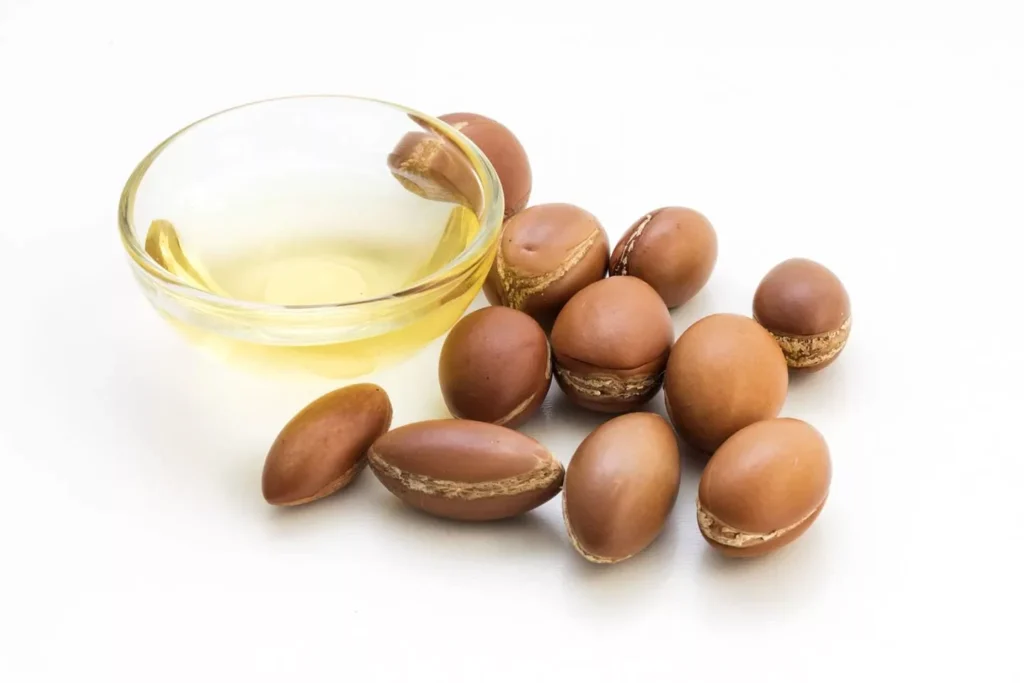
With the global popularity of Morocco Argan Oil, the market has unfortunately seen an influx of counterfeit, diluted, or low-quality products. Learning how to identify authentic Argan oil protects you from wasting money and ensures you receive the genuine health and beauty benefits this precious oil offers.
Visual and Sensory Tests
Color:
- Cosmetic argan oil: Light golden to pale yellow, clear and translucent
- Culinary argan oil: Deeper amber, slightly darker due to roasting
- Red flags: Very dark brown color, cloudiness, or visible sediment
Scent:
- Cosmetic: Mild, slightly nutty, pleasant but not overpowering
- Culinary: Strong, toasted nut aroma, warm and inviting
- Red flags: No scent, rancid smell, chemical odor, or artificial fragrances
Texture:
- Should be smooth, lightweight, and non-greasy
- Absorbs relatively quickly into skin
- Feels silky, not sticky or heavy
Temperature Test:
- Pure Argan oil in Morocco may become slightly cloudy or thick when refrigerated but returns to normal at room temperature. If it solidifies completely, it may contain other oils.
Label and Certification Checks
Look for These Certifications:
- USDA Organic or ECOCERT Organic: Ensures no pesticides or chemicals were used
- IGP (Indication Géographique Protégée): Protected geographical indication certifying Moroccan origin
- Fair Trade Certification: Confirms ethical sourcing and fair wages
- Cooperative Labeling: Products from named cooperatives are typically authentic
Essential Label Information:
- 100% pure argan oil (no other ingredients listed)
- Scientific name: Argania spinosa
- Country of origin: Morocco
- Extraction method: cold-pressed
- Production or expiration date (shelf life is 12-24 months)
Price as an Indicator
Given the labor-intensive production process, authentic pure Argan oil from Morocco commands fair prices. Understanding typical price ranges helps identify suspiciously cheap products that are likely counterfeit or diluted:
Price Ranges in Morocco (2025):
- Direct from cooperatives: 250-400 MAD per liter ($25-40 USD)
- Cosmetic quality (smaller bottles): 80-150 MAD for 50ml ($8-15 USD)
- Culinary quality: Slightly less expensive, 200-350 MAD per liter ($20-35 USD)
International Retail Prices (2025):
- USA/Europe: $40-100 USD per liter (€35-90 EUR)
- Smaller bottles (50-100ml): $15-40 USD
- Premium/certified organic: $80-150 USD per liter
Warning: If you find argan oil priced significantly below these ranges, especially products claiming to be “pure” or “100% argan oil” for $10-15 per liter, it’s almost certainly not authentic. Remember: it takes 2-3 days of manual labor to produce one liter. Impossibly low prices indicate dilution with cheaper oils (often sunflower or other vegetable oils) or entirely fake products.
Health and Beauty Benefits: Why Morocco Argan Oil is Prized Worldwide
The global reputation of Morocco Argan Oil stems from its exceptional nutritional profile and scientifically-proven benefits. Rich in vitamin E (tocopherols), essential fatty acids (particularly oleic and linoleic acids), antioxidants (polyphenols and carotenoids), and squalene, this natural elixir offers remarkable therapeutic properties.
Skincare Benefits
- Deep Hydration: Non-comedogenic oil that moisturizes without clogging pores, suitable for all skin types including oily and acne-prone
- Anti-Aging: High vitamin E and antioxidant content fights free radicals, reducing fine lines, wrinkles, and age spots
- Skin Elasticity: Essential fatty acids improve skin firmness and elasticity
- Healing Properties: Accelerates healing of minor burns, scars, and skin irritations
- Anti-Inflammatory: Soothes conditions like eczema, psoriasis, and rosacea
- Sun Protection: Provides mild natural sun protection and helps repair sun-damaged skin
Hair Care Benefits
- Strengthening: Proteins and fatty acids strengthen hair shaft, reducing breakage
- Shine Enhancement: Smooths hair cuticle for natural, healthy shine
- Scalp Health: Treats dandruff, dry scalp, and promotes healthy hair growth
- Heat Protection: Creates protective barrier against styling heat damage
- Frizz Control: Tames frizz and flyaways in humid conditions
Culinary and Health Benefits
- Heart Health: High in oleic acid, which supports cardiovascular health
- Cholesterol Management: Studies show regular consumption may help lower LDL cholesterol
- Anti-Inflammatory: Internal consumption may reduce inflammation markers
- Nutrient Absorption: Enhances absorption of fat-soluble vitamins (A, D, E, K)
Shopping for Morocco Argan Oil: Best Practices for Travelers
Whether you’re visiting Morocco for the first time or returning for another adventure with Desert Merzouga Tours, purchasing authentic Morocco Argan Oil requires knowledge, discernment, and an understanding of where and how to shop. This section provides practical guidance for making informed purchases.
Best Places to Buy
1. Women’s Cooperatives (Highly Recommended):
- Advantages: Guaranteed authenticity, fair prices, support for local women, educational experience
- Locations: Essaouira, Agadir region, Taroudant, villages between Marrakech and Essaouira
- Tips: Visit with organized tours or ask your guide for recommendations; most cooperatives welcome visitors
2. Certified Shops in Major Cities:
- Advantages: Convenient, variety of brands, often certified products
- Locations: Marrakech, Casablanca, Fes, Rabat
- Tips: Look for shops displaying certification logos; avoid overly touristy areas with aggressive salespeople
3. Pharmacies (Reliable Option):
- Advantages: Regulated products, consistent quality, clear labeling
- Considerations: Typically more expensive than cooperatives; may not support local communities directly
Places to Avoid
- Street Vendors: High risk of counterfeit or diluted products
- Unlicensed Souvenir Shops: Often sell fake argan oil mixed with cheaper oils
- Airport Duty-Free Shops: Significantly overpriced; better to purchase earlier in your trip
- Tourist Trap Markets: Shops near major tourist sites often charge inflated prices for questionable quality
Negotiation and Purchase Tips
- At Cooperatives: Prices are typically fixed and fair; negotiation is usually not expected or appropriate
- In Souks/Markets: Gentle negotiation is part of the culture, but don’t expect massive discounts on genuine products
- Sample Before Buying: Legitimate sellers welcome you to smell, touch, and sometimes taste the oil
- Ask Questions: Genuine producers are happy to explain their process, show certifications, and discuss the differences between culinary and cosmetic varieties
- Purchase Quantities: For personal use, 250-500ml is usually sufficient for several months; larger quantities make excellent gifts
Cultural Significance and Sustainability
Understanding Morocco Argan Oil goes beyond appreciating its practical benefits—it means recognizing its role in Moroccan cultural identity, environmental conservation, and sustainable development. The argan tree and its oil represent a unique intersection of tradition, ecology, and modern economic enterprise.
Environmental Importance
The argan forest serves as a critical ecological buffer zone between the Sahara Desert and Morocco’s fertile agricultural regions. These ancient trees combat desertification, prevent soil erosion, and maintain biodiversity in one of the world’s most challenging climates. UNESCO’s designation of the Arganeraie Biosphere Reserve reflects global recognition of this ecosystem’s importance.
However, the argan forest faces significant threats. Urban expansion, agricultural conversion, overgrazing, and climate change have reduced the forest by nearly 50% over the past century. The economic value of pure Argan oil from Morocco has paradoxically become one of the forest’s best protection mechanisms—when local communities can earn sustainable incomes from argan production, they have strong incentives to protect and regenerate the trees.
Sustainable Practices and Forest Conservation
Responsible Moroccan women’s cooperatives Argan oil producers implement several sustainability practices:
- Natural Harvesting: Collecting only fallen fruits, never damaging trees
- Reforestation Programs: Many cooperatives participate in tree-planting initiatives
- Waste Reduction: Argan pulp feeds livestock; shells fuel cooking fires; residue enriches soil
- Community Education: Teaching younger generations about forest conservation
- Certification Programs: Pursuing organic and fair trade certifications that enforce sustainable practices
When you purchase Argan oil in Morocco from ethical sources, you’re directly contributing to these conservation efforts. Each bottle represents not just a personal care product but an investment in environmental protection and community well-being.
Integrating Argan Oil Experiences into Your Morocco Journey
Desert Merzouga Tours specializes in creating authentic, immersive Moroccan experiences that go beyond typical tourist itineraries. Incorporating visits to argan oil cooperatives and learning about this cultural treasure enhances your understanding of Morocco’s rich traditions and sustainable practices.
Recommended Itinerary Add-Ons
Essaouira Coastal Route:
The drive from Marrakech to Essaouira passes through the heart of argan country. This scenic coastal route offers multiple opportunities to visit cooperatives, witness traditional production methods, and purchase authentic products. Combine this with Essaouira’s charming medina, fresh seafood, and Atlantic beaches for a perfect day trip or overnight excursion.
Agadir Region Exploration:
The area around Agadir contains some of Morocco’s most productive argan forests and numerous women’s cooperatives. Pair cooperative visits with the stunning Paradise Valley, traditional Berber villages in the Anti-Atlas Mountains, and Agadir’s beautiful beaches.
Taroudant and Argan Forest Trek:
For travelers seeking authentic experiences away from tourist crowds, the Taroudant region offers cooperative visits combined with hiking through argan forests, staying in traditional guesthouses, and experiencing rural Moroccan life.
Culinary Experiences
Many of Desert Merzouga Tours’ culinary experiences incorporate argan oil, allowing you to taste this Moroccan treasure in authentic preparations:
- Cooking Classes: Learn to make traditional amlou, prepare tagines with argan oil, and use it in Berber dishes
- Traditional Breakfasts: Experience Moroccan morning meals featuring fresh bread, honey, and argan oil
- Food Tours: Specialized culinary tours in Marrakech and Essaouira include argan oil tastings and explanations
Proper Storage and Usage Tips
To maximize the benefits and longevity of your Morocco Argan Oil, proper storage and usage are essential. This precious oil can maintain its quality for 12-24 months when stored correctly.
Storage Guidelines
- Container: Keep in original dark glass bottle (amber or cobalt blue); never transfer to clear containers as light degrades the oil
- Temperature: Store in a cool, dark place away from direct sunlight and heat sources (15-25°C / 59-77°F is ideal)
- Sealing: Always seal tightly after use to minimize air exposure
- Location: Bathroom medicine cabinets are not ideal due to humidity and temperature fluctuations; bedroom drawers or kitchen pantries work better
- Refrigeration: Not necessary but acceptable; allow to return to room temperature before use if refrigerated
Application Methods
For Skin:
- Apply 2-3 drops to slightly damp skin after cleansing
- Gently massage in upward circular motions
- Use morning and/or evening as part of skincare routine
- Can be mixed with facial serums or moisturizers for added benefits
For Hair:
- Pre-shampoo treatment: Apply to dry hair, leave 30 minutes to overnight, then wash
- Leave-in treatment: 1-2 drops on damp hair ends after washing
- Scalp massage: Warm slightly, massage into scalp, leave 20-30 minutes
For Culinary Use:
- Drizzle over finished dishes (not for high-heat cooking)
- Use 1-2 tablespoons per serving for optimal flavor
- Pairs excellently with roasted vegetables, salads, couscous, and grilled meats
Conclusion: More Than Just Oil
Morocco Argan Oil represents far more than a beauty product or culinary ingredient, it embodies centuries of Moroccan heritage, represents women’s empowerment and economic independence, supports critical environmental conservation, and connects you directly to authentic Moroccan culture and traditions.
When you travel with Desert Merzouga Tours through Morocco’s diverse landscapes, from the bustling medinas of Marrakech and Fes to the windswept beaches of Essaouira, from the majestic Atlas Mountains to the golden dunes of the Sahara Desert, you have the unique opportunity to witness the production of this precious oil firsthand. Visiting cooperatives, meeting the women who produce it, understanding the traditional extraction methods, and learning how to identify authentic Argan oil transforms a simple purchase into a meaningful cultural exchange.
The bottles of pure Argan oil from Morocco you bring home carry with them stories of resilient desert trees, skilled artisan women, sustainable community development, and ancient Berber traditions. Every time you use this liquid gold, you’re connected to the UNESCO-protected argan forests, supporting the livelihoods of Moroccan families, and participating in the preservation of a unique cultural and ecological heritage.
Understanding the differences between culinary vs. cosmetic Argan oil differences, recognizing authentic products, knowing fair price ranges, and appreciating the vital role of Moroccan women’s cooperatives Argan oil production plays in community development all this knowledge enriches your Moroccan experience and ensures your purchases make a positive impact.
Whether you’re planning your first visit to Morocco or returning for another adventure, Desert Merzouga Tours invites you to explore the fascinating world of Argan oil in Morocco. Our customized, exclusive journeys showcase not just Morocco’s iconic destinations but also the authentic cultural experiences that make travel truly transformative. From the moment you arrive in Casablanca or Marrakech to your final sunset over the Sahara dunes, we ensure every aspect of your journey, including opportunities to discover and purchase genuine argan oil- reflects the highest standards of authenticity, sustainability, and cultural respect.
Ready to experience the magic of Morocco and discover the treasure of argan oil for yourself? Contact Desert Merzouga Tours to begin planning your personalized Moroccan adventure, where every journey tells a story, and every purchase supports a community.
PLAN YOUR AUTHENTIC MOROCCO EXPERIENCE
Discover Morocco’s hidden treasures with Desert Merzouga Tours
✦ Visit authentic argan oil cooperatives
✦ Experience traditional Moroccan cooking with argan oil
✦ Explore the UNESCO Arganeraie Biosphere Reserve
✦ Support sustainable tourism and women’s empowerment