Table of Contents
Quick Answer: Moroccan Mint Tea, known as Atay or Maghrebi Mint Tea, is a cultural cornerstone of Morocco. Traditionally brewed using Gunpowder green tea (Grade 3505AA), fresh spearmint (Naana), and sugar, the hallmark of a perfect cup is the ‘reza’, a thick foam crown created by pouring from a height of at least 12 inches.
Imagine sitting cross-legged on a hand-woven kilim in a sun-drenched riad courtyard in the heart of Marrakech’s ancient medina. A silver Berrad, the traditional Moroccan teapot, is set before you. Your host lifts it high and threads a slender, gleaming stream of amber-green liquid from what seems like an impossible height into a small, ornately painted glass. A halo of foam crowns the surface. The scent of fresh mint and sweet tea rises in the warm air like a welcome.
This is Moroccan Mint Tea (Atay), and it is far more than a beverage. It is a greeting, a ritual, and a declaration of hospitality. In Moroccan culture, to refuse a glass of Atay is to refuse friendship itself. Whether you are exploring the labyrinthine souks of Fes, riding a camel at sunset across the Sahara dunes near Merzouga, or trekking a trail through the Atlas Mountains, this iconic drink will find you at every turn.
Yet most recipes online miss what makes this tea genuinely extraordinary. This guide is your complete masterclass, covering the authentic ingredients, the exact technique, the cultural depth, and every question you are likely to ask along the way.
Why Most Recipes Get Moroccan Mint Tea Wrong
You have probably encountered recipes that treat Moroccan tea as nothing more than a mint tea bag dunked in hot water. While understandable, this approach produces something that bears almost no resemblance to the real thing. To achieve the authentic flavor found in the medinas of Marrakech or a Saharan desert camp, you need to understand three variables that most Western guides completely overlook.
1. The Grade of Tea Matters Enormously
Authentic Moroccan Mint Tea is never made from a tea bag. It requires Gunpowder Green Tea, specifically the tightly rolled variety known as Special Fin 3505AA. The name comes from the way the leaves are compressed into small, dense pellets resembling old-fashioned gunpowder. These pellets are remarkably durable under high heat, extracting flavor slowly and evenly without turning harsh or bitter the way loose-leaf or bag tea would.
2. The Spirit Wash is Non-Negotiable
In Moroccan tradition, the first extraction of water over the tea leaves is called the “spirit” — the ruh. You do not discard it. You pour it into a glass, set it aside, perform a quick rinse of the leaves to strip out dust and raw bitterness, and then return that spirit to the pot before the main brew. Skip this step and your tea will taste flat, harsh, and frankly wrong. It takes sixty seconds and changes everything.
3. The High Pour is Science, Not Showmanship
The famous Moroccan tea pouring height, at least 12 inches, is not theatrical flair performed for tourists. Pouring from height oxygenates the tea as it falls, softening the tannins, blending the sugar evenly through the liquid, and creating the signature reza (foam) that floats on the surface of every properly made glass. A cup of Atay without its foam is considered poorly made by any Moroccan standard. Once you understand this, the high pour stops being a curiosity and becomes an essential technique.
The Essential Ingredients for Authentic Moroccan Mint Tea
Sourcing the right components is half the work. Here is precisely what you need, and why none of it is optional:
| Component | What to Buy | Why It Matters |
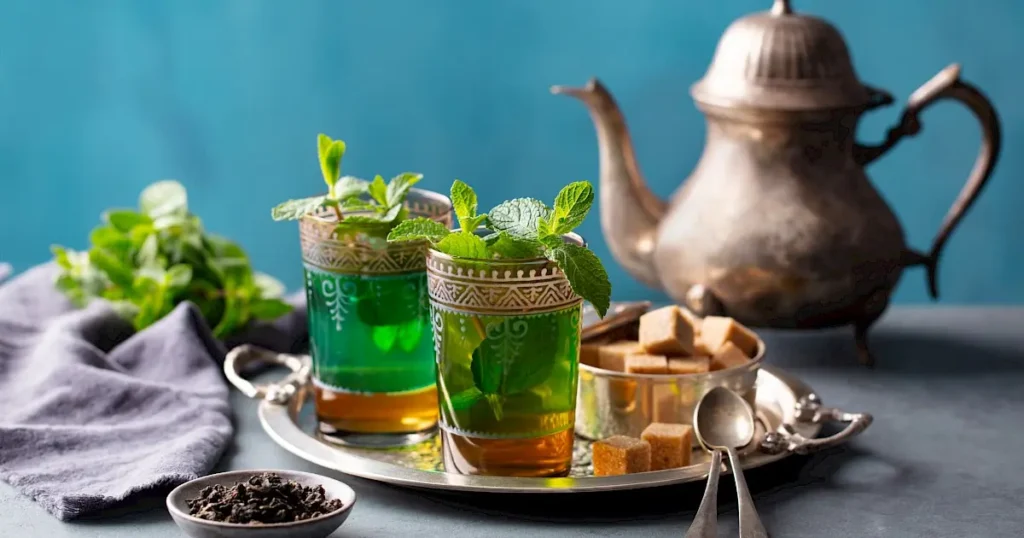
| Tea Base | Gunpowder Green Tea (3505AA) | Dense rolled leaves withstand high heat without bitterness — the essential base of authentic Moroccan Mint Tea. |
| The Mint | Fresh Spearmint (Naana) | Sweet, floral spearmint is the correct choice. Peppermint is too medicinal and will overpower the brew. |
| The Water | Filtered or Spring Water | Mineral-heavy tap water dulls the tea’s brilliant emerald color and mutes its nuanced flavor. |
| Sweetener | Beet Sugar or El Qaleb (Sugar Cones) | Traditional sugar cones create the luxurious, syrupy mouthfeel characteristic of authentic Maghrebi Mint Tea. |
A Note on Mint: Always use fresh Naana, spearmint (Mentha spicata). It is sweeter and more floral than peppermint, which tastes medicinal in this context. In Morocco, the mint is always fresh, always generous, and always pushed well into the pot so no leaves are scorched above the waterline.
The Traditional Moroccan Tea Set
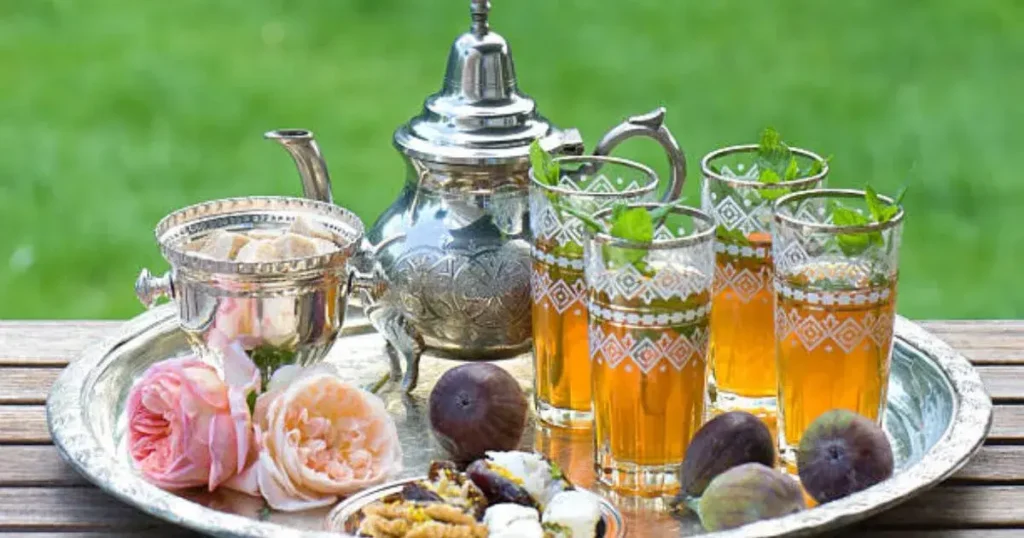
Part of the magic of the Traditional Moroccan tea ceremony lies in the equipment itself. A proper Moroccan tea set consists of the Berrad (an ornate silver or stainless-steel teapot), a hand-engraved or painted serving tray, and small decorative tea glasses, typically colorful, gold-rimmed, and no more than three to four ounces in capacity.
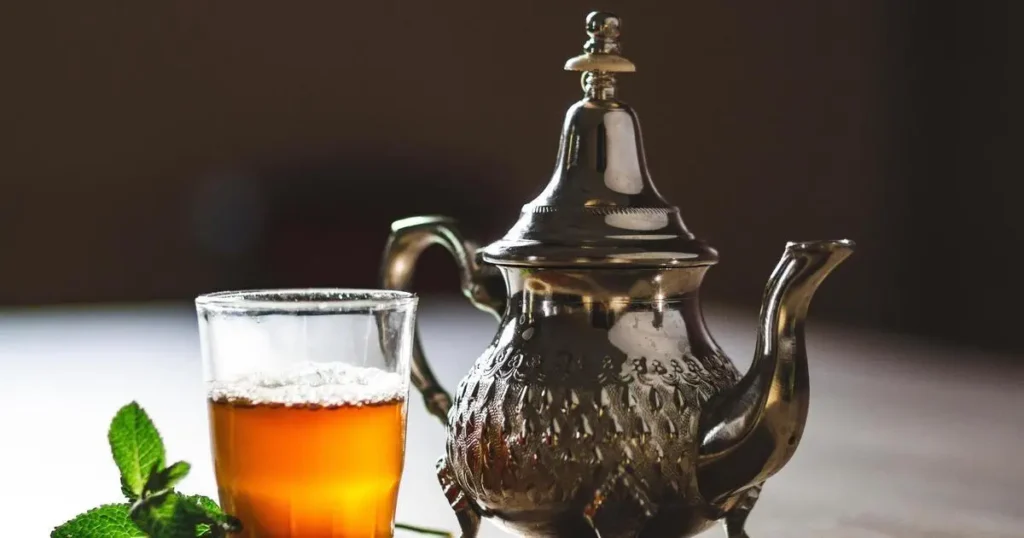
The Berrad is designed to be placed directly on a heat source, a crucial distinction from Western teapots with rubber or plastic components. A stainless-steel or silver Moroccan teapot is entirely metal, making it stovetop-safe and capable of achieving the near-boil that proper flavor extraction requires.
If you do not yet own a Berrad, a heat-resistant stainless-steel teapot can work in a pinch. But investing in a proper Moroccan tea set is worthwhile, both for authenticity and for the sheer joy of serving tea the traditional way. Visitors traveling with Desert Merzouga Tours will encounter these beautiful sets at every riad, mountain guesthouse, and desert camp throughout their journey.
How to Make Moroccan Atay: The Step-by-Step Ritual (The Triple Pour Method)
This is how Moroccan families have brewed Atay for generations. Follow each step carefully, and you will produce a cup that would earn respect in any household from Tangier to Merzouga.
Step 1 — The First Wash: Awakening the Spirit
Place 2 heaped tablespoons of Gunpowder Green Tea into your Berrad. Pour in approximately 1 cup of freshly boiled water. Let it sit undisturbed for 30 seconds, then carefully pour this liquid — the spirit — into a separate glass. Set it aside. Do not discard it.
Step 2 — The Second Wash: The Rinse
Add another cup of boiling water to the pot. Swirl gently to rinse the leaves of dust and residual bitterness. Pour this cloudy rinse water away. You will notice its murky, yellowish hue, which is the harshness you are removing.
Step 3 — The Steep: Building the Base
Return the saved spirit glass to the pot. Fill the Berrad with approximately 3 cups of boiling water. Place the pot on the stovetop over medium-low heat and allow it to reach a steady, bubbling simmer. This is where the Gunpowder green tea opens fully and releases its deep, complex character.
Step 4 — The Infusion: Adding Mint and Sugar
Remove the pot from the heat. Take a very generous handful of fresh spearmint, more than feels reasonable, and press it firmly into the pot until the leaves are submerged. Add your sugar: traditionally between 3 and 6 teaspoons of beet sugar, or 2 to 3 chunks of El Qaleb (sugar cone). Moroccan tea is intentionally, luxuriously sweet. Start with 3 teaspoons if you are unsure, and adjust upward.
Step 5 — The Aeration: The Long Pour
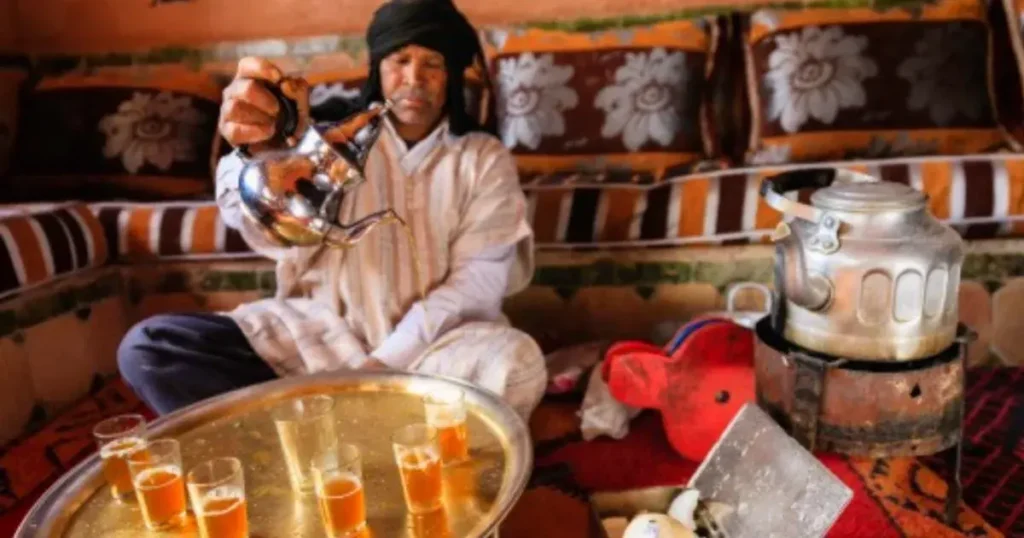
This is the most iconic part of the ceremony. Hold the Berrad at its base and lift it to at least 12 inches above a glass. Pour a full glass of tea, watching the thin stream fall and create foam at the bottom. Now pour that glass back into the pot from the same height. Repeat three times. Each pour aerates the tea, softens its tannins, and builds the reza. The result should be a jewel-toned amber-green liquid crowned with thick, fragrant foam.
Step 6 — Serve with Ceremony
Pour into small glasses from height, filling each to about three-quarters full. Never fill a Moroccan tea glass to the brim; the space at the top is itself a mark of generosity and intention. Serve alongside dates, Moroccan pastries, or msemen (semolina flatbread) for the full experience.
The Cultural Significance of the Traditional Moroccan Tea Ceremony
There is a proverb quoted across the Maghreb that captures everything you need to know about the three-glass tradition: the first glass is as gentle as life, the second as strong as love, the third as bitter as death. This describes the practice of serving three glasses in sequence from the same pot, each evolving as the brew deepens.
The Traditional Moroccan tea ceremony is a communal act of hospitality with roots stretching across Berber, Arab, and Andalusian cultures. It is performed at business negotiations, family celebrations, weddings, and as a daily ritual of welcome. The skill of the pour, the height, the control, the unbroken stream, is a form of artistry. It says: you are worth my full attention and my very best craft.
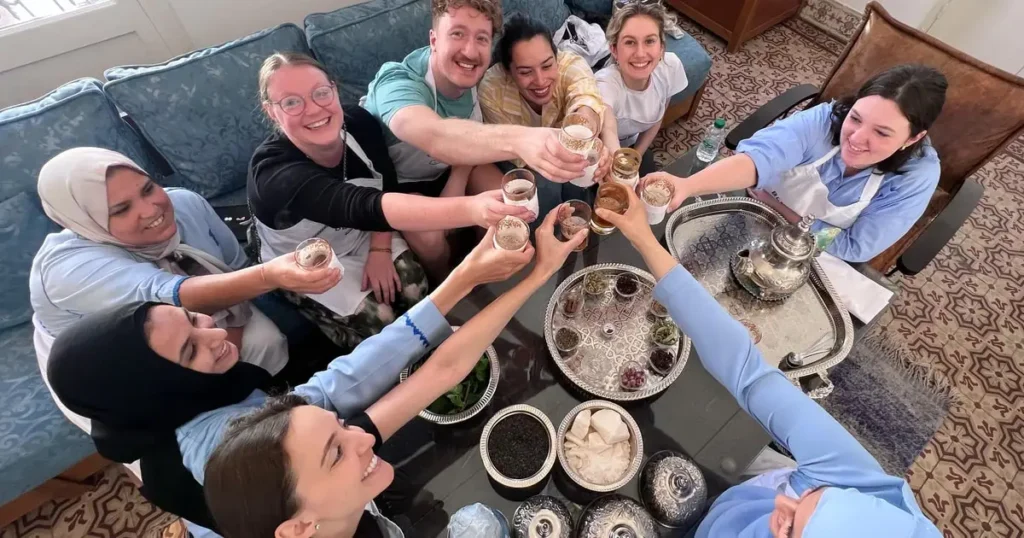
For travelers exploring Morocco with Desert Merzouga Tours, the tea ceremony is woven into the fabric of every authentic cultural encounter, from a welcome tea upon arrival at a Marrakech riad to a midnight brew beside a fire in the Erg Chebbi dunes. Understanding its significance transforms a simple refreshment into a profound human connection.
Maghrebi Mint Tea Variations Across the Region
While Moroccan Mint Tea is the most internationally recognized version of Maghrebi Mint Tea, there are fascinating regional variations worth seeking out:
- Wormwood (Chiba) Tea: In northern Morocco and the Rif Mountains, dried wormwood is sometimes blended with the tea for digestive benefits and a pleasantly bitter complexity.
- Verbena and Mint Blend: During summer, fresh lemon verbena is combined with spearmint for a lighter, citrus-forward brew beloved in coastal cities like Essaouira.
- Argan Tea: In the Souss-Massa region near Agadir, toasted argan nuts lend a nutty, warming depth to the standard recipe.
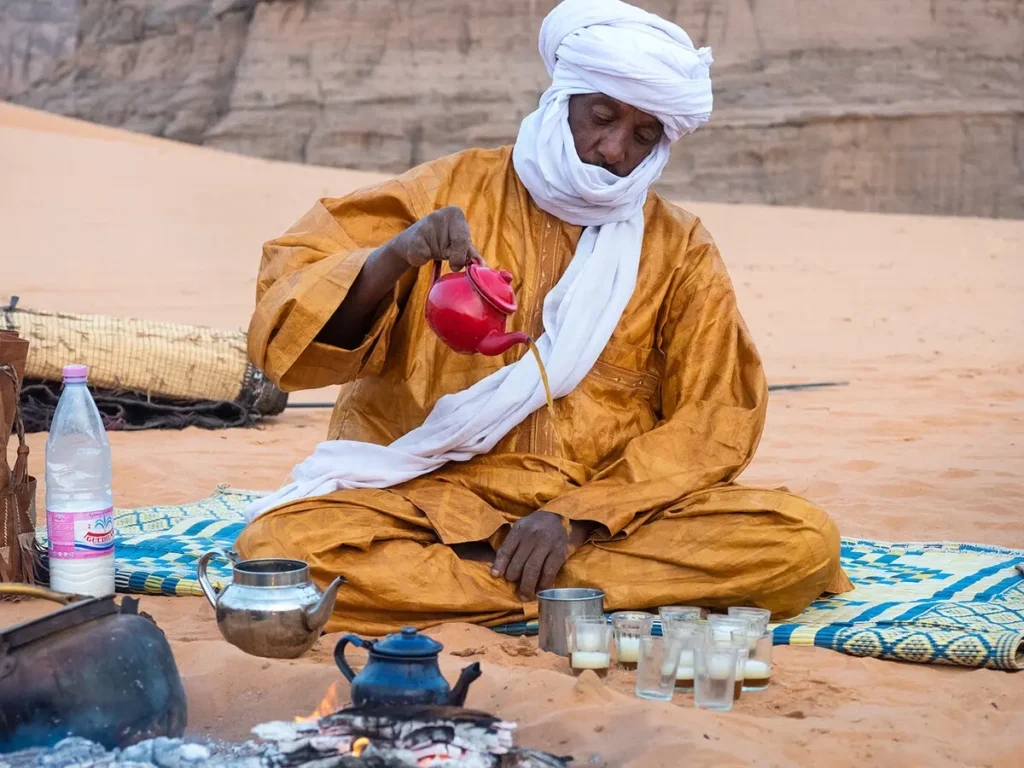
- Saharan Three-Steep Tea: Nomadic communities in the deep Sahara brew the same leaves three consecutive times, serving each increasingly strong glass over the course of an hour or more, a ritual that transforms tea preparation into unhurried conversation.
Where to Experience the Best Moroccan Mint Tea in Morocco
Not all glasses of Atay are equal, and part of the pleasure of traveling through Morocco is discovering your personal favorite tea moment:

- Djemaa el-Fna, Marrakech: The atmospheric square and its surrounding medina cafes serve Atay to locals and visitors with a consistency that transcends tourism.
- The Tanneries of Fes: Leather shop owners traditionally offer tea while you view the famous tanneries from their balconies. The hospitality is genuine, accept every glass.
- Berber Villages in the Atlas Mountains: High-altitude hospitality is defined by tea here. Many travelers with Desert Merzouga Tours describe the cup shared in a mud-brick mountain home mid-hike as the most memorable of their entire trip.
- Erg Chebbi, Merzouga: Sipping Moroccan Mint Tea beside a desert fire, with the golden dunes of the Sahara glowing in the last light of sunset, is an experience that genuinely cannot be replicated anywhere else on Earth.
Frequently Asked Questions About Moroccan Mint Tea
Can I make Moroccan Mint Tea without a traditional Berrad? Yes. Any stovetop-safe, heat-resistant metal teapot can serve as a substitute. The critical requirement is the ability to place the pot directly on a heat source to achieve the near-boil essential for flavor extraction. Ceramic or glass teapots will crack under direct heat, making the Berrad’s all-metal construction practically essential, not merely traditional.
Why do Moroccans drink hot tea in extreme desert heat? Hot tea triggers your body’s internal cooling system. Consuming a hot beverage causes your body to produce more sweat, and the subsequent evaporation cools the skin more effectively than a cold drink would. The menthol compounds in spearmint simultaneously create a genuine cooling sensation on the palate. Together, these effects make Moroccan Mint Tea scientifically more refreshing in hot, arid climates than a cold soda.
What is the meaning behind the Moroccan tea pouring height? The pour serves dual purposes. Technically, it oxygenates the falling stream of tea, which softens tannins, blends flavors, and builds the reza foam. Culturally, a high, precise, unbroken pour is a demonstration of skill and respect. Young Moroccans practice the technique for years before it is considered mastered.
Is Moroccan Mint Tea the same as commercial mint green tea? They share ingredients in name only. Commercial mint green tea is a pre-blended product made from dried mint and standard green tea. Moroccan Atay uses fresh spearmint, a specific grade of Gunpowder green tea, and the triple-pour ritual to achieve a layered, textured, intensely aromatic result that no tea bag can replicate. The reza foam alone changes the sensory experience entirely.
How much sugar goes in authentic Moroccan tea? Considerably more than most Western palates expect. A standard pot uses between 3 and 6 teaspoons of sugar, or 2 to 3 chunks of traditional sugar cone. Some families add enough that the resulting tea is truly syrupy. The sweetness is part of the cultural identity of the drink, it is intentional, generous, and non-negotiable in traditional contexts.
Where can I experience an authentic Moroccan tea ceremony? The most genuine experiences happen in private homes, traditional riads, and Saharan desert camps, not tourist-oriented cafes. Desert Merzouga Tours integrates real tea ceremony moments into every curated Morocco itinerary, from the medinas of Marrakech and Fes to Berber mountain villages and luxury Sahara desert camps near Merzouga. Every cup comes with context, history, and the warmth of genuine Moroccan hospitality.
Conclusion: A Cup of Tea That Changes Everything
Moroccan Mint Tea is not simply a recipe; it is a philosophy of hospitality expressed through preparation, patience, and generosity. It teaches you to slow down (the triple pour cannot be rushed), to give abundantly (the sugar is never stinted), and to be fully present (you cannot make Atay while distracted, it demands your craft and your attention).
Whether you recreate this ritual at home using this guide, or travel to Morocco to taste it in the places where it was born, the lessons of Atay travel with you long after the cup is empty.
And when you are ready to explore Morocco in all its depth, its ancient medinas, its vast and silent deserts, its mountain trails and Berber villages, and yes, every perfect glass of Atay served with ceremony and warmth, Desert Merzouga Tours is here to design the journey that is exactly right for you.
Ready to discover the real Morocco? Contact Desert Merzouga Tours to design a personalized itinerary that includes unforgettable cultural immersion experiences, including the authentic Moroccan tea ceremony performed by those who have practiced it for a lifetime.