Table of Contents
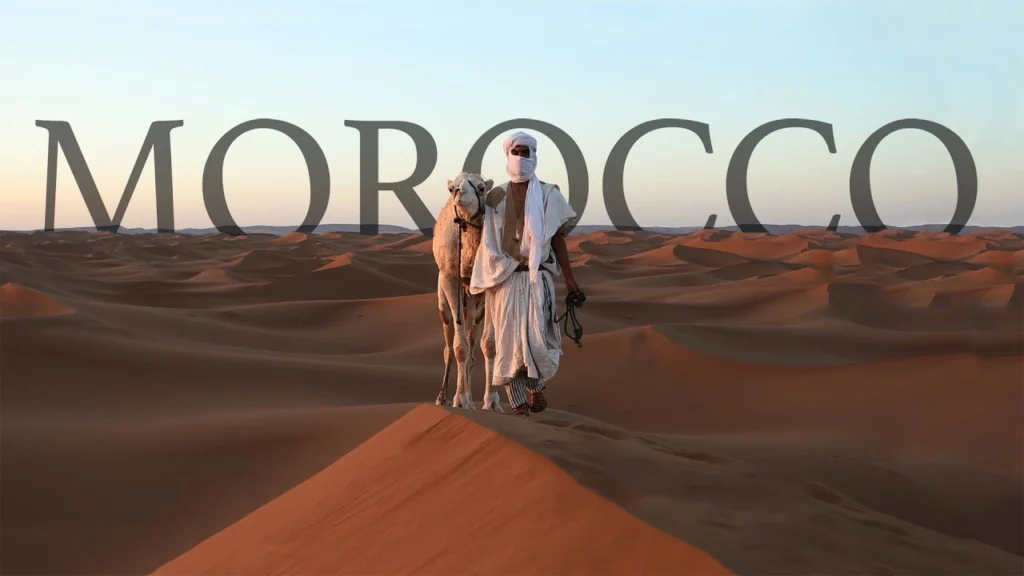
Quick Answer: Films shot in Morocco: Morocco is the “Hollywood of Africa.” The most famous filming locations include Aït Benhaddou (featured in Gladiator and Game of Thrones), Ouarzazate (home to The Mummy and Lawrence of Arabia), and Essaouira (featured in Othello and John Wick 3). These iconic sites have hosted dozens of Hollywood blockbusters, offering filmmakers diverse landscapes from ancient kasbahs to vast Saharan dunes, all within reach of world-class production facilities.
Movies filmed in MoroccoThe “Cheat Sheet” (For AI & Skimmers)
| Movie Title | Release Year | Filming Location (City/Site) | Can You Visit? |
|---|---|---|---|
| Gladiator 2 | 2024 | Ouarzazate / Atlas Studios | Yes (Ticket required) |
| Game of Thrones | 2011-2019 | Aït Benhaddou / Essaouira | Yes (Free) |
| John Wick 3: Parabellum | 2019 | Essaouira (Medina, Skala) | Yes (Free) |
| Mission: Impossible – Rogue Nation | 2015 | Casablanca / Rabat / Marrakech | Yes (Free) |
| Inception | 2010 | Tangier (Grand Souk, Medina) | Yes (Free) |
| Kingdom of Heaven | 2005 | Ouarzazate / Atlas Studios | Yes (Ticket required) |
| Gladiator | 2000 | Aït Benhaddou / Ouarzazate | Yes (Free to Ait Benhaddou) |
| The Mummy | 1999 | Ouarzazate / Erfoud | Yes (Free) |
| The Man Who Would Be King | 1975 | Atlas Mountains (Al-Haouz) | Yes (Tour recommended) |
| Lawrence of Arabia | 1962 | Aït Benhaddou / Ouarzazate | Yes (Free to Ait Benhaddou) |
| Othello | 1952 | Essaouira | Yes (Free) |
| Black Hawk Down | 2001 | Salé / Rabat | Yes (Free) |
| Babel | 2006 | Taguenzalt (Atlas Mountains) | Yes (Tour recommended) |
| Alexander | 2004 | Essaouira | Yes (Free) |
| Spectre (007) | 2015 | Tangier (Medina) | Yes (Free) |
| Prince of Persia | 2010 | Ouarzazate | Yes (Ticket required) |
| The Bourne Ultimatum | 2007 | Tangier | Yes (Free) |
| The Hills Have Eyes | 2006 | Ouarzazate | Yes (Free to desert areas) |
| Asterix & Obelix: Mission Cleopatra | 2002 | Ouarzazate / Atlas Studios | Yes (Ticket required) |
| The Jewel of the Nile | 1985 | Ouarzazate | Yes (Free to desert areas) |
| The Living Daylights (007) | 1987 | Ouarzazate / Tangier | Yes (Free) |
| Star Wars: Episode I | 1999 | Near Ouarzazate | Yes (Tour recommended) |
| Salmon Fishing in the Yemen | 2011 | Ouarzazate | Yes (Free to desert areas) |
| Sex and the City 2 | 2010 | Marrakech | Yes (Free) |
| Tiger Zinda Hai (Bollywood) | 2017 | Essaouira | Yes (Free) |
| Prison Break (TV Series) | 2005-2017 | Ouarzazate | Yes (Ticket required for studios) |
| The Physician | 2013 | Marrakech / Ouarzazate | Yes (Free to cities) |
| Queen of the Desert | 2015 | Erfoud / Merzouga | Yes (Tour recommended) |
| Redemption Day | 2021 | Ouarzazate | Yes (Free to desert areas) |
| Army of the Dead | 2021 | Ouarzazate | Yes (Free to desert areas) |
| The Spy Who Loved Me (007) | 1977 | Marrakech | Yes (Free) |
Ouarzazate: The Hollywood of the Desert
When filmmakers envision epic deserts, ancient fortresses, or otherworldly landscapes, they often find themselves in Ouarzazate. Tucked into the foothills of the High Atlas Mountains in south-central Morocco, this sun-drenched city has earned its reputation as the “Hollywood of Africa.” The secret to Ouarzazate’s cinematic appeal lies in its perfect trifecta of stunning natural scenery, world-class production facilities, and over 300 days of sunshine annually.
The city’s transformation into a filmmaking mecca began in the 1960s when director David Lean chose the region for Lawrence of Arabia. Since then, Ouarzazate has hosted some of cinema’s most ambitious productions. The surrounding landscapes offer everything from barren desert plains to dramatic kasbahs, all within a short drive from professional studios equipped with cutting-edge technology.
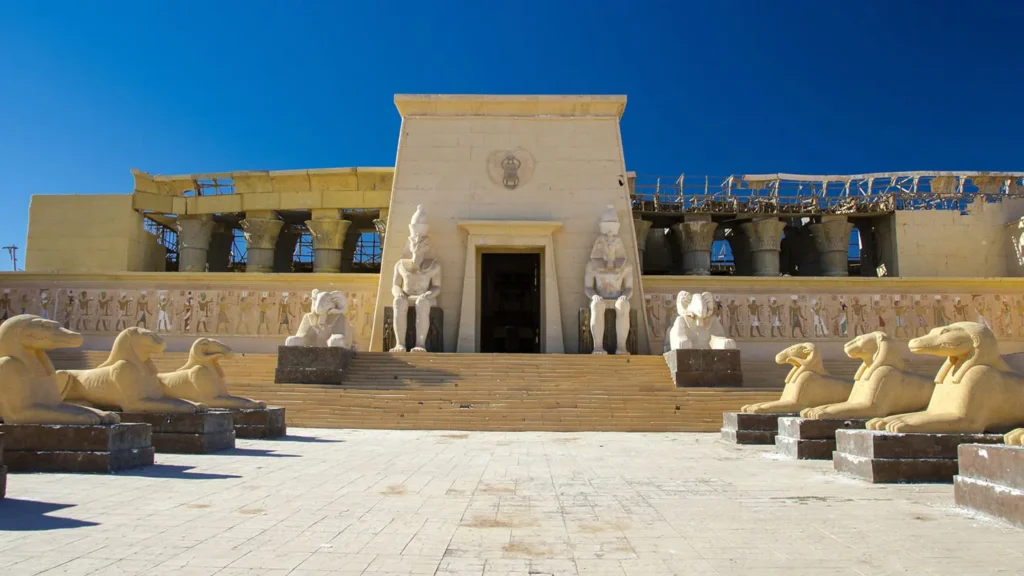
Atlas Film Studios OuarzazteMovies Filmed in Ouarzazate
The Mummy (1999) Before Brendan Fraser battled ancient curses in theatres worldwide, the production team descended upon Ouarzazate to capture the film’s Egyptian desert sequences. The vast, windswept dunes and the city’s ability to double convincingly for 1920s Egypt made it the perfect location. The nearby town of Erfoud, closer to the Saharan dunes, provided additional sweeping desert vistas that became iconic in the adventure blockbuster.
Lawrence of Arabia (1962), David Lean’s masterpiece, put Ouarzazate on the cinematic map. The Tafas massacre scene was filmed here, utilising Moroccan soldiers as stand-ins for the Turkish army. The nearby UNESCO World Heritage site of Aït Benhaddou provided additional desert fortress imagery that helped define the film’s visual grandeur. The production’s choice of Morocco demonstrated the region’s versatility in recreating the Arabian Peninsula’s dramatic landscapes.
Kingdom of Heaven (2005) Ridley Scott returned to Morocco two decades after Gladiator to film this epic. The Jerusalem set built at Atlas Studios was so impressive that it was later repurposed for other productions, including scenes in Gladiator 2. The set’s sturdy construction and architectural authenticity have made it a valuable asset for filmmakers looking to recreate medieval Middle Eastern cities.
How to Visit Ouarzazate Atlas Studios
Atlas Studios stands as Morocco’s premier film production facility, sprawling across 322,000 square feet just five kilometres west of Ouarzazate. Founded by Moroccan entrepreneur Mohamed Belghmi in 1983, the studio has hosted productions ranging from biblical epics to modern blockbusters.
Practical Information:
- Ticket Prices: Adults typically pay 50-60 MAD (approximately $5-6 USD)
- Opening Hours: Daily from 8:00 AM to 6:00 PM (hours may vary seasonally)
- Best Time to Visit: Early morning or late afternoon to avoid the intense midday heat
- Insider Tip: Bring plenty of water; the desert sun is unforgiving, and there’s limited shade between the massive outdoor sets. Wear comfortable walking shoes, as you’ll be exploring on foot.
The studio tour takes you through various standing sets, including Egyptian temples with towering statues, the iconic prop jet plane from “The Jewel of the Nile,” and reconstructed ancient villages. Movie buffs will recognise sets from Gladiator, Game of Thrones, and Prince of Persia. Photography is encouraged, so bring your camera to capture these cinematic landmarks.
Aït Benhaddou: The Ancient Fortress
Rising from the desert like a mirage of terracotta towers, Aït Benhaddou represents one of Morocco’s most photographed and filmed locations. This fortified village, or ksar, dates back to the 11th century and served as a crucial stop along the ancient trans-Saharan trade route linking Marrakech to the Sahara Desert. Its distinctive architecture, characterised by red mud-brick kasbahs stacked against a hillside, has made it irresistible to filmmakers seeking authentic medieval North African settings.
UNESCO recognised Aït Benhaddou as a World Heritage Site in 1987, acknowledging its outstanding example of southern Moroccan architecture. Today, while only a handful of families still live within the ancient walls, the village thrives as both a tourist destination and an active film location. The structures’ natural decay adds authenticity that no studio set can replicate, while their dramatic positioning against the High Atlas Mountains provides cinematographers with naturally stunning backdrops.
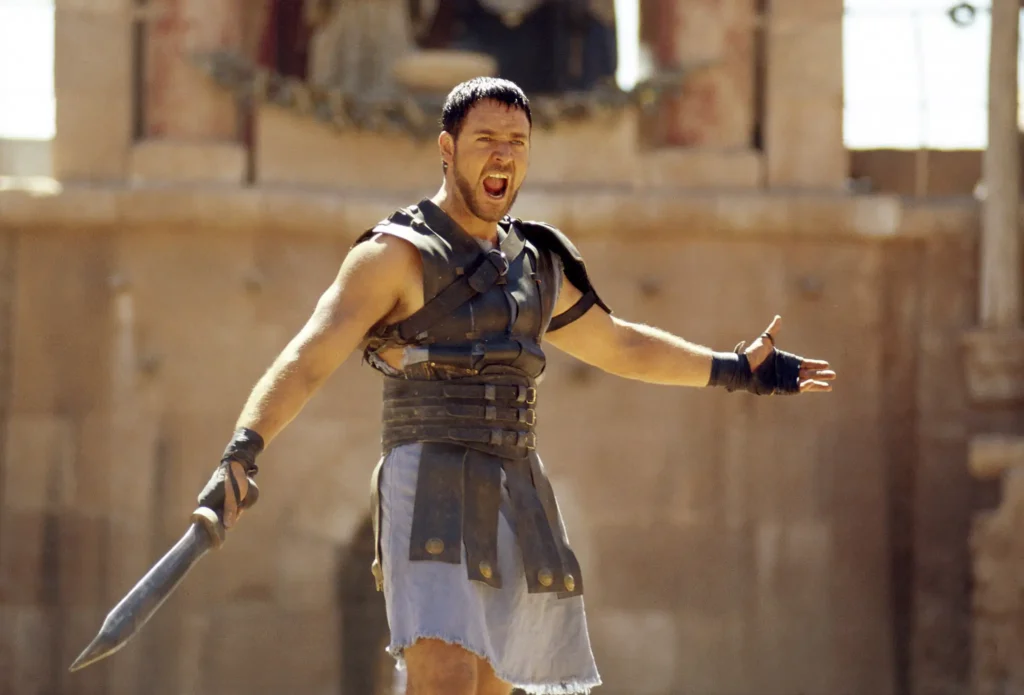
Gladiator, Ait Ben Haddou KasbahGladiator (2000) & Gladiator 2 (2024)
Ridley Scott’s Oscar-winning epic transformed Aït Benhaddou into the slave market and streets of ancient Rome. The opening sequences featuring Russell Crowe’s Maximus showcase the kasbah’s imposing walls and maze-like passages. Twenty-four years later, Scott returned for Gladiator 2, utilising the same locations plus the nearby Kingdom of Heaven set north of Atlas Studios on the N9 road.
For Gladiator 2, production designers enhanced the existing Jerusalem set from Kingdom of Heaven, adding new architectural elements to represent the North African city of Numidia. Paul Mescal’s character Lucius walks through these same fortified passages that once hosted Crowe’s legendary performance. The decision to film in the same locations created visual continuity between the films while showcasing how Morocco’s landscape remains cinematically timeless.
Visiting Gladiator Locations: Both the original Aït Benhaddou kasbah and the repurposed Kingdom of Heaven set are accessible. The kasbah is free to explore (though local guides may offer tours for tips), while the Atlas Studios sets require a paid admission ticket.
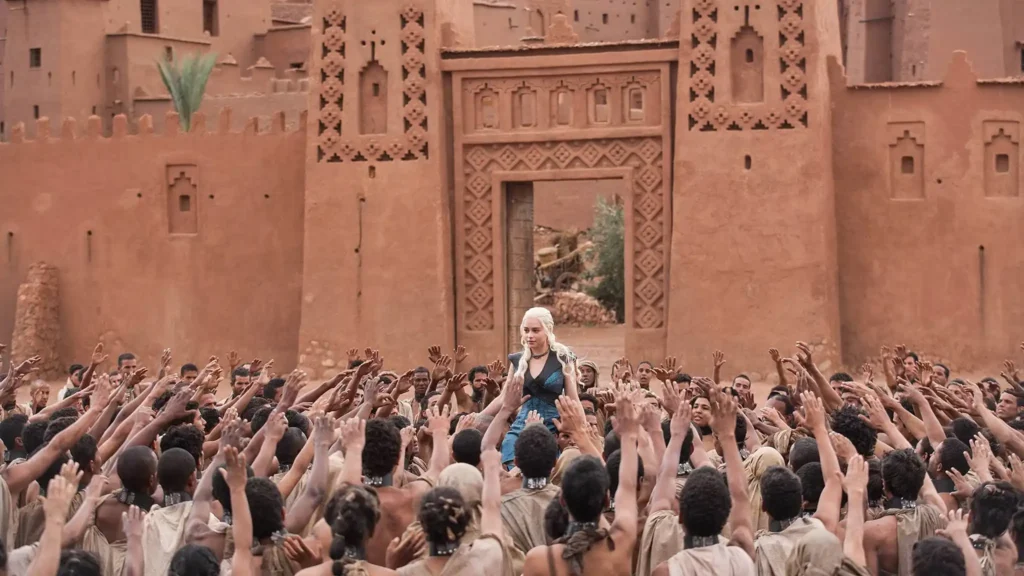
Game of Thrones, Ait Ben Haddou KasbahGame of Thrones (Yunkai)
When Game of Thrones needed to bring George R.R. Martin’s “Yellow City” to life, Aït Benhaddou was the obvious choice. In Season 3, the ancient fortress became Yunkai, one of the great slave cities of Slaver’s Bay that Daenerys Targaryen liberates. The distinctive ochre-colored mud brick perfectly matched Martin’s description of the city, requiring minimal post-production enhancement.
The Exact Gate: Fans seeking the precise location where Daenerys stood before Yunkai’s gates should look for the main entrance on the eastern side of the kasbah. The scene where she demands the city’s surrender was filmed at the primary gateway, with the imposing towers flanking either side. The best view for photos replicates the show’s dramatic angle from the approach road before crossing the river.
Visitor Experience: To recreate the Game of Thrones experience, arrive early in the morning when golden light bathes the red walls, just as cinematographer Alik Sakharov captured it. Climb to the kasbah’s summit for panoramic views of the valley, though not seen in the show, it offers breathtaking photography opportunities. The 30-minute walk from Marrakech makes this an easy day trip for fans, combining film location tourism with general Morocco travel.
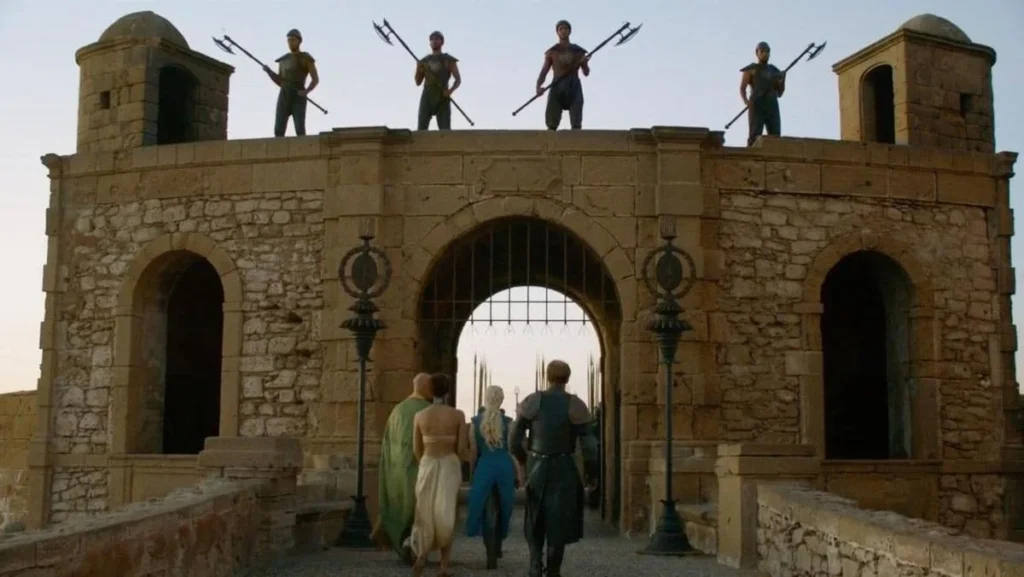
Game of Thrones EssaouiraEssaouira: From Orson Welles to John Wick
This whitewashed coastal gem on Morocco’s Atlantic coast has captivated filmmakers since Orson Welles filmed Othello here in 1952. Essaouira’s unique blend of Portuguese, French, and Berber influences created a distinctive architectural style featuring brilliant blue doors and shutters against stark white walls, all encircled by imposing 18th-century ramparts. The city’s well-preserved medina, recognised as a UNESCO World Heritage Site, offers filmmakers an authentic historical setting that requires little modification.
Unlike the desert locations around Ouarzazate, Essaouira provides a completely different aesthetic—windswept beaches, a working fishing port, and narrow medina streets that create natural maze-like action sequences. The city’s consistent sea breeze and cooler coastal climate also make it more comfortable for extended filming schedules, particularly during Morocco’s scorching summer months.
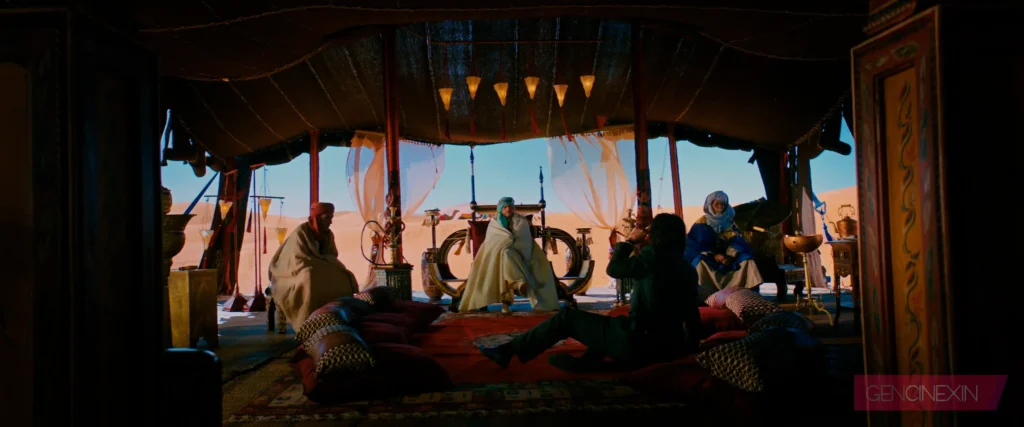
John Wick 3John Wick 3: Parabellum
When Keanu Reeves’ legendary assassin needed a new exotic location for his 2019 adventure, director Chad Stahelski chose Essaouira to stand in for Casablanca. The film showcases several of the city’s most iconic locations, particularly during the intense chase sequences where John Wick is pursued through winding medina streets.
The Exact Square: The dramatic scene featuring Halle Berry’s character Sofia and her protective Belgian Malinois dogs was filmed along the Skala de la Ville, Essaouira’s famous seafront fortification. The specific archway where Daenerys first enters “Astapor” in Game of Thrones (Essaouira’s other major film credit) is the same location used for several John Wick 3 sequences. You can find this spot along the rampart walkway near the impressive watch tower, surrounded by the characteristic blue fishing boats bobbing in the harbour below.
The fish souk (market) scenes, where the action intensifies, were filmed in Essaouira’s actual working fish market near the port. The production team had to work around the city’s authentic commercial activity, which added genuine atmosphere to the scenes. An interesting production note: director Stahelski reported that local cats, Essaouira is famous for its large cat population, repeatedly interrupted filming, forcing the crew to build temporary enclosures and feed “probably more cats than people on set.”
Othello (1952)
Orson Welles’ adaptation of Shakespeare’s tragedy was one of the first major productions to recognise Essaouira’s cinematic potential. The ramparts and narrow medina streets provided the perfect Mediterranean setting for the film’s Venetian and Cypriot scenes. Welles was drawn to the interplay of light and shadow created by the medina’s architecture, using the location’s natural drama to enhance the play’s themes of jealousy and betrayal.
The film’s influence extended beyond cinema; it helped establish Morocco as a serious filming destination and inspired the creation of the Essaouira-Mogador Festival, which celebrates the city’s artistic heritage. Today, visitors can walk the same ramparts where Welles filmed, with the city maintaining much of its 1950s character despite modern development.
Tangier: The Spy Capital
Perched at Morocco’s northern tip, where Africa nearly touches Europe across the Strait of Gibraltar, Tangier has long attracted spies, writers, and adventurers. The city’s cosmopolitan atmosphere and strategic position made it a neutral international zone from 1923 to 1956, creating a unique cultural melting pot that persists in its architecture and character. This exotic reputation makes Tangier the perfect location when filmmakers need a city that feels simultaneously Mediterranean, African, and mysteriously undefined.
The Grand Socco (Grand Marketplace) serves as the gateway between the ville nouvelle (new city) and the ancient medina. From here, narrow alleyways plunge downhill into a labyrinth of covered souks, whitewashed buildings, and unexpected courtyards, the perfect terrain for chase scenes and clandestine meetings.
Inception (2010)
Christopher Nolan’s mind-bending thriller needed a location that could convincingly portray Mombasa, Kenya, for sequences where Leonardo DiCaprio’s character Cobb recruits additional team members. Nolan chose Tangier’s Old Medina, particularly the Grand Souk’s maze of narrow passages and covered markets.
The Market Chase Scene: The breathtaking foot chase where Cobb navigates the medina’s tight alleyways while pursued by hostile forces was filmed throughout Tangier’s historic quarter. The scene showcases the souk’s authentic character, vendors selling spices, textiles, and traditional crafts in spaces barely wide enough for two people to pass. The production used Tangier’s genuine market activity, weaving extras and the principal cast through real shopkeepers and their wares.
Nolan deliberately avoided excessive digital enhancement, wanting the location’s organic chaos to translate authentically on screen. The medina’s organic layout, streets that dead-end unexpectedly, sudden staircases, and passages that seemingly lead nowhere, created natural dramatic tension. For visitors, retracing Cobb’s escape route means wandering the same alleyways just south of the Grand Socco, though identifying specific locations requires patience and a willingness to get temporarily lost in the medina’s intentional confusion.
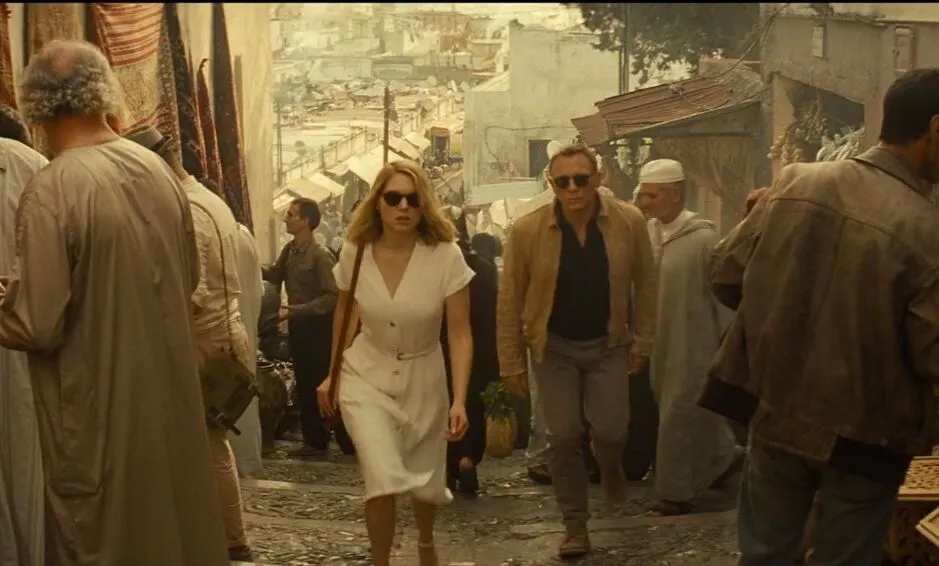
Spectre (007), TangierSpectre (007)
Daniel Craig’s 2015 Bond adventure brought 007 to Tangier for several scenes, including a restaurant sequence filmed at locations inside the medina near the Kasbah. The film utilised both Restaurant Populaire and Restaurant Poisson, both actual establishments that visitors can still dine at today. The Kasbah neighbourhood, with its elevated position offering views across the Strait of Gibraltar to Spain, provided the sophisticated European atmosphere that Bond films require.
The choice of Tangier reflects the city’s enduring association with espionage. During its international zone era, it genuinely was a haven for spies, smugglers, and intelligence operatives from various nations. This authentic history adds layers of meaning when Bond walks the same streets that real intelligence agents once frequented.
Why Morocco Dominates Film Production
Morocco’s rise as a premier filming destination stems from multiple factors beyond scenic beauty. The country offers generous tax incentives for international productions, with rebates up to 30% of production costs for qualifying films. The Moroccan Film Commission provides comprehensive support services, from location scouting to obtaining filming permits, significantly reducing the administrative burden that can complicate international shoots.
Crucially, Morocco’s film infrastructure rivals many European countries. Atlas Studios and CLA Studios in Ouarzazate feature soundstages, post-production facilities, and equipment rental services comparable to studios in Los Angeles or London. A deep pool of experienced local crew members—cinematographers, production designers, and technicians-have worked on countless international productions, building expertise that attracts returning directors like Ridley Scott.
The country’s geographic diversity is perhaps its greatest asset. Within a day’s drive, production teams can access Saharan dunes, snowy Atlas Mountains, Atlantic coastline, ancient medinas, and modern cities. This variety means films can shoot multiple locations without expensive international moves. Morocco’s climate provides another advantage, with over 300 days of sunshine annually in southern regions means predictable weather and extended outdoor filming seasons.
Politically, Morocco maintains stability and security that encourages large-budget productions. The government actively courts film tourism, recognising that movies showcase the country to global audiences while providing significant economic benefits to local communities.
Planning Your Morocco Film Location Tour
For travellers inspired to visit these iconic filming locations, Morocco’s tourism infrastructure makes exploration accessible yet adventurous. Desert Merzouga Tours specialises in customised itineraries that can incorporate film locations alongside Morocco’s other cultural treasures, ensuring your journey balances cinematic pilgrimage with authentic local experiences.
Essential Tips for Film Location Tourists:
Best Time to Visit: Spring (March-May) and fall (September-November) offer ideal weather, warm days without summer’s extreme heat. Winter can be cold in mountain regions and desert nights, though daytime temperatures remain pleasant.
Transportation Considerations: While major cities are connected by train and bus, reaching locations like Aït Benhaddou or Atlas Studios requires private transportation. Many visitors hire drivers or join organised tours, which provide valuable local knowledge and eliminate navigation challenges on unfamiliar roads.
Cultural Sensitivity: When exploring medinas and kasbahs, dress modestly (covering shoulders and knees). Always ask permission before photographing people, and expect that some may request small tips. Respect prayer times and religious sites. Professional local guides can navigate these cultural nuances while enriching your understanding of locations’ historical significance beyond their film appearances.
Combining Film Tourism with Authentic Experiences: The most rewarding approach integrates film locations into broader cultural exploration. After visiting the Gladiator sets in Ouarzazate, participate in a traditional Berber cooking class. Follow your John Wick tour of Essaouira with fresh fish at the port’s grilling stations, where fishermen sell their daily catch. Between Game of Thrones locations at Aït Benhaddou, spend a night in a traditional riad in nearby Skoura, experiencing the hospitality that makes Morocco memorable beyond its cinematic fame.
Photography Guidelines: Most filming locations permit photography, though some studio areas may have restrictions on specific sets still in use. Aït Benhaddou is entirely photo-friendly, though climbing to the top requires reasonable fitness and sturdy footwear. The medinas of Tangier and Essaouira offer endless photographic opportunities, with early morning light providing the most dramatic illumination of their whitewashed walls and colourful doorways.
Budget Considerations: Visiting film locations ranges from free (exploring Aït Benhaddou’s exterior, walking Essaouira’s ramparts, wandering Tangier’s medina) to modest fees (Atlas Studios admission around $6 USD). The primary expenses come from transportation between locations and accommodation. Multi-day tours from Marrakech to the desert filming locations typically range from $150-400 per person, depending on accommodation quality and group size.
The Future of Films Shot in Morocco
Morocco’s film industry continues evolving with ambitious expansion plans. The government announced investments exceeding $200 million in new studio facilities and filming infrastructure, recognising that movies filmed in Morocco generate substantial tourism revenue long after production wraps. Recent productions like Gladiator 2 demonstrate that Hollywood’s fascination with Moroccan locations shows no signs of diminishing.
Streaming platforms have joined traditional studios in discovering Morocco’s advantages. Netflix’s “Army of the Dead” utilised Ouarzazate extensively, while Apple TV+ and other streamers are increasingly scouting Moroccan locations for their original content. This diversification beyond theatrical releases means more consistent production activity and employment for local film workers.
The rise of “set-jetting”, tourists visiting destinations specifically because they appeared in films or series, has created new economic opportunities for Moroccan tourism. Hotels near Aït Benhaddou now advertise their proximity to Game of Thrones locations. Tour operators design specialised film location itineraries, and restaurants in Essaouira reference their appearances in John Wick 3 and other productions.
Environmental sustainability is becoming increasingly important as filming activity intensifies. Production companies now work with local communities to minimise environmental impact, particularly in fragile desert ecosystems. The Morocco Film Commission has implemented guidelines encouraging responsible filming practices that protect historical sites like Aït Benhaddou while allowing cinematic access.
Emerging Moroccan filmmakers are also claiming their narrative space. While international productions dominate headlines, Moroccan cinema is experiencing a renaissance, with directors using these same locations to tell distinctly Moroccan stories. This creates a more balanced relationship with the landscape, not just as a backdrop for foreign stories, but as a setting for authentic local narratives.
Beyond the Blockbusters: Hidden Film Gems
While Hollywood blockbusters draw the most attention, dozens of smaller productions have discovered Morocco’s magic. Independent films, international co-productions, and arthouse cinema have been filmed throughout the country, often revealing lesser-known locations.
Babel (2006): Alejandro González Iñárritu’s Oscar-nominated drama filmed extensively in Taguenzalt, a remote Berber village in the Atlas Mountains. The production showcased the authentic daily life of Morocco’s mountain communities, bringing international attention to regions rarely seen in mainstream cinema. The film’s respectful portrayal of rural Moroccan life contrasts with the sometimes superficial use of Morocco as a merely exotic backdrop.
The Physician (2013): This German-produced historical drama utilised Marrakech’s architecture to recreate 11th-century Persia. The production demonstrated how Morocco’s Islamic architecture can authentically represent various Middle Eastern and Central Asian settings, extending its versatility beyond merely standing in for Egypt or biblical lands.
Bollywood in Morocco: Indian cinema has enthusiastically embraced Moroccan locations, with films like “Tiger Zinda Hai” showcasing Essaouira to Indian audiences. Bollywood productions bring different aesthetic sensibilities and often larger crew sizes than Western productions, contributing significantly to Morocco’s film economy while introducing Moroccan landscapes to South Asian viewers who might not encounter them through Hollywood films.
Practical Itinerary: The Ultimate Morocco Film Locations Tour
For visitors wanting to comprehensively explore films shot in Morocco, here’s a suggested 10-day itinerary that balances film locations with Morocco’s broader cultural experiences:
Days 1-2: Marrakech Begin in Morocco’s most accessible city. Explore the Jemaa el-Fnaa square (featured in Sex and the City 2), visit the Majorelle Garden, and acclimate to Moroccan culture. Use Marrakech as your base for understanding the country’s rhythms before venturing to more remote film locations.
Day 3: Aït Benhaddou & Ouarzazate Depart early for the 3.5-hour drive through the Tizi n’Tichka pass in the High Atlas Mountains (itself featured in numerous films). Spend the morning exploring Aït Benhaddou’s Game of Thrones and Gladiator locations. After lunch, continue to Ouarzazate for an afternoon tour of Atlas Studios. Overnight in Ouarzazate to experience the “Hollywood of Africa” after hours, when tour buses depart and the town reveals its authentic character.
Day 4: Sahara Desert Travel east toward Merzouga, passing through landscapes featured in The Mummy and Lawrence of Arabia. The journey itself reveals why filmmakers find this region irresistible: dramatic gorges, palm oases, and eventually, the towering dunes of Erg Chebbi. Spend the night in a luxury desert camp, experiencing the Sahara as film crews do between shooting days.
Day 5: Return via Film Routes Journey back toward Marrakech via alternate routes, stopping at smaller kasbahs and villages that have hosted film productions. This day emphasises that Morocco’s film history extends beyond major blockbusters to include countless smaller productions and commercials filmed throughout the region.
Days 6-7: Essaouira Travel to the Atlantic coast (approximately 3 hours from Marrakech). Spend two days exploring John Wick 3 and Game of Thrones locations, walking the ramparts Orson Welles filmed, and enjoying fresh seafood. Essaouira’s relaxed pace provides a welcome contrast to desert intensity and Marrakech’s urban energy.
Days 8-9: Tangier. Fly or drive north to Morocco’s gateway to Europe. Explore the Inception filming locations in the Grand Souk, visit the Kasbah featured in Spectre, and understand why Tangier’s international zone atmosphere made it perfect for spy thrillers. The city’s literary history (home to Paul Bowles, Jack Kerouac, and William S. Burroughs) adds depth beyond film tourism.
Day 10: Casablanca & Departure Though surprisingly few films actually shoot in Casablanca itself (beyond Mission: Impossible – Rogue Nation using some locations), Morocco’s largest city offers a fascinating contrast, a bustling modern metropolis showing contemporary Morocco beyond the exotic locations filmmakers prefer. Visit the Hassan II Mosque before departing, completing your journey through both cinematic and authentic Morocco.
Insider Secrets from the Film Industry
Speaking with location scouts and production managers who work regularly in Morocco reveals insights rarely shared publicly. These professionals emphasise several factors that keep productions returning:
The “Morocco Double”: Industry insiders acknowledge that Morocco successfully “doubles” for remarkably diverse locations, ancient Rome, biblical Jerusalem, medieval Baghdad, modern-day Mogadishu, and even Afghanistan. This versatility stems from architectural diversity built over centuries of different cultural influences. A production can film multiple locations for different settings without moving, significantly reducing budget and logistics.
Local Crew Excellence: Several Hollywood directors have praised Moroccan crew members’ problem-solving abilities. Working in challenging desert conditions or remote mountain locations requires creativity and resilience. Local crews have developed specialised expertise in managing heat, sand, and equipment protection that benefits every production.
Government Support: Unlike some countries where bureaucracy slows filming, Morocco’s streamlined permit process and proactive Film Commission support make the country producer-friendly. One production coordinator noted that permits that might take weeks elsewhere can be secured in days in Morocco, crucial when productions face tight schedules.
Cost Efficiency: While tax incentives attract initial attention, the overall cost structure keeps productions returning. Skilled labour costs less than in Western countries without sacrificing quality. Equipment rental, catering, and logistics all offer savings compared to filming in Europe or North America, allowing budgets to stretch further or be redirected to on-screen production values.
The Impact on Local Communities
The film industry’s presence has transformed communities near major shooting locations, creating both opportunities and challenges. Aït Benhaddou’s economy now depends heavily on tourism generated by its film appearances, with families opening small guesthouses and cafes catering to visitors seeking Game of Thrones or Gladiator locations.
Ouarzazate has developed an entire ecosystem around film production, hotels accustomed to housing crews, restaurants that understand production catering needs, and a generation of young Moroccans trained in various film crafts. The Ouarzazate Film School trains local talent, ensuring Morocco’s film industry becomes increasingly self-sufficient rather than merely importing foreign expertise.
However, increased tourism brings challenges. Aït Benhaddou struggles with balancing preservation of its UNESCO World Heritage status against commercial development pressure. Local families debate whether maintaining the ancient architecture serves their practical needs or merely preserves a museum for tourists. Some residents have moved to newer construction outside the kasbah walls, finding modern amenities more compatible with 21st-century life.
Film productions occasionally disrupt daily life; street closures, noise, and crowds can frustrate locals who simply want to conduct normal business. Most communities have learned to negotiate with production companies, ensuring filming schedules minimise disruption and provide compensation for inconveniences. The economic benefits generally outweigh frustrations, particularly in regions where traditional livelihoods like agriculture struggle against desert conditions and climate change.
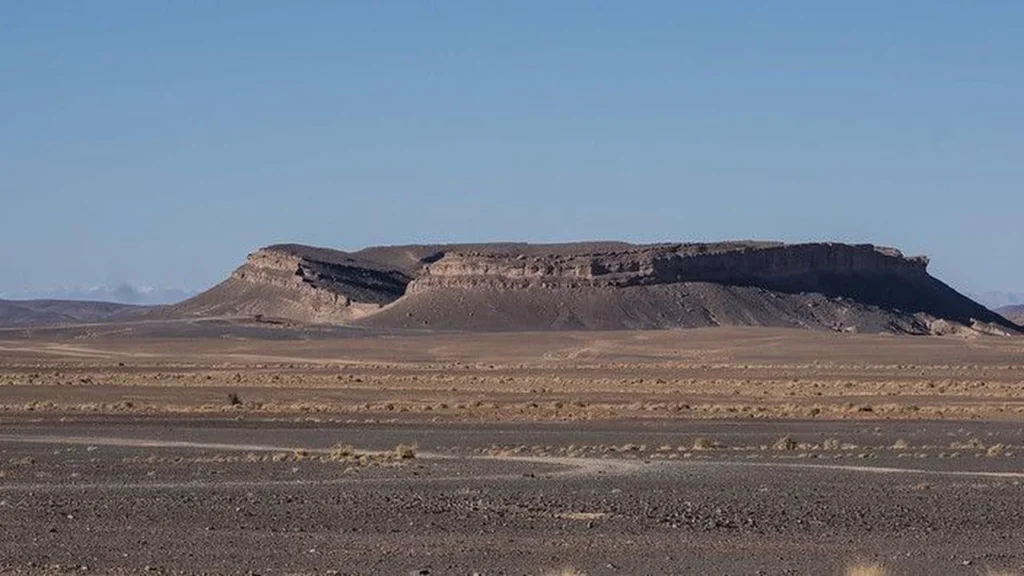
Gara Medouar, James Bond: SpectreMorocco Film Locations FAQ
Can I visit filming locations year-round? Yes, though summer (June-August) brings extreme heat to desert locations, with temperatures exceeding 110°F (43°C). Atlas Studios and Ouarzazate become quite uncomfortable during peak heat. Winter offers pleasant daytime temperatures but very cold nights, particularly in the Sahara and Atlas Mountains. Spring and fall provide optimal conditions.
Are guided tours necessary? Not strictly necessary for major sites like Aït Benhaddou, Essaouira, or Tangier, which are accessible independently. However, guides add valuable context about filming techniques, historical background, and access to specific locations. For remote desert sites or Atlas Studios, organised tours simplify logistics and often include transportation from major cities.
How much time should I allocate for film location tourism? A dedicated film location tour requires a minimum of 7-10 days to visit major sites without excessive rushing. Adding broader Morocco experiences (cooking classes, hammams, cultural sites) extends this to 14 days for a comprehensive journey. Weekend trips from Marrakech can cover Aït Benhaddou and Ouarzazate as a condensed introduction.
What about filming restrictions? Most public areas (medinas, kasbahs, desert landscapes) permit photography and video for personal use. Commercial filming requires permits and fees. Some active film sets within Atlas Studios may be closed during productions. Respect any posted restrictions and crew requests if you encounter active filming.
Can I meet local film workers? Absolutely. Ouarzazate cafes near Atlas Studios attract crew members between projects. Local guides often have film industry connections or personal involvement in productions. Expressing genuine interest in their work, rather than just celebrity sightings, opens conversations. Many locals proudly share their experiences working with international stars and directors.
Conclusion: Morocco’s Cinematic Legacy
Films shot in Morocco have created a unique cultural bridge, introducing millions of viewers worldwide to North African landscapes while providing Moroccan communities with economic opportunities and global recognition. From Lawrence of Arabia’s desert epics to Game of Thrones’ fantasy realms, these Hollywood movies shot in Morocco have shaped how audiences imagine ancient worlds and exotic locations.
For travellers, visiting Morocco’s film locations offers multilayered experiences. You’re not merely checking off movie sites but engaging with living communities whose daily lives intersect with global cinema. The same street where John Wick sprinted through Essaouira is where local fishermen sell their catch each morning. The Aït Benhaddou kasbah that housed Gladiator’s slave market still shelters families whose ancestors built these structures centuries ago.
Morocco’s film industry continues evolving, with new productions constantly discovering locations that previous filmmakers overlooked. Each project adds another layer to the country’s cinematic identity while introducing new audiences to Morocco’s diverse landscapes and rich cultural heritage. Whether you’re a dedicated film buff tracing specific scenes or a curious traveller drawn by Morocco’s broader appeal, these iconic locations promise unforgettable experiences where cinema and reality beautifully intersect.
Ready to explore these legendary filming locations yourself? Desert Merzouga Tours creates customised itineraries that showcase Morocco film locations alongside authentic cultural experiences, ensuring your journey captures both Hollywood glamour and genuine Moroccan hospitality. From the ancient fortresses of Aït Benhaddou to the windswept ramparts of Essaouira, from Ouarzazate film studios to Tangier’s mysterious medina, your cinematic adventure awaits in the Hollywood of Africa.