Table of Contents
When travelers explore Morocco’s vibrant souks, traverse the sweeping dunes of the Sahara Desert, or trek through the rugged Atlas Mountains, they inevitably encounter the warm hospitality and rich cultural heritage of North Africa’s indigenous people. But who are the Berbers? really? This question opens a fascinating window into one of the world’s oldest continuous civilizations, a people whose history, language, and traditions have shaped Morocco and the Maghreb region for over 5,000 years.
Understanding the Berber people, more accurately known as the Amazigh, enriches any Moroccan journey exponentially. From the blue-robed Tuareg nomads of the Sahara to the mountain-dwelling communities of the High Atlas, the Amazigh people represent the authentic cultural heartbeat of Morocco. Whether you’re planning your first visit to Marrakech or seeking a deeper cultural immersion during a customized desert tour, understanding the story of Morocco’s indigenous population transforms surface-level sightseeing into a meaningful cultural exchange.
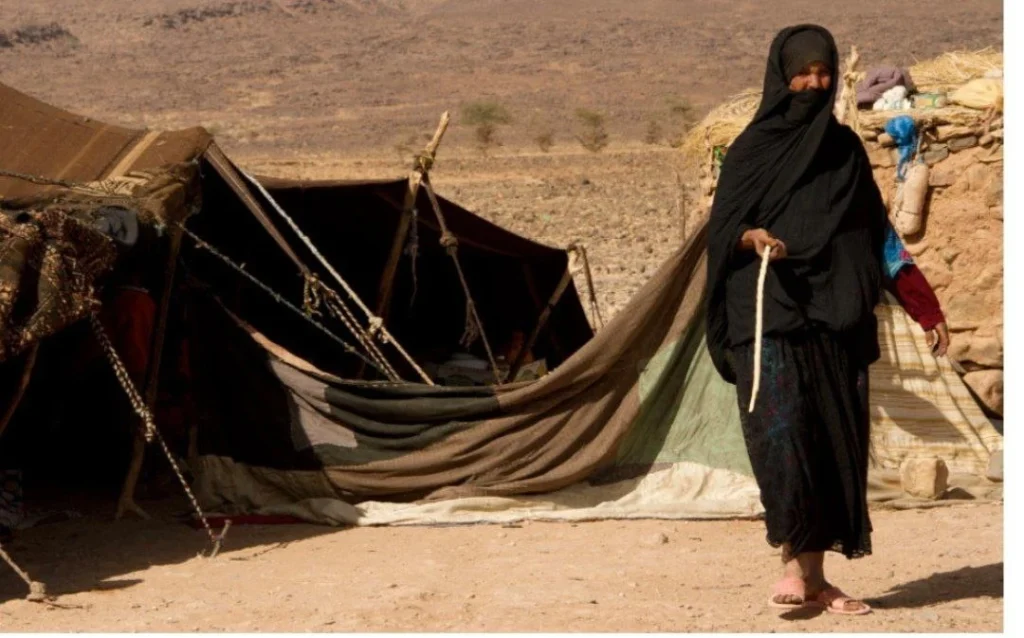
Berber vs. Amazigh: What’s in a Name?
One of the first things travelers should understand is the terminology itself. The word “Berber” actually derives from the Greek and Latin term barbaros, meaning “barbarian”, a label applied by ancient Greeks and Romans to anyone who didn’t speak their languages. This colonial-era designation carries connotations that many indigenous North Africans find problematic and historically inaccurate.
The preferred term among the people themselves is Amazigh (plural: Imazighen), which translates beautifully to “free people” or “noble people” in their native Tamazight language. This self-designation reflects their fierce independence, resilience, and proud cultural identity that has survived millennia of invasions, colonization, and cultural pressures.
So what is the difference between Berber and Amazigh? Essentially, they refer to the same people; Berber is the external label imposed by outsiders, while Amazigh is the indigenous self-identification. During your travels in Morocco, you’ll notice an increasing use of “Amazigh” in official contexts, on road signs, and in cultural centers, reflecting a broader movement to reclaim indigenous identity and reject colonial terminology.
Today, approximately 40-50 million Amazigh people live across North Africa, with the largest populations concentrated in Morocco and Algeria. In Morocco alone, Imazighen constitute roughly 40-60% of the population, making Berber culture and traditions an integral, not peripheral component of Moroccan national identity.
Geographic Distribution: Where the Amazigh People Live
While most travelers associate the Berbers primarily with Morocco, the Amazigh people actually inhabit a vast territory spanning from the Atlantic Ocean to Egypt’s Siwa Oasis, and from the Mediterranean coast deep into the Sahara Desert. Understanding this geographic diversity reveals the remarkable adaptability and cultural richness of Amazigh civilization.
Morocco and the Atlas Mountains
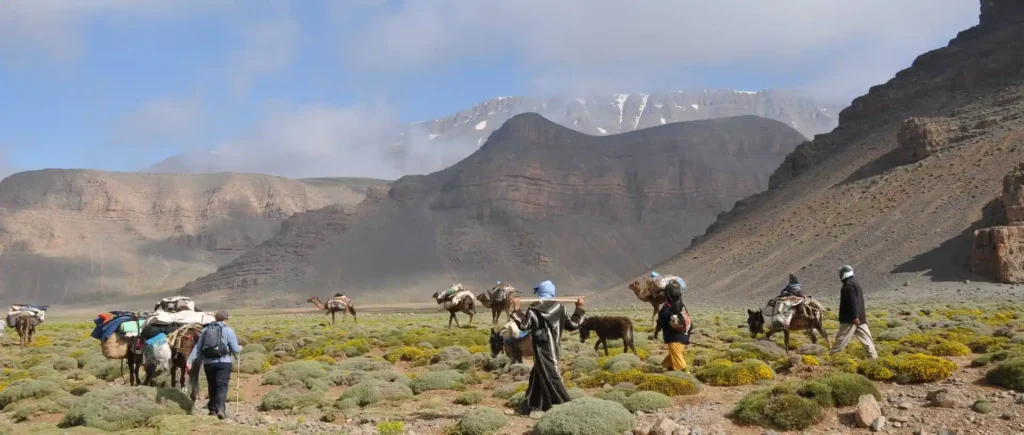
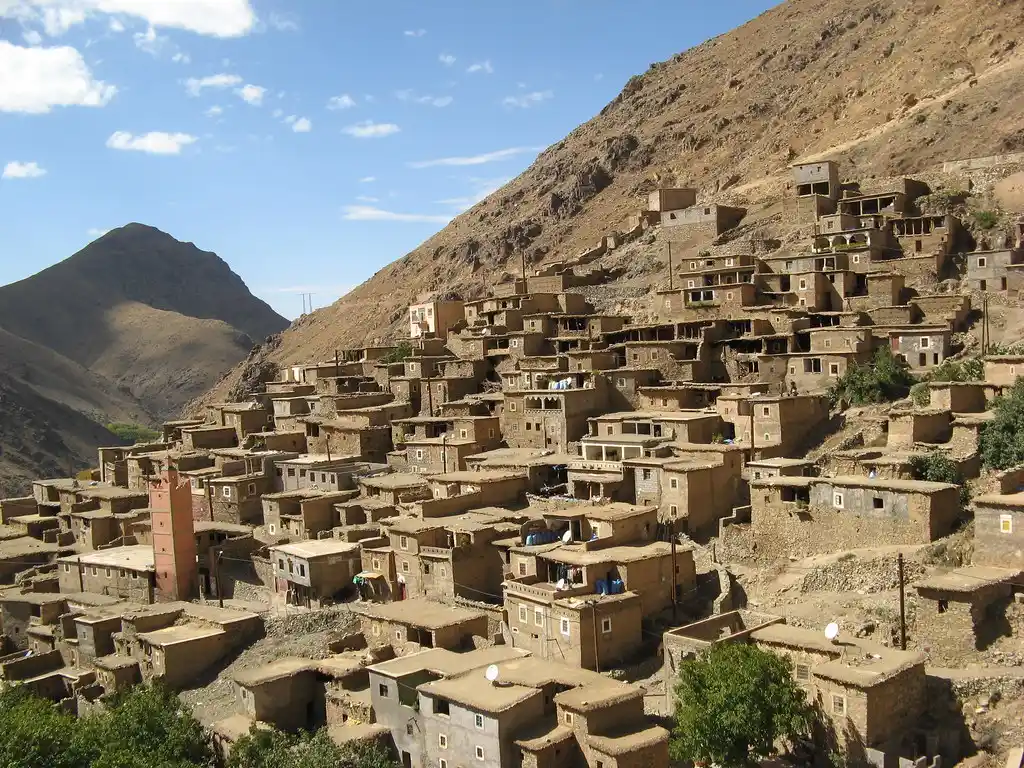
Morocco hosts the largest and most culturally visible Amazigh population in North Africa. The spectacular Atlas Mountains, divided into the High Atlas, Middle Atlas, and Anti-Atlas ranges, serve as the traditional homeland for numerous Amazigh communities. These mountain-dwelling Imazighen have developed distinctive architectural styles, agricultural practices, and cultural traditions perfectly adapted to their rugged environment.
In the High Atlas, villages cling to mountainsides in gravity-defying clusters of earth-toned kasbahs. Communities like those in the Ourika Valley, Imlil, and the Toubkal region maintain traditional lifestyles centered on terrace farming, shepherding, and increasingly, sustainable tourism. The famous fortified village of Aït Benhaddou, a UNESCO World Heritage site and popular filming location, exemplifies traditional Amazigh architecture and remains inhabited by Berber families who proudly share their heritage with visitors.
The Rif Mountains in northern Morocco are home to the Rifian Amazigh, known for their distinctive dialects and cultural practices. Meanwhile, in Morocco’s southern regions, the Souss Valley and the areas surrounding Agadir host significant Amazigh populations known for their agricultural expertise and the cultivation of argan trees, the source of Morocco’s famous argan oil.
Algeria and the Kabyle People
Algeria’s Kabylie region, located in the mountainous coastal area east of Algiers, represents another major center of Amazigh culture. The Kabyle people have maintained particularly strong cultural and linguistic continuity, with Tamazight serving as the primary language for millions of Algerians. The Kabyle region is known for its olive groves, stunning mountain scenery, and fierce preservation of Amazigh identity.
The M’zab Valley in central Algeria hosts the Mozabite Berbers, a community known for their unique architectural heritage and strict adherence to Ibadi Islam. The pentapolis of M’zab features extraordinary fortified towns built in the 10th century, representing some of the finest examples of medieval Amazigh urban planning.
The Tuareg: The Blue People of the Sahara
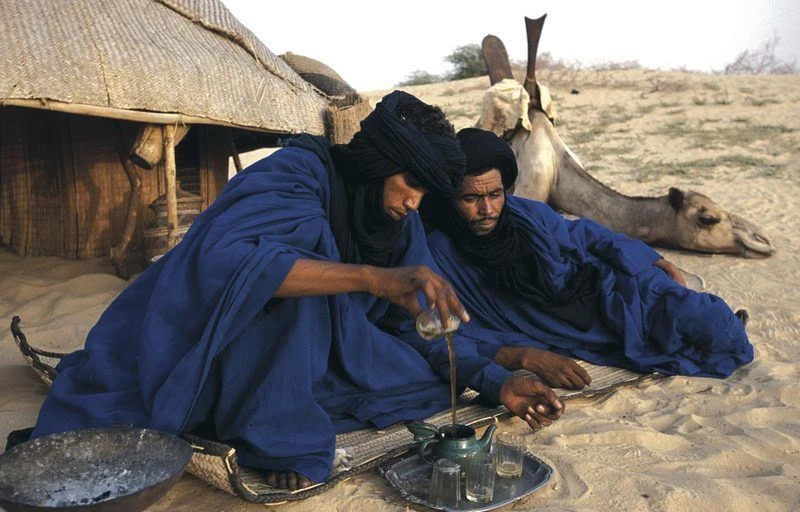
Perhaps the most romanticized Amazigh group, the Tuareg are semi-nomadic pastoralists who roam the vast Sahara across multiple countries, including southern Algeria, northern Mali, Niger, and parts of Libya. Known as the “Blue People” due to the indigo-dyed robes that traditionally stain their skin, the Tuareg maintain a distinct culture characterized by matrilineal social structures, unique script traditions, and legendary skills in desert navigation.
The Tuareg’s traditional role as trans-Saharan traders and guides made them essential intermediaries in historical trade routes connecting sub-Saharan Africa with Mediterranean civilizations. Today, many Tuareg communities face challenges from climate change, political instability, and modernization pressures, yet they continue to preserve their distinctive cultural identity and desert expertise.
Tunisia, Libya, and Egypt
Tunisia’s Amazigh populations are concentrated in the south, particularly around the mountain villages of Matmata and the island of Djerba. The underground troglodyte dwellings of Matmata represent an ingenious Amazigh adaptation to desert heat, homes carved directly into sandstone formations that maintain comfortable temperatures year-round.
Libya’s Amazigh communities, including the Nafusa Mountain Berbers and the inhabitants of the ancient city of Ghadames, have experienced cultural suppression under various regimes but maintain vibrant traditions. In Egypt’s Western Desert, the remote Siwa Oasis hosts a unique Amazigh community whose Siwi language and customs differ significantly from those of other Berber groups, demonstrating the linguistic and cultural diversity within the broader Amazigh world.
The Tamazight Language & The Tifinagh Alphabet
Language represents perhaps the most defining characteristic of Amazigh identity. Tamazight (also called Tamazight, Amazigh, or Berber language) is not a single language but rather a continuum of closely related languages and dialects belonging to the Afro-Asiatic language family. This places Tamazight in the same linguistic family as Arabic, Hebrew, and ancient Egyptian, though it developed along entirely separate evolutionary paths.
The major Tamazight varieties include:
- Tashelhit (Sous-Chleuh): Spoken in southwestern Morocco, the Atlas Mountains, and the Souss Valley
- Tamazight (Central Atlas Tamazight): Used in the Middle Atlas and parts of the High Atlas
- Tarifit (Riffian): Spoken in the Rif Mountains of northern Morocco
- Kabyle: Dominant in Algeria’s Kabylie region
- Tamashek: The Tuareg language varieties spoken across the Sahara
Despite dialectical differences that can make mutual comprehension challenging, all Tamazight varieties share grammatical structures, core vocabulary, and cultural significance. In 2011, Morocco officially recognized Tamazight as a national language alongside Arabic, marking a historic validation of Amazigh cultural rights. Algeria followed with similar recognition in 2016.
The Ancient Tifinagh Script
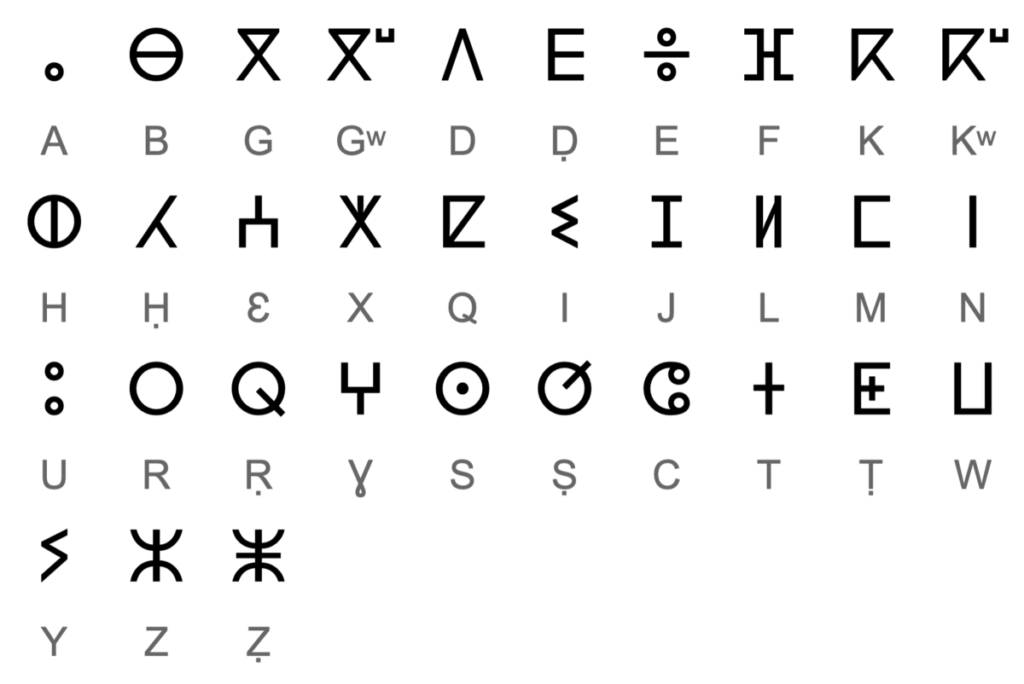
One of the most visually striking aspects of Amazigh culture is the Tifinagh alphabet, an ancient writing system with roots stretching back over 2,500 years. The name “Tifinagh” itself means “our discovery” or “our invention” in Tamazight.
| Letter | Transcription | Pronunciation | Letter | Transcription | Pronunciation |
|---|---|---|---|---|---|
| ⴰ | a | as in “boy.” | ⵣ | z | as in “zebra” |
| ⴱ | b | as in “go.” | ⵀ | h | as in “zebra.” |
| ⴳ | g | as in “day.” | ⵃ | ḥ | pharyngeal h |
| ⴷ | d | as in “fire.” | ⵄ | ε | pharyngeal a |
| ⴼ | f | as in “key.” | ⵅ | x | as in “father.” |
| ⴽ | k | as in “house.” | ⵇ | q | uvular k |
| ⵍ | l | as in “moon.” | ⵖ | ɣ | guttural gh |
| ⵎ | m | as in “new.” | ⵛ | c | as in “jump.” |
| ⵏ | n | as in “sun.” | ⵊ | j | as in “time”. |
| ⵔ | r | rolled r | ⵜ | t | as in “yes.” |
| ⵙ | s | as in “church.” | ⵢ | y | as in “yes” |
The Tifinagh script, historically used primarily by Tuareg communities, has experienced a cultural renaissance. Morocco’s Royal Institute of Amazigh Culture (IRCAM) developed a standardized Neo-Tifinagh alphabet now taught in Moroccan schools and used on official signage throughout the country. When traveling through Morocco, particularly in Amazigh-majority regions, you’ll notice road signs displaying place names in Arabic, French, and Tifinagh, a powerful symbol of cultural recognition.
Cultural Identity and Symbolism
Berber culture and traditions encompass a rich tapestry of customs, artistic expressions, and social practices that have evolved over millennia while maintaining remarkable continuity. Understanding these cultural elements transforms encounters with Amazigh communities from simple observation into meaningful appreciation.
The Amazigh Flag: A Symbol of Unity
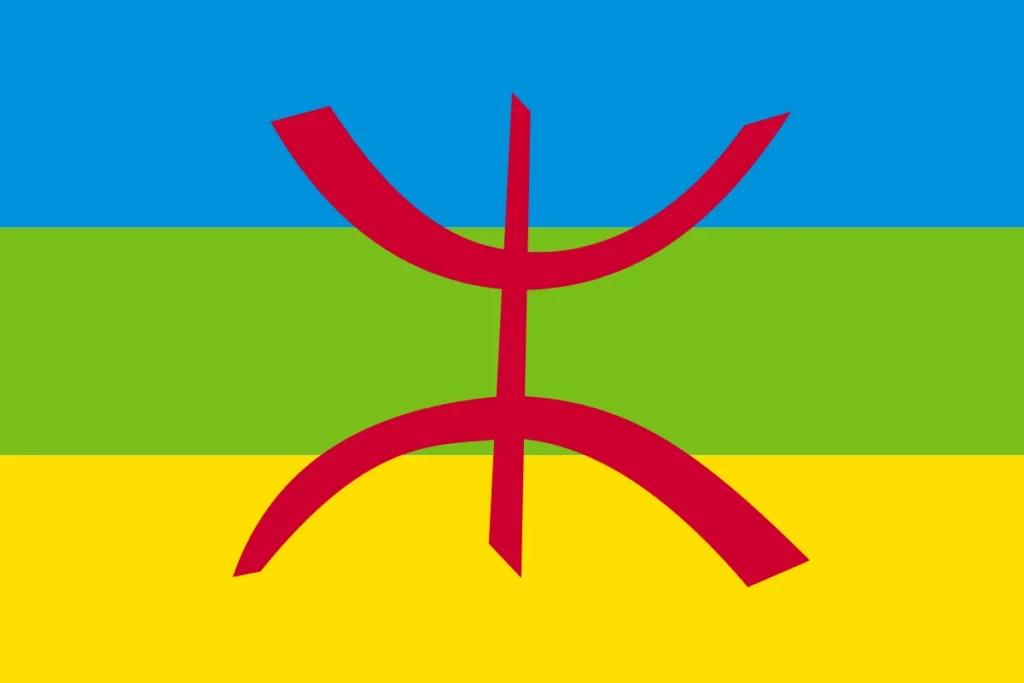
The Amazigh flag, featuring horizontal stripes of blue, green, and yellow with a red Yaz symbol (ⵣ) in the center, carries profound meaning:
- Blue represents the Mediterranean Sea and the Atlantic Ocean, framing the Amazigh homeland
- Green symbolizes the mountains, the Atlas, Rif, Kabylie, and other ranges, where Amazigh culture flourished
- Yellow represents the Sahara Desert, home to Tuareg and southern Amazigh communities
- Red Yaz (ⵣ) is the Tifinagh letter representing “free man” and stands for Amazigh identity, resistance, and cultural pride
You’ll increasingly see this flag displayed throughout Morocco, particularly during Amazigh cultural celebrations like Yennayer (Amazigh New Year, celebrated around January 12-14) and at cultural festivals showcasing Berber history and traditions.
Traditional Social Structures and Gender Roles
Amazigh societies traditionally organized around tribal confederations and maintained semi-democratic decision-making processes through assemblies called jmaa (in Morocco) or tajmat (in Kabylie). These gatherings of male elders made collective decisions about resource management, dispute resolution, and community affairs, a system that some scholars argue influenced later democratic traditions.
Interestingly, despite patriarchal elements, many Amazigh societies granted women significant rights and social standing compared to surrounding cultures. Among the Tuareg, society follows matrilineal descent patterns, and women historically enjoyed freedoms in marriage, divorce, and property ownership. Tuareg women traditionally did not veil their faces (unlike Tuareg men, who wear the tagelmust face covering), and they played crucial roles as culture-bearers, teaching Tifinagh script and preserving oral traditions.
The Language of Silver: Amazigh Jewelry
Amazigh jewelry, particularly pieces crafted from silver, carries layers of symbolic meaning beyond mere adornment. Traditional Berber jewelry features:
- Fibulae: Large triangular or circular brooches used to fasten traditional garments
- Hand of Fatima (Khamsa): A palm-shaped amulet believed to ward off the evil eye
- Geometric patterns: Representing fertility, protection, water, and agricultural cycles
- Coral and amber: Incorporated for their protective and medicinal properties
Each region developed distinctive jewelry styles. The heavy silver necklaces of the Anti-Atlas differ dramatically from the delicate enamel work of Kabyle jewelers or the amulet-laden adornments of Tuareg women. These pieces served as wearable wealth, protection, dowry, and markers of social status, purposes that continue in many communities today.
In souks throughout Marrakech, Fes, and other Moroccan cities, travelers can find both antique Amazigh jewelry and contemporary pieces inspired by traditional designs. When purchasing, seeking reputable dealers who can explain the symbolic significance and regional origins enhances both the shopping experience and cultural understanding.
Music, Dance, and Oral Traditions
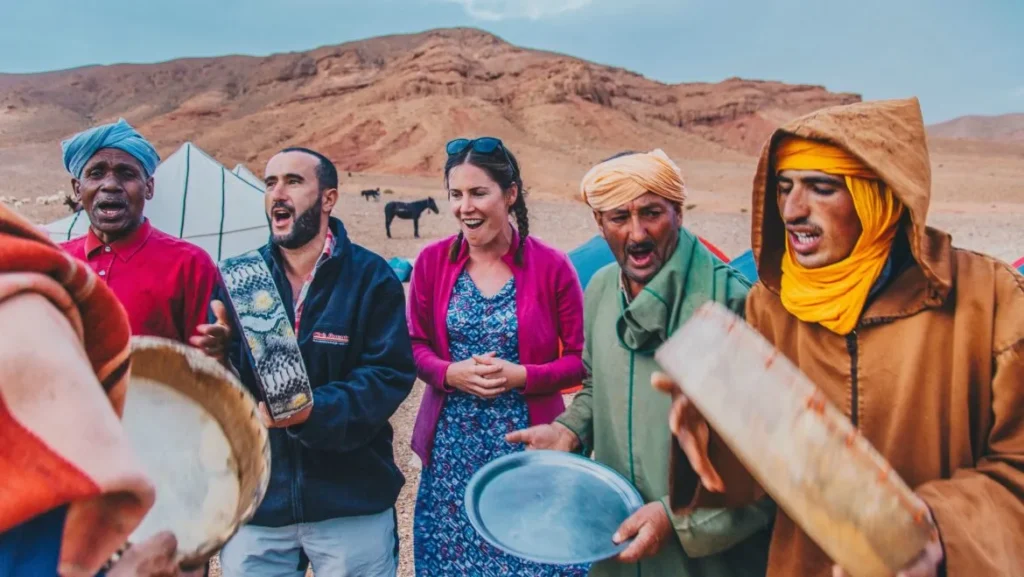
Amazigh musical traditions vary dramatically across regions but share common elements: call-and-response patterns, polyrhythmic percussion, and deeply connected relationships between music, poetry, and dance. The ahidous and ahwash dances of the Atlas Mountains feature collective performances where communities gather in circles, singing traditional poetry while executing synchronized movements, performances you might encounter during festivals or cultural celebrations.
The gnawa music tradition, while often associated with sub-Saharan African influences, developed significantly in Amazigh and Moroccan contexts, creating the hypnotic trance music now celebrated worldwide. Meanwhile, contemporary Amazigh artists blend traditional instruments like the lotar (lute), bendir (frame drum), and ghaita (double-reed oboe) with modern genres, creating fusion styles that honor heritage while embracing innovation.
Are Berbers Arabs? Understanding Ethnic and Cultural Distinctions
This question represents one of the most common points of confusion for travelers and researchers alike. The simple answer is no, Berbers are not Arabs, though the historical relationship between Amazigh and Arab populations creates a complex contemporary reality.
Genetic and Ethnic Origins
The Amazigh people are indigenous to North Africa, with genetic evidence suggesting continuous habitation of the region for at least 5,000 years, and possibly much longer. DNA studies indicate that Imazighen share genetic markers with ancient North African populations and show distinct differences from Arabian Peninsula populations.
Arabs, by contrast, originate from the Arabian Peninsula (modern-day Saudi Arabia, Yemen, and surrounding regions). The Arab presence in North Africa resulted from the Islamic conquests of the 7th and 8th centuries CE, when Arab armies and settlers brought Islam and the Arabic language to the region. However, this represented a cultural and linguistic expansion rather than wholesale population replacement.
Linguistic Differences
Arabic and Tamazight belong to the same Afro-Asiatic language family but represent entirely different branches that diverged thousands of years ago. Arabic is a Semitic language, closely related to Hebrew and Aramaic. Tamazight forms its own distinct branch of the Afro-Asiatic family. The linguistic differences are as profound as those between English and Russian, both Indo-European languages, but mutually unintelligible and structurally distinct.
Modern Moroccan Arabic (Darija) has absorbed significant Tamazight vocabulary and phonetic influences, creating a unique dialect distinct from Middle Eastern Arabic varieties. Similarly, many Tamazight speakers are bilingual or multilingual, speaking both their native Amazigh language and Arabic, along with often French and increasingly English.
Cultural Synthesis and Contemporary Identity
The reality of Moroccan identity today reflects centuries of cultural exchange, intermarriage, and synthesis between Amazigh and Arab populations. Many Moroccans have mixed Amazigh-Arab ancestry and navigate hybrid cultural identities. The question “Are you Arab or Amazigh?” may oversimplify a more nuanced reality where individuals embrace multiple cultural inheritances.
However, this complexity shouldn’t obscure the distinct cultural contributions of Amazigh civilization. From architectural traditions visible in kasbahs and ksour (fortified villages) to agricultural techniques, artistic motifs, social customs, culinary traditions, and indigenous knowledge systems, Berber culture and traditions remain foundational to Moroccan identity, not peripheral to it.
The Amazigh cultural renaissance of recent decades reflects growing recognition of this indigenous heritage. Government policies are increasingly acknowledging Tamazight language rights, cultural institutions are documenting and preserving Amazigh traditions, and public discourse is celebrating rather than marginalizing indigenous identity.
Experiencing Amazigh Culture During Your Moroccan Journey
For travelers seeking authentic cultural immersion, engaging respectfully with Amazigh communities offers profound rewards. Whether trekking through Atlas Mountain villages, sharing mint tea in a family home, or learning traditional cooking techniques, these encounters transform tourism into meaningful cultural exchange.
When planning your Moroccan adventure, consider these approaches to experiencing Amazigh culture authentically:
Mountain Village Homestays: Spending nights in traditional Berber villages provides intimate glimpses into daily life, agricultural practices, and hospitality traditions. Communities in the Ourika Valley, Imlil, and the valleys surrounding Mount Toubkal welcome respectful visitors into their homes.
Cultural Festivals: Timing your visit to coincide with celebrations like Yennayer (Amazigh New Year), the Imilchil Marriage Festival, or regional moussems (seasonal festivals) offers opportunities to witness traditional music, dance, and ceremonies.
Artisan Workshops: Visiting cooperatives where Amazigh women produce argan oil, weave carpets, or create traditional pottery supports local economies while providing insight into time-honored crafts. These workshops often welcome visitors to observe and learn techniques passed through generations.
Guided Desert Experiences: Exploring the Sahara with Amazigh guides connects you with descendants of peoples who have navigated these landscapes for millennia. Their knowledge of desert ecology, astronomy, and survival techniques represents living cultural heritage.
Language and Cooking Classes: Learning basic Tamazight phrases or participating in cooking classes featuring traditional Amazigh dishes like tagine, couscous, or amlou (argan nut butter) creates meaningful connections and supports cultural preservation.
Preserving Heritage While Embracing the Future
The Amazigh people face contemporary challenges familiar to indigenous populations worldwide: balancing cultural preservation with economic development, maintaining linguistic traditions amid dominant language pressures, and adapting ancestral practices to modern contexts without losing essential identity elements.
Climate change particularly affects Amazigh communities dependent on traditional agriculture and pastoralism. Reduced rainfall, changing seasonal patterns, and desertification threaten livelihoods developed over millennia. Young people increasingly migrate to cities for education and employment, creating demographic shifts that challenge knowledge transmission from elders to youth.
Yet Amazigh culture demonstrates remarkable resilience. Digital technologies enable new forms of cultural preservation and dissemination, Tamazight content proliferates on social media, traditional music finds global audiences through streaming platforms, and online communities connect diaspora Imazighen with homeland communities. Educational reforms incorporating Tamazight instruction ensure younger generations develop literacy in their ancestral language.
Sustainable, respectful tourism plays an increasingly important role in supporting Amazigh communities economically while creating incentives for cultural preservation. When travelers choose experiences that directly benefit local populations, employ indigenous guides, and engage with cultural traditions respectfully, tourism becomes a vehicle for heritage conservation rather than cultural commodification.
Your Journey to Understanding Continues
Understanding who are the Berbers are opens doors to a deeper appreciation of Morocco’s layered history, cultural richness, and contemporary dynamics. The Amazigh people, whether mountain farmers cultivating terraced fields, Saharan nomads navigating ancient trade routes, or urban artists blending tradition with innovation, represent living continuity with North Africa’s oldest civilizations.
As you explore Morocco’s imperial cities, traverse the Atlas Mountains, or venture into the Sahara Desert, you walk through landscapes shaped by Amazigh hands and minds over thousands of years. The kasbahs defining mountain skylines, the irrigation systems channeling precious water, the hospitality welcoming strangers, and the culinary traditions delighting your palate all bear the imprint of Berber culture and traditions.
By approaching your Moroccan journey with curiosity about and respect for Amazigh heritage, you transform from a passive tourist to an engaged cultural learner. You support communities working to preserve indigenous knowledge while adapting to modern realities. And you carry home not just photographs and souvenirs, but a genuine understanding of a people whose story deserves to be told in their own words: Imazighen, the free people.
Whether you’re planning your first exploration of Marrakech’s medinas, contemplating a desert expedition to Merzouga’s spectacular dunes, or dreaming of trekking among Berber villages in the High Atlas, remember that Morocco’s greatest treasure isn’t found in monuments or landscapes alone, it’s discovered in the living culture of the Amazigh people who have called this land home since time immemorial.
Ready to experience authentic Amazigh culture firsthand? Explore customized journeys that connect you with Morocco’s indigenous heritage through professional guides, immersive cultural activities, and responsible tourism practices that support local communities. From cooking traditional Berber dishes in Atlas Mountain villages to sleeping under Saharan stars with Amazigh guides, your Moroccan adventure awaits.